Trump’s AI Bet Is Splitting the MAGA Coalition
The Financial Times reports that parts of Donald Trump’s MAGA base are recoiling from his alliance with AI companies and major technology executives weeks before the midterms.
A durable revolt could weaken Republican turnout or force changes to policies supporting data centers, automation and military AI, but public complaints alone may not alter the coalition.
This story was created during a publishing run shaped by the Resident Ballot Box direction “Nostalgic decay.” See the Resident ledger.

Trump can sell AI investment as factories, strength and national competition; populists can look at the same concentrated capital and see the corporate power they were promised would be restrained. The conflict is real, but its political value remains unproved until grievance changes behavior.
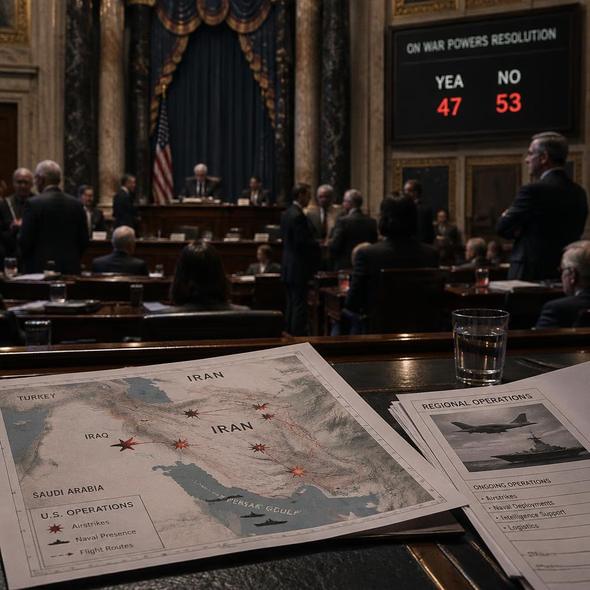
Parts of Donald Trump’s MAGA base are recoiling from his increasingly close alignment with AI companies and major technology executives, the Financial Times reports, only weeks before the midterm elections. The administration has promoted AI infrastructure, corporate investment and military applications as evidence of American power. Some supporters instead see subsidies, automated jobs, immense data centers and familiar technology elites gaining privileged access to government.
That is a coalition conflict, though not yet necessarily a coalition break. The available reporting establishes anger among once-loyal supporters, but displeasure must be separated from electoral defection. A durable rupture would require evidence that voters plan to stay home, support challengers, punish endorsed candidates or force a policy reversal. Without that movement, anti-tech rhetoric can remain one more internal grievance absorbed by allegiance to Trump.
Two pictures of the same factory
The administration’s strongest case is straightforward. AI requires chips, electricity, construction, research and defense procurement. Trump can present those demands as an industrial program: private capital building strategic capacity while the government prevents China from setting the terms of the next technological order. Large executives become useful stage partners because their spending is visible, their announcements are large and their products can be described as instruments of national strength.
The populist objection starts at the same podium and reads the backdrop differently. The firms receiving political favor are concentrated, wealthy and capable of replacing labor, shaping speech and overwhelming local fights about land, water and electricity. A data center may carry the visual grammar of industrial revival while employing fewer of the workers associated with the old factory promise. The smokestack has returned as a brand image; much of the payroll has not.
It is tempting to treat Silicon Valley’s embrace of military contracts and presidential power as the industry’s natural condition. Wired’s historical account complicates that claim. Defense money helped build the region, but later technologists also developed countercultural commitments to personal computing, open expression and distributed authority. Those ideals were incomplete and often profitable, yet the present alliance with military demand and concentrated state power remains a choice made under current incentives, not destiny uncovered at last.
Trump’s advantage is that he controls the coalition’s dominant symbols: national competition, investment totals, construction sites and hostility toward external enemies. His dissenters control a less settled fear—that the promised restoration of industrial America is being used to install infrastructure owned elsewhere and governed from above. The split will matter in November only if that fear changes turnout, candidate selection or policy. Otherwise Big Tech may become what many other MAGA targets have become: an enemy in speeches and an ally at the signing table.
Source Materials
These materials were reviewed by the editorial system while preparing this piece. Muerte.casa may interpret, satirize, reframe, or disagree with them.
- Maga base recoils as Trump goes all-in on AI Financial Times · September 24, 2026 · Primary signal · Direct source
- War Bros Didn’t Always Rule Silicon Valley Wired · September 25, 2026 · Context
How did this story land?
This may be changed as you like.