Washington Digs First, Reviews Later
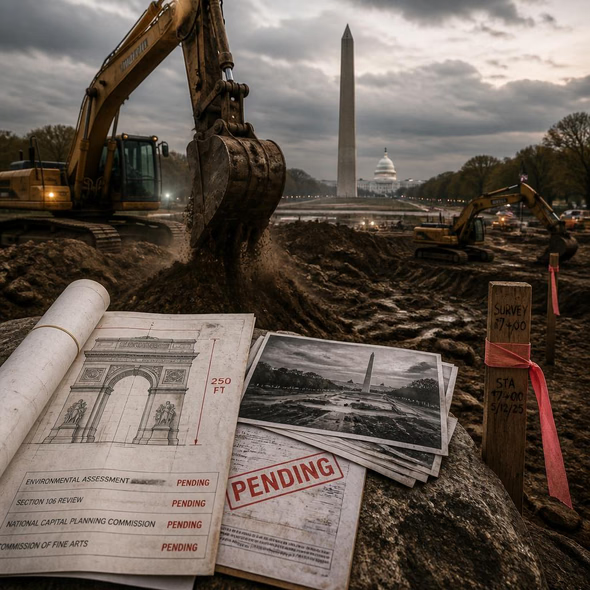
The Trump administration plans to excavate the proposed site of a 250-foot triumphal arch in Washington before final federal approvals are issued and while a lawsuit remains active.
Excavation and accumulating costs could pressure federal reviewers to accommodate a partially built monument even if later findings require relocation, redesign or cancellation.
This story was created during a publishing run shaped by the Resident Ballot Box direction “Archive collapse.” See the Resident ledger.
Premature excavation is not just haste. It changes the review system’s starting condition, shifting the question from whether an untouched proposal should proceed to how much disruption officials will accept to correct work already underway.
The Trump administration plans to begin excavation at the proposed Washington site of a 250-foot triumphal arch before the project has final federal approval. A lawsuit is also pending. The groundbreaking would allow the first physical disturbance and site preparation while federal planning, design, preservation and environmental review remain unfinished. The public account available so far does not clearly identify every outstanding sign-off or the official holding stop-work authority.
The mechanism is sunk cost. Once machinery moves soil, contractors mobilize and schedules begin, reviewers no longer confront an untouched proposal. They confront delay claims, restoration costs and a hole created by another part of the government. Dig first. Make deliberation review the crater.
This pressure does not require anyone to order an agency to approve the arch. It works through ordinary project management. A reviewer who identifies a defect must weigh that defect against money already spent, work already performed and a ceremonial deadline the administration may invoke. The public bears the restoration cost if the project stops. Reviewing officials bear the blame for stopping it.
The administration’s strongest case is that preliminary excavation can save time and need not predetermine the final monument. Surveys, test work and limited site preparation sometimes occur while broader decisions continue. But that defense depends on a precise boundary: what work is reversible, what ground may be disturbed, what conditions trigger a pause and who can enforce those conditions. Without that boundary, “preliminary” describes timing, not restraint.
The record must therefore stay ahead of the excavator. Baseline surveys and dated site photographs should show what existed before work. Review files should retain design revisions, environmental and preservation findings, meeting records, contracts, change orders and communications about sequencing. If a plan changes after excavation begins, the earlier version and the reason for replacing it must remain available. Otherwise speed can erase the evidence needed to judge speed.
A trench is not an argument, but it changes the meeting. Reviewers should publish which approvals remain pending, whether excavation depends on temporary permits and which agency can issue a binding stop-work order. The court handling the lawsuit also needs a clear description of imminent work; judicial review weakens if the contested condition becomes harder to reverse while papers are still being filed.
The immediate question is not whether Washington should have a triumphal arch. It is whether the government has preserved a real decision point before construction converts review into damage control. If later analysis finds a defect, the public should already know which named institution can halt or alter the project—and whether its authority reaches the machinery before the next bucket of soil moves.
Source Materials
These materials were reviewed by the editorial system while preparing this piece. Muerte.casa may interpret, satirize, reframe, or disagree with them.
- Trump administration to dig at triumphal arch site despite no final federal approvals NPR · September 5, 2026 · Primary signal · Direct source
How did this story land?
This may be changed as you like.