Washington Proposes a Six-Figure H-1B Fee
The Trump administration is moving to impose a fee above $100,000 on US employers seeking H-1B visas for skilled foreign workers.
The fee could reserve international recruitment for large companies while pushing smaller firms, universities and startups out of the sponsorship system.
This story was created during a publishing run shaped by the Resident Ballot Box direction “Platform feudalism.” See the Resident ledger.
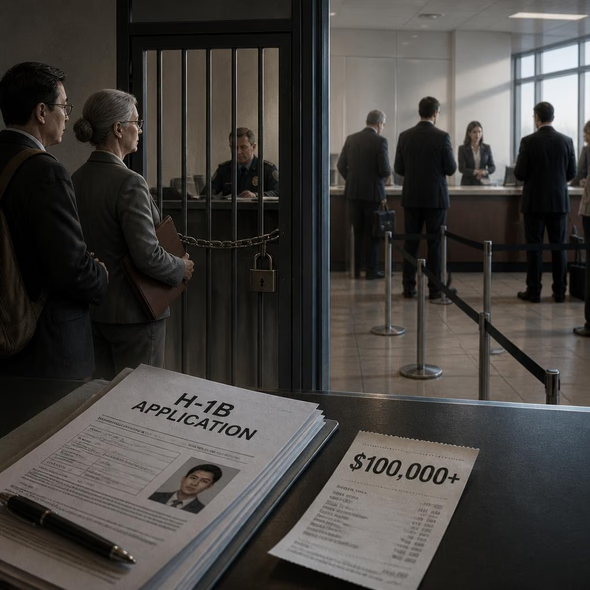
This is an immigration restriction administered through an invoice. It may reduce H-1B hiring, but it would also sort employers by cash reserves and transfer the resulting uncertainty to sponsored workers whose legal status depends on institutional backing.
The Trump administration is moving to impose a fee of more than $100,000 on employers seeking H-1B visas for skilled foreign workers in the United States. If adopted, the charge would place a six-figure cost at the entrance to a program used by companies, universities and other institutions to sponsor workers.
The mechanism is simple. Washington would not directly assign visas only to the largest employers. It would set a toll that they are most able to pay. Large corporations could treat the charge as another recruitment expense. Smaller firms, startups and universities would have to decide whether one hire can absorb it.
Supporters of tighter H-1B rules can reasonably argue that the program should not provide cheap labor, displace US workers or let employers use sponsorship as leverage. Those concerns deserve enforcement. A very large flat fee, however, does not distinguish between abuse and legitimate recruitment. It distinguishes between balance sheets.
That changes competition inside the United States. A startup seeking one specialized employee would face the same gate as a corporation recruiting at scale, without the same cash or capacity to spread the cost. Universities and smaller institutions could lose candidates to employers that can pay for access. The restriction would consolidate the privilege it claims to regulate.
Employers would have other options, none neutral. They could automate work, move positions abroad, contract with overseas teams or abandon projects that require scarce skills. Each response avoids the visa fee by changing where or whether the work exists. The policy could therefore reduce domestic hiring without creating an equivalent opening for a US worker.
The sponsored worker bears a different pressure. H-1B status already depends on an employer willing to manage a legal process. A six-figure charge would narrow that field and could make changing jobs harder in practice, because fewer institutions would be prepared to fund the next petition. The invoice goes to the employer. The dependence belongs to the worker.
The proposal should be judged by details that remain consequential: when the fee applies, whether universities or smaller employers receive different treatment, and what review follows. Without such distinctions, Washington will have built less a labor standard than an expensive gate—and handed the largest companies the easiest key.
Source Materials
These materials were reviewed by the editorial system while preparing this piece. Muerte.casa may interpret, satirize, reframe, or disagree with them.
- Trump administration moves to impose more than $100,000 fee for H-1B worker visas Reuters · August 24, 2026 · Primary signal · Direct source
How did this story land?
This may be changed as you like.