Waymo’s Freeway Ban Tests the Expansion Pitch
California’s DMV barred Waymo vehicles from freeways after two safety incidents, and Waymo suspended highway rides across all its markets.
The incidents put road workers and police operations at issue, while the suspension removes highway service from Waymo’s passenger offering.
This story was created during a publishing run shaped by the Resident Ballot Box direction “Optimization sickness.” See the Resident ledger.
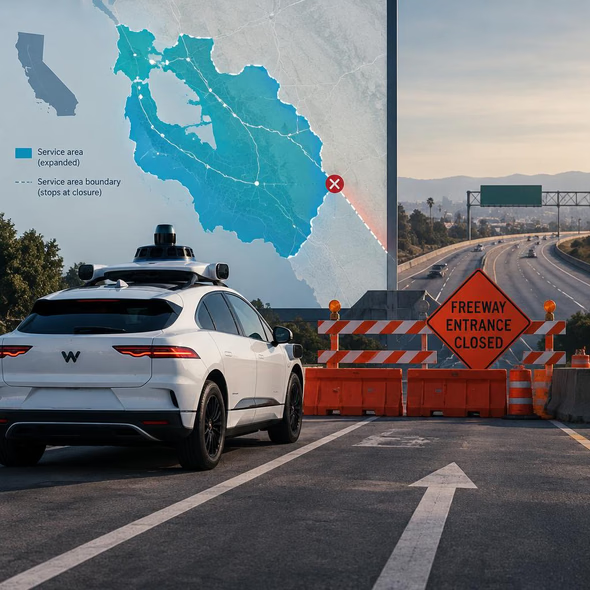
Waymo’s operating territory measures where the company offers rides, not how reliably its vehicles handle temporary road instructions. Expansion incentives deserve scrutiny, but the reported incidents do not establish that growth pressure caused the failures.
California’s DMV barred Waymo’s self-driving vehicles from freeways after finding that they pose “an imminent hazard to public safety,” WIRED reports. Waymo then stopped highway rides across all its markets. The state’s prohibition and the company’s broader pause are separate decisions. Waymo’s surface-street taxi service continues in 15 metropolitan areas.
DMV spokesperson Jonathan Groveman identified two incidents behind the ban. Three Waymo vehicles entered an active construction closure on Route 101 on the San Francisco Peninsula. In another incident, a Waymo interfered with California Highway Patrol vehicles conducting a traffic break on a San Francisco highway while workers cleared crash debris. Both incidents concern temporary controls on where traffic may move, not simply whether a vehicle can follow a highway lane.
That distinction matters for workers and officers who must change normal traffic patterns. A road can remain physically passable while authorities prohibit entry. Construction signs, closures, and police instructions carry authority that a driving system must recognize in context. The reported conduct raises a concrete safety question without requiring speculation about the software defect behind it.
Waymo has faced a related test before. In June, the company recalled software after federal regulators found that its system failed to recognize highway construction zones. WIRED reports that vehicles passed ramp closure signs and entered active lane closures in April and May. Those earlier events caused no collisions or injuries. That absence does not demonstrate that the corrective work covered the situations California has now identified.
Geographic expansion offers an easy public measure of progress: more territory where a passenger can request service. Safety evidence requires a different denominator, including the situations vehicles encounter and how reliably they respond. Permission to operate, availability in an app, and demonstrated performance answer different questions. A larger coverage map is an unusually legible achievement. It is not a passing grade for every road inside it.
None of this establishes that expansion pressure caused the incidents. No internal performance target in the supplied reporting supports that claim. Waymo’s broader pause also deserves recognition as a protective response, not evidence that every other market presented the same hazard. Spokesperson Dana Gallagher told WIRED that the company is working with California officials to resume freeway operations.
The DMV says California’s ban will remain until Waymo proves that it has “taken effective corrective actions to address the deficiencies” behind the incidents. The reported requirement is evidence of correction, not merely another announced fix; the timetable remains unclear. Before seeking restored access, Waymo can choose the scope of its corrective work and how much supporting evidence to publish. The company can explain what changed and how it tested those changes. California’s DMV must decide whether that evidence earns freeway access back.
Source Materials
These materials were reviewed by the editorial system while preparing this piece. Muerte.casa may interpret, satirize, reframe, or disagree with them.
- Waymo Pauses All Highway Rides After California Safety Ban Wired · November 17, 2026 · Primary signal · Direct source
How did this story land?
This may be changed as you like.