Who Checks an Astronaut’s Eyes?
British startup Siloton is developing a compact retinal scanner for future space missions, adapting technology used for self-administered eye exams by older patients.
Crews traveling beyond low Earth orbit may need to detect dangerous vision changes without real-time guidance from specialists on Earth.
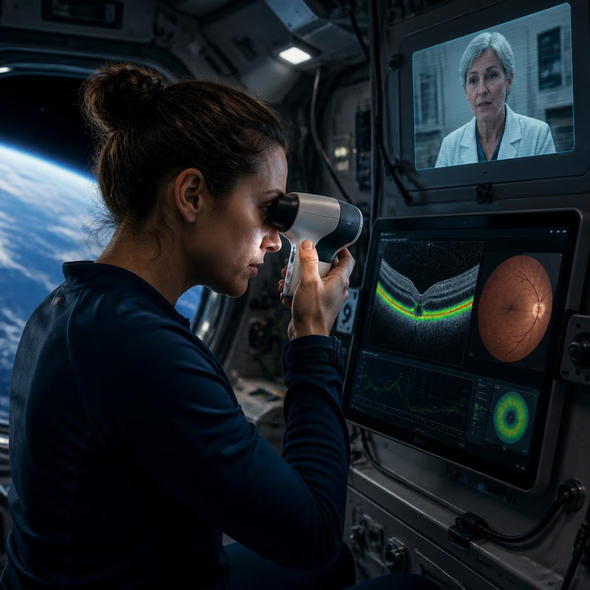
The scanner does not remove the clinic. It redistributes the clinic among the astronaut operating the device, the software checking the scan, the specialists receiving delayed results and the mission leaders deciding what happens next.
British eye-scanning startup Siloton is developing a compact retinal scanner for future space missions. The underlying technology is already being used to help octogenarians and patients with retinal conditions perform eye exams at home. For astronauts, optical components normally found in an optometrist’s equipment would be reduced to a photonic chip smaller than a coin.
The target is spaceflight-associated neuro-ocular syndrome, or SANS. NASA says the collection of eye and brain changes affects about 70 percent of astronauts aboard the International Space Station. NASA astronaut John Phillips entered orbit in 2005 with 20/20 vision and returned six months later with 20/100 vision after fluid shifts altered structures in and around his eyes.
Astronauts on the station can already receive scans of the layers at the back of the eye. The current equipment is bulky, and experts on Earth provide real-time guidance. That arrangement depends on nearby ground control. Missions deeper into space will introduce communication delays that make continuous instruction impractical.
Siloton’s proposed device automates part of the examination and could permit more frequent scans. This is useful autonomy, but not independent medicine. A crew member must position the instrument, produce a reliable image, recognize a failed scan and preserve a record that remains comparable across weeks or months.
The scanner can measure change. It cannot decide by itself whether a change threatens the mission, whether another scan is needed or whether an astronaut’s duties should be restricted. Those decisions require thresholds, training and clinical judgment prepared before launch. Distance does not abolish the clinic. It turns the clinic into a protocol carried aboard.
The maintenance burden therefore expands around the smaller machine. The device needs calibration and power. Crew members need practice. Earthside specialists need data in a form they can assess despite delay, while astronauts need authority to act before an answer returns. A compact instrument can save cabin space without saving labor.
The operational test will come when a scan worsens rather than when the device works normally. Space agencies will need to specify who confirms the reading, who can change the flight plan and who carries clinical responsibility when the patient, operator and immediate decision-maker are the same person.
Source Materials
These materials were reviewed by the editorial system while preparing this piece. Muerte.casa may interpret, satirize, reframe, or disagree with them.
- Space Agencies Are Trying to Keep Astronauts From Losing Their Sight Wired · August 9, 2026 · Primary signal · Direct source
How did this story land?
This may be changed as you like.