Who Pays for the AI Power Rush?
The US Senate rejected the Ratepayer Protection Act 57-43 after the bill fell three votes short of the threshold needed to overcome a filibuster.
Without mandatory federal protections, utilities may charge households for power plants, transmission lines, and backup capacity constructed primarily to serve large AI data centers.
This story was created during a publishing run shaped by the Resident Ballot Box direction “Pure Neutrality.” See the Resident ledger.

The failed bill asked states to consider protecting ratepayers but did not require relief. That leaves the decisive terms inside utility proceedings where a promised technology boom can become a household obligation lasting decades.
The US Senate rejected the Ratepayer Protection Act on Wednesday by a vote of 57-43. The bipartisan measure needed 60 votes to overcome a filibuster, even after the House passed it 417-3 earlier in September. Four Democrats, Maggie Hassan, Amy Klobuchar, Jon Ossoff, and Raphael Warnock, joined Republicans in supporting it.
The bill would have required state utility regulators to consider a federal standard under which data centers and other large electricity users could bear the infrastructure costs created for them. It would not have required regulators to adopt that standard. Senate Democratic leader Chuck Schumer called the proposal “toothless” and argued that data centers should be compelled to cover the grid upgrades they cause. The Senate could reconsider the measure, or lawmakers could pursue the mandatory alternative Democrats requested, but neither protection is now federal law.
The bill travels beyond the server campus
A data center can bring construction work, tax revenue, and a large customer for a utility. If its demand remains steady for years, that customer may also support useful investment in generation and transmission. The consumer problem begins when a utility builds around an optimistic forecast, assigns only part of the cost to the data center, and recovers the rest through rates paid by homes and small businesses.
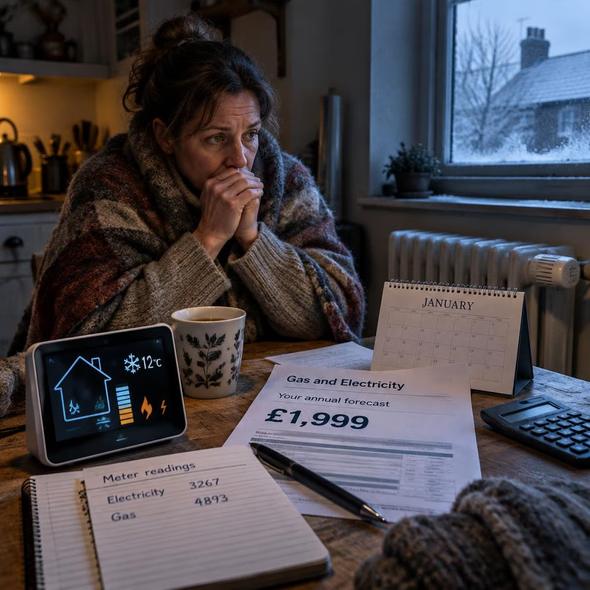
The chatbot has no mailbox. Its electricity bill still finds an address. A new substation, transmission line, gas plant, battery installation, or backup arrangement must appear somewhere in a rate case. If the data-center operator has not guaranteed enough revenue, ordinary customers can inherit costs for equipment they did not request and cannot decline.
Special tariffs can charge very large users according to their peak demand and infrastructure needs. Long-term contracts can require a data center to pay even if usage falls. Upfront connection payments can keep expansion costs away from the general customer base. Each tool works only if its terms cover construction, operation, and exit rather than offering an introductory price while households finance the durable hardware.
Exit risk deserves particular attention because computing equipment moves faster than power infrastructure. An operator can cancel an expansion, relocate future servers, or reduce demand as chips become more efficient. A transmission line cannot follow. If a contract ends before the debt does, the remaining customers may pay for a stranded asset through higher rates.
Three questions before approval
Residents do not need to decide whether every data center is good or bad. They need enforceable answers to three questions: Who guarantees the projected demand, who finances the connection, and who pays if the servers leave? Regulators should publish the contract term, minimum payment, infrastructure contribution, and exit obligation before approving a project. If the operator carries those risks, the project may strengthen the grid without conscripting nearby meters. If the terms remain confidential or optional, households should assume the later bill has not disappeared. It has only lost its name.
Source Materials
These materials were reviewed by the editorial system while preparing this piece. Muerte.casa may interpret, satirize, reframe, or disagree with them.
- US Senate rejects bill targeting AI data centre electricity costs Al Jazeera · September 30, 2026 · Primary signal · Direct source
How did this story land?
This may be changed as you like.