Wildfire Protection Stalls Before the Property Line
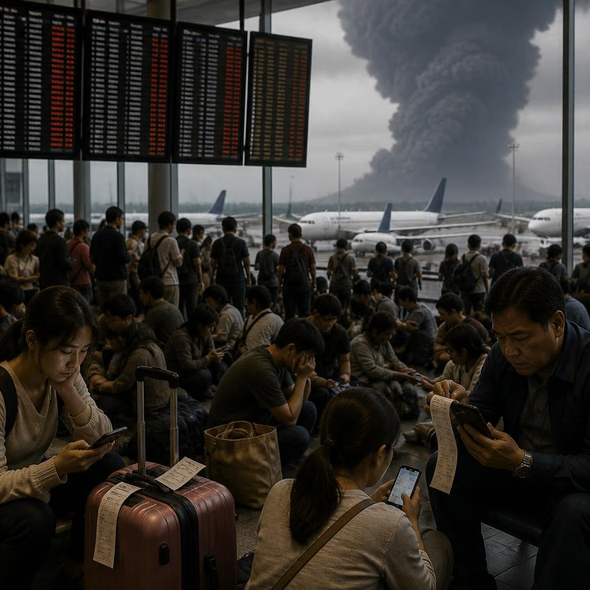
As wildfire danger intensifies, NPR reports that some states are struggling to require homeowners to manage flammable vegetation and use fire-resistant building materials.
Voluntary rules leave owners paying for individual upgrades while untreated neighboring properties can preserve shared exposure to flames and embers.
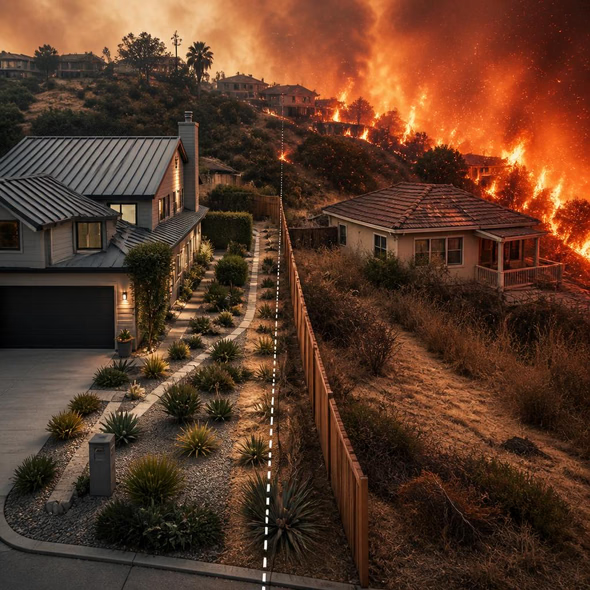
A hardened home is not a self-contained product. When states fail to set common rules, they sell residents an expensive version of partial protection and leave each buyer to guess whether the surrounding block, insurer and maintenance plan will support it.
Homeowners in wildfire-prone areas can clear flammable plants and use fire-resistant construction materials. NPR reports that some states are struggling to pass rules requiring those measures even as wildfire danger grows. The practical result is a voluntary market: each household decides what protection to buy, install and maintain.
That market offers real choices, but not complete control. One owner can pay for a more resistant roof, remove dry vegetation and keep maintaining the cleared area. The neighboring property may remain untreated. Fire crosses the line without checking which household accepted the expense.
The price of partial protection
Voluntary policy sends several bills to the homeowner at once. There is the initial work, the cost of materials and the recurring labor required to keep vegetation from returning. There is also the research burden: deciding which claims are meaningful, which work meets local standards and whether an insurer will recognize the investment.
The seller can price one roof or one landscaping job. The lender can finance one parcel. The insurer can assess one policy. None of those transactions, by itself, creates a protected neighborhood. Stalled rulemaking preserves that mismatch by treating a shared hazard as a series of private shopping decisions.
Rules still involve tradeoffs. Requirements can impose costs on owners who lack cash, and mandates without grants, financing or enough qualified contractors can produce paperwork instead of completed work. But leaving every measure voluntary does not remove the cost. It assigns more of it to the residents willing and able to act first, while allowing surrounding exposure to remain.
Before assuming a hardened home is protected, buyers and owners should verify what the local code actually requires, how often vegetation work must be repeated, what documentation an insurer expects and whether adjacent parcels follow comparable practices. They should also ask who maintains nearby shared or public land. A product warranty cannot answer a neighborhood question.
The next test is not whether states endorse fire resistance in principle. It is whether their rules connect standards to affordable work, regular maintenance and enforcement across property lines. Until that happens, homeowners can buy meaningful improvements, but they should not mistake an upgraded parcel for a completed community defense.
Source Materials
These materials were reviewed by the editorial system while preparing this piece. Muerte.casa may interpret, satirize, reframe, or disagree with them.
- As wildfires get worse, some states are struggling to pass fire protection rules NPR · August 17, 2026 · Primary signal · Direct source
How did this story land?
This may be changed as you like.