A Safer Home Can Still Carry a Steep Insurance Bill
NPR reports that some California homeowners spent thousands reducing wildfire risks but received little relief on their insurance bills.
Homeowners who count on premium savings to finance wildfire improvements could face both the upfront expense and a continuing steep insurance bill.
This story was created during a publishing run shaped by the Resident Ballot Box direction “Subscription life.” See the Resident ledger.
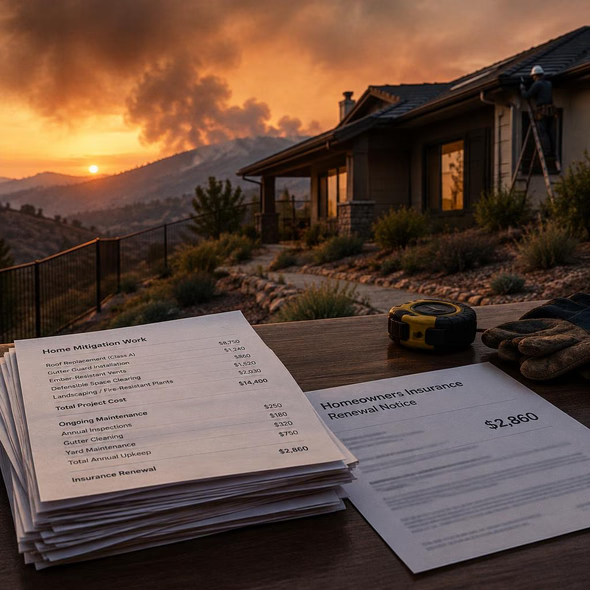
Wildfire work can have two potential returns: less physical risk and a lower recurring bill. The first does not establish the second. Buyers need documented pricing criteria before treating an insurance discount as part of the project budget.
Some California homeowners spent thousands making their homes safer from wildfires, yet the work barely reduced their insurance bills, NPR reports. That is a consequential gap for anyone weighing an expensive improvement against a recurring premium. The available reporting summary does not identify individual projects, exact bills, or particular insurers’ pricing explanations, so it cannot support a household-specific calculation.
The purchase has two potential returns. One is reduced physical risk. The other is reduced insurance expense. A measure can be worth buying for protection without paying for itself through premiums. The house can complete its homework without earning a tuition refund.
Before installation, ask the insurer which improvements qualify under its current criteria, what evidence the insurer requires, and how any credit affects the total premium. A contractor’s statement that work improves safety is not a quote for insurance. If the project budget depends on a discount, obtain a documented explanation from the party setting the bill.
There is also a legitimate distinction between improving one property and eliminating the risks an insurer covers. As a general insurance principle, a safer house does not make the surrounding wildfire exposure disappear. That principle does not establish why any particular California bill stayed high. Insurers should explain which remaining risks affect the price rather than asking customers to accept “risk” as an itemized answer.
Follow the expense beyond installation. Ask what maintenance the improvement needs, what that upkeep costs, and whether the insurer requires continuing verification. At renewal, distinguish a mitigation credit from the final bill: a credit and an overall premium increase can coexist. Neither a small discount nor a large one makes a house fireproof.
If an improvement meets the household’s safety needs and remains affordable without assumed premium savings, assess it on that basis. If insurance savings are necessary to afford the work, proceed only when documented insurer criteria and any confirmed incentives support the calculation. Count available assistance only after checking eligibility, and count a lower premium only when the insurer can substantiate it.
Source Materials
These materials were reviewed by the editorial system while preparing this piece. Muerte.casa may interpret, satirize, reframe, or disagree with them.
- What should it cost to insure a home in wildfire country? NPR · November 24, 2026 · Primary signal · Direct source
How did this story land?
This may be changed as you like.