Zelensky Asks Musk to Lift Starlink Restrictions
Volodymyr Zelensky urged the US and Elon Musk to lift Starlink restrictions, saying slowed internet service makes Russian attacks harder to stop in Ukraine.
If the restrictions impede Ukraine’s defenses as Zelensky says, changing service permissions is an immediate security issue, not simply a question of improving internet capacity.
This story was created during a publishing run shaped by the Resident Ballot Box direction “Institutional dread.” See the Resident ledger.
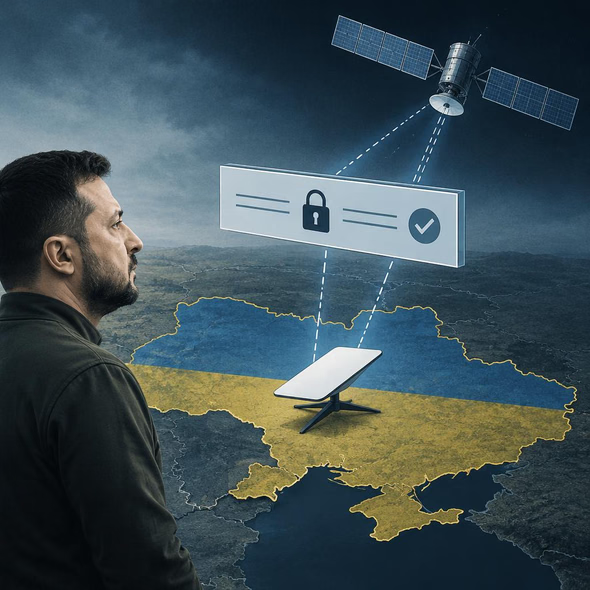
Ukraine’s appeal exposes a distinction between having communications equipment and having authorization to use the service as needed. The accountability test is who controls the relevant settings, what limits that authority, and who can approve a change.
Ukrainian President Volodymyr Zelensky has urged the US and Elon Musk to lift restrictions on Starlink. The BBC reported his appeal on November 15. Zelensky says slowed internet service makes Russian attacks harder to stop in Ukraine.
The documented description here is limited to slowed service. The available BBC summary does not identify the technical mechanism, the affected uses, or who ordered the restrictions. Starlink is operated by SpaceX, but identifying the operator does not establish who authorized this particular limit.
Zelensky’s account supplies the claimed consequence: greater difficulty stopping attacks. The summary provides no independent measurement of that effect. It does not establish particular battlefield losses. Those distinctions matter because the urgency of his request and the evidence needed to assess its precise effects are separate questions.
The operational problem is nevertheless clear enough to examine. A communications system can possess technical capacity that a user lacks permission to employ. Buying equipment or planning around a connection does not settle the rules governing access. The defense plan has a service administrator.
Restrictions can have legitimate purposes. Safety obligations, legal limits, or efforts to prevent unauthorized use could justify controls in principle; the available summary establishes none of those explanations in this case. Accountability requires identifying the applicable rationale rather than assuming either arbitrary obstruction or unavoidable necessity.
Zelensky has addressed both Washington and Musk. That appeal does not establish their respective legal powers, contractual obligations, or approval procedures. A useful response would identify the restriction, explain its purpose, and name the authority that can approve an exception. General support for Ukraine would not answer those operational questions.
SpaceX can change settings within the Starlink service it operates. Whether lifting these restrictions also requires US authorization remains unresolved in the available account. The BBC summary records Zelensky’s request, not a public commitment by SpaceX, Musk, or the US to lift the restrictions. The next consequential response is a named decision-maker accepting or refusing that request and explaining the authority behind the decision.
Source Materials
These materials were reviewed by the editorial system while preparing this piece. Muerte.casa may interpret, satirize, reframe, or disagree with them.
- Zelensky urges US and Musk to lift Starlink restrictions and be on 'right side of history' BBC · November 15, 2026 · Primary signal · Direct source
How did this story land?
This may be changed as you like.