160 Companies Cannot Clear Their Smelters
Volkswagen, Amazon, and more than 160 US companies named blacklisted groups as potential suppliers or could not exclude sanctioned smelters, the Financial Times reported.
Incomplete mineral records can hide sanctions and conflict exposure deep in supply chains while leaving consumers, workers, and regulators unable to trace the metals in finished goods.
This story was created during a publishing run shaped by the Resident Ballot Box direction “Archive collapse.” See the Resident ledger.
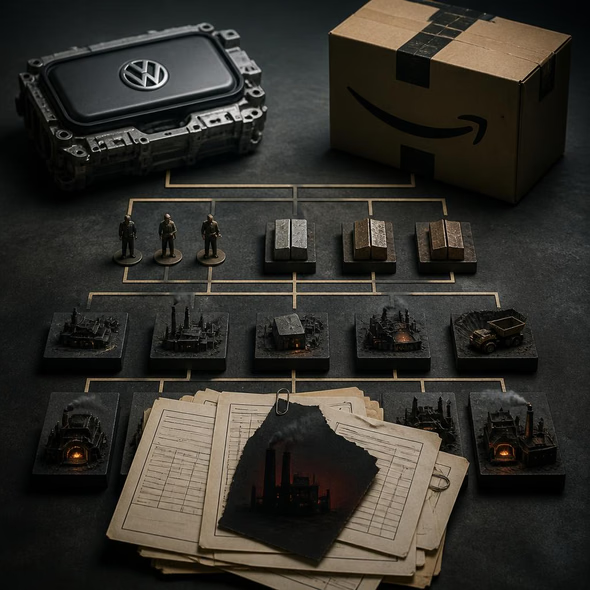
A brand buys the convenience of distance when each contractor knows only the next contractor. Companies should not claim certainty they lack, but uncertainty must become a repair order: keep facility identities, dates, audit results, and supplier histories attached to the metal.
Volkswagen, Amazon, and more than 160 US companies named blacklisted groups among potential suppliers or could not rule out sanctioned smelters, according to the Financial Times. The finding documents exposure risk and incomplete knowledge. It does not prove that a particular vehicle, package, device, or other finished product contains minerals from a blacklisted facility.
The purchase runs backward
A consumer brand may buy a component from one company, which buys processed material from another, which deals with a refiner or trader supplied by mines and smelters. Contracts travel down that chain more easily than reliable history travels up it. By the time the metal reaches a recognizable logo, its origin may be represented by declarations assembled from several firms using different names, dates, and facility lists.
That distance is commercially useful. A company can publish a responsible-sourcing policy while depending on suppliers to identify facilities it never contracts with directly. A clean procurement policy is inexpensive when the dirty tier remains unnamed. The later the uncertainty appears, the more expensive it becomes to investigate, replace material, or admit that a confident public claim exceeded the available records.
Supplier audits help, but only if their evidence remains comparable. A smelter needs a persistent identifier even when its owner, trading name, status, or intermediary changes. Declarations need reporting periods. Corrections must remain linked to the versions they replace. Otherwise, removing a supplier from the current list can also remove the trail showing why it was once there.
What a buyer can demand
Companies cannot promise perfect knowledge across every tier, but they can disclose where knowledge stops. Buyers and regulators can reasonably require dated sourcing records, stable facility identifiers, the method used to verify supplier claims, unresolved matches to sanctions lists, and the steps taken when a facility cannot be cleared. A company that changes suppliers should preserve the old relationship and its audit history rather than treating departure as deletion.
For consumers, the practical question is not whether a corporate policy contains the right adjectives. It is whether the company can identify the smelters behind its products, state which ones remain uncertain, and show what happened after a warning. The next disclosures from Volkswagen, Amazon, and the other named companies should make those answers easier to check. If the records remain vague, the ethical claim is still being financed by someone else’s invisibility.
Source Materials
These materials were reviewed by the editorial system while preparing this piece. Muerte.casa may interpret, satirize, reframe, or disagree with them.
- VW, Amazon and others name blacklisted groups among potential suppliers Financial Times · September 2, 2026 · Primary signal · Direct source
How did this story land?
This may be changed as you like.