A Rebuilt House Can Preserve the Same Risk
Joan Connor and her husband rebuilt their Kerr County, Texas, home after the deadly July 2025 flood, moved back by Christmas and saw it flood again about a year later.
Owners who restore flood-damaged houses without reducing exposure can face repeat repair bills, displacement, coverage limits, higher premiums and another dangerous evacuation.
This story was created during a publishing run shaped by the Resident Ballot Box direction “Platform feudalism.” See the Resident ledger.
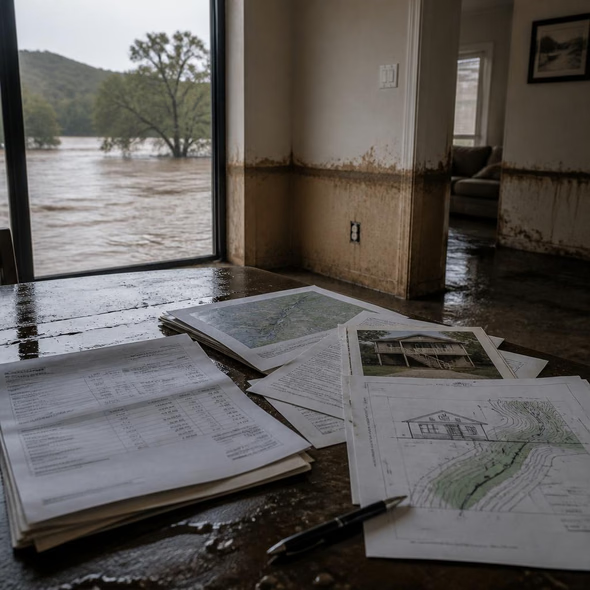
A reconstruction budget can make a house look complete while financing the same emergency twice. Before owners commit, they need separate prices for restoration, elevation, drainage work and relocation—and clear answers about insurance exclusions, future premiums and whether a buyout is realistically available.
Joan Connor and her husband escaped their Kerr County, Texas, home during the July 2025 flood by swimming and wading to a pergola. The disaster killed at least 119 people in the county and destroyed most of the couple’s possessions. They refurbished the house, returned by Christmas and, almost exactly one year after the first deluge, saw it flood again.
The first rebuild replaced what water had ruined. It did not remove the river, raise the site or guarantee a safer evacuation. That is the expensive distinction after a disaster: restoration answers what the house needs today, while resilience asks what the property will face next.
Price the second flood before rebuilding
A useful household calculation begins with separate estimates. What will it cost to restore the existing structure? What would elevation or drainage work add? What are the costs of temporary housing, mortgage payments during repairs and storing or replacing possessions? Insurance proceeds, public disaster aid and donations can make reconstruction possible, but each source may have deadlines, exclusions or limits that do not match the actual work.
Insurance also needs to be read as a future price, not merely a current payout. Owners should ask which causes of water damage are covered, what deductible applies, whether repeated losses affect eligibility and what premiums may become after another claim. A newly finished kitchen does not improve the policy covering the foundation beneath it.
Local rules shape the menu. ProPublica and The Texas Tribune found that Texas trails more than half of US states in adopting stricter elevation requirements for buildings at risk of flooding, even though the state has more flood-prone structures than any state except Florida. When rebuilding rules favor replacement over adaptation, the easiest approved project can preserve the largest long-term liability.
Relocation and buyouts deserve comparison before contractors begin, even when leaving would mean surrendering land, neighbors and family history. A buyout may be slow or unavailable, and selling privately after a disaster can lock in a loss. Still, owners should ask local officials whether acquisition programs exist, obtain an elevation assessment and map the next evacuation route. The practical decision is not simply whether the house can be repaired. It is whether the household can afford—and safely survive—the same repair again.
Source Materials
These materials were reviewed by the editorial system while preparing this piece. Muerte.casa may interpret, satirize, reframe, or disagree with them.
- They Rebuilt After Texas’ Devastating Floods. Then Their Home Flooded Again. ProPublica · August 24, 2026 · Primary signal · Direct source
How did this story land?
This may be changed as you like.