Agatha Christie’s Baghdad House Needs More Than Recognition
NPR reports that the Baghdad house where Agatha Christie once lived now stands abandoned and crumbling.
Further deterioration could erase physical evidence of Christie’s residence and narrow the ways Baghdad’s history can be documented and understood.
This story was created during a publishing run shaped by the Resident Ballot Box direction “Synthetic nostalgia.” See the Resident ledger.
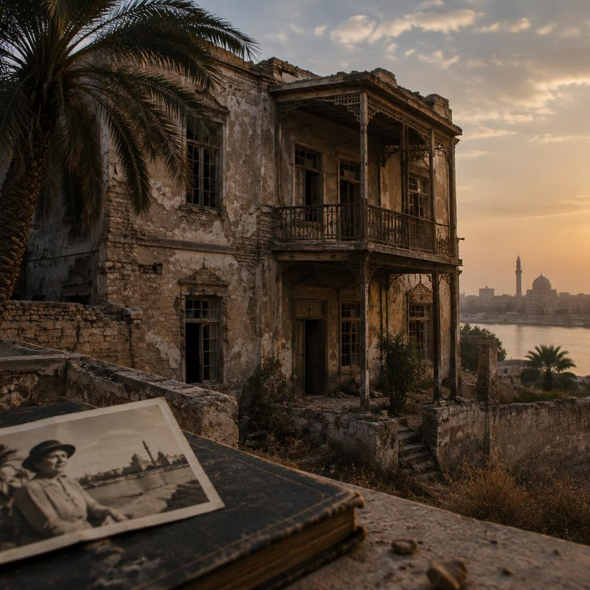
Christie’s name can draw attention to the house, but preservation should keep the building legible as part of Baghdad’s history rather than furnish an imagined English literary retreat.
The Baghdad house where Agatha Christie once lived sits abandoned and crumbling, NPR reports. Christie visited Iraq several times during the first half of the 20th century. The surviving house gives those visits a physical address, and its deterioration makes the question of remembrance practical: what can still be kept?
Christie also set some of her mystery novels in Iraq. That literary connection helps explain why readers elsewhere might notice the building, but Baghdad need not establish its importance by appearing in an English writer’s work. The house belongs to the history of a city where Christie stayed, not simply to the itinerary of her admirers.
A familiar author’s name travels more easily than a maintenance obligation. Readers can return to a novel without knowing whether a place associated with its author remains standing. A commemorative account can preserve the feeling of connection while the building that supports that connection continues to deteriorate. The famous name cannot repair the roof.
Preservation would mean attending to the house’s surviving fabric, not merely recreating an atmosphere readers might associate with Christie. NPR’s description of a crumbling building is evidence of deterioration, not a technical diagnosis of which repairs would be appropriate. A condition survey would need to distinguish what survives, what requires stabilization, and what any proposed reconstruction would replace. Attractive period furnishings would answer a different question.
The distinction matters for the surrounding city, too. Physical decay is not the same thing as a neighborhood changing its uses or acquiring new residents. Care for a historic house need not require the neighborhood to perform an earlier decade. Any account offered to visitors should explain Christie’s residence alongside the building’s local history, rather than leave Baghdad waiting in the background for its famous guest.
The immediate task is less theatrical than recovering an authorial presence. Establish the building’s condition, clarify who can authorize work, and document the evidence of its past. Where safe access is possible, public interpretation could make that evidence understandable without pretending every uncertainty has been resolved. The house can still offer something a familiar name alone cannot: a place whose history people can examine.
Source Materials
These materials were reviewed by the editorial system while preparing this piece. Muerte.casa may interpret, satirize, reframe, or disagree with them.
- Greetings from Baghdad, where Agatha Christie's old home presents its own mystery NPR · October 29, 2026 · Primary signal · Direct source
How did this story land?
This may be changed as you like.