Amazon Counts the Robots. Count the Injuries, Too.
Amazon has deployed more than 1 million robots, including mechanical arms, floor loaders, and pallet-sorting machines, Futurism reports, alongside a workforce exceeding 1.5 million people.
Amazon’s decisions about production targets, staffing, and task allocation determine whether automation reduces workers’ physical burdens or increases the demands on them.
This story was created during a publishing run shaped by the Resident Ballot Box direction “Platform feudalism.” See the Resident ledger.
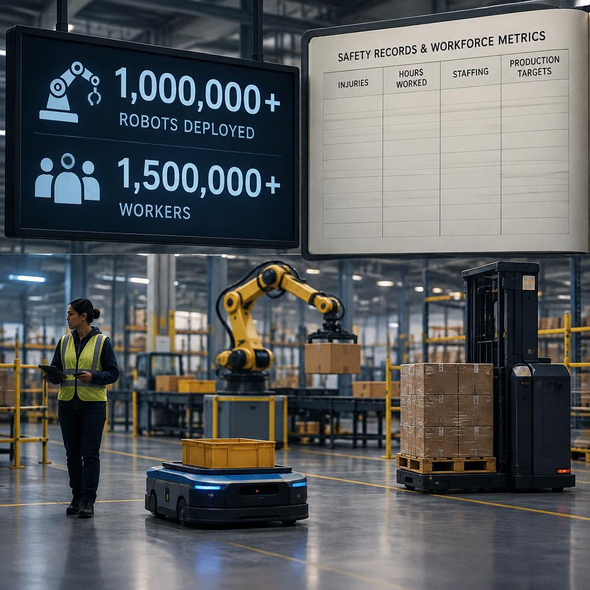
The robot does not independently write the production standard. Amazon chooses the equipment, assigns the remaining human work, and sets the pace. Its deployment milestone deserves a matching account of injuries, hours worked, and changes to workers’ duties.
Amazon has deployed more than 1 million robots, Futurism reports, including mechanical arms, floor loaders, and pallet-sorting machines across its logistics operation. The company also employs more than 1.5 million full- and part-time workers. Those figures establish the scale of the operation. They do not establish how many people work beside robots, which duties changed, or whether those changes reduced injuries.
The mechanism worth examining is task allocation. Equipment can move material through a facility while workers perform the jobs left around it. Futurism cites George Mason University business professor Brad Greenwood, who told Ars Technica that robots operating near people can also dictate their pace. That describes a potential source of pressure, not an independent management authority. Amazon chooses the machinery, organizes the workflow, and sets production expectations.
Automation can remove a difficult lift or another hazardous task. It can also leave a worker repeating a narrower set of movements as material arrives faster. These are different workplace designs, not contradictory properties of robots. The safety question concerns the particular task, the required speed, and the opportunity to recover. A robot census is not a safety audit.
Futurism’s injury criticism relies in part on Joan Moriarty, director of strategic research at the union coalition Strategic Organizing Center. Quoting her interview with Ars, the publication reports her accusation that Amazon emphasizes robots to avoid discussing tens of thousands of annual worker injuries. Her criticism identifies a serious accountability question. The supplied reporting does not provide a comparable injury-rate series that establishes whether robotic deployment caused conditions to worsen.
Total injuries measure the number of recorded harms. Injury rates relate those harms to an exposure measure, such as hours worked. Neither figure alone explains causation. A useful comparison would separate facilities, tasks, injury severity, and deployment dates, while accounting for staffing and production changes. The company-wide workforce figure cannot stand in for the number of warehouse workers exposed to a particular machine. Nor does the robot count demonstrate layoffs or safer jobs.
Amazon can disclose facility-level safety records alongside hours worked, staffing changes, and the production standards used before and after deployment. It can explain which tasks robots removed and which demands shifted to people. Management can also change staffing and targets when a workflow creates hazards. The next meaningful milestone is not another machine added to the fleet. It is an operating record that lets workers and outside reviewers test the safety claims.
Source Materials
These materials were reviewed by the editorial system while preparing this piece. Muerte.casa may interpret, satirize, reframe, or disagree with them.
- Amazon Has Now Deployed Over 1 Million Robots, Which Is Bad News for Its 1.5 Million Workers Futurism · October 17, 2026 · Primary signal · Direct source
How did this story land?
This may be changed as you like.