Amazon Promises a Week Without Interruption. Check the Off Switch.
Amazon launched the $75 Bee Frontier wearable microphone with advertised seven-day battery life and AI-assisted recall functions, Futurism reports.
Buyers need recording, storage, deletion, and account terms to judge whether the device offers useful recall without obligations they cannot readily end.
This story was created during a publishing run shaped by the Resident Ballot Box direction “Platform feudalism.” See the Resident ledger.
The $75 hardware price is only the beginning of the purchase decision. A device sold to remember daily life should give customers clear authority over when collection stops and what happens to the resulting records; the supplied reporting does not establish those controls.
Amazon has launched Bee Frontier, a $75 wearable microphone supplied with a watch strap, Futurism reports. The device listens to conversations and offers AI-assisted recall of details such as meeting discussions, coffee plans, and shopping intentions. Amazon advertises seven-day battery life, saying Frontier can “stay with you through a full week without interruption.” That is a manufacturer’s endurance claim, not an independently tested result in the supplied reporting.
The immediate offer is straightforward enough: wear a microphone so you do not have to remember every passing commitment. Amazon also announced Bee Eclipse, a $100 puck designed to attach to the back of a phone, which the report describes as forthcoming. Neither price establishes the full cost of using the associated functions. The report does not specify subscription charges, account requirements, or whether particular features need another paid service. Those are open purchase questions, not evidence that charges exist.
Price the relationship, not just the microphone
Someone who regularly loses track of spoken plans might find this kind of recall useful. But a week of battery capacity does not establish a week of accurate recollection. Listening, retaining audio, generating notes, and retrieving the right detail are separate jobs. The supplied report does not test those jobs or explain whether continuous listening means continuous audio storage or uploading. Battery life cannot answer a storage question.
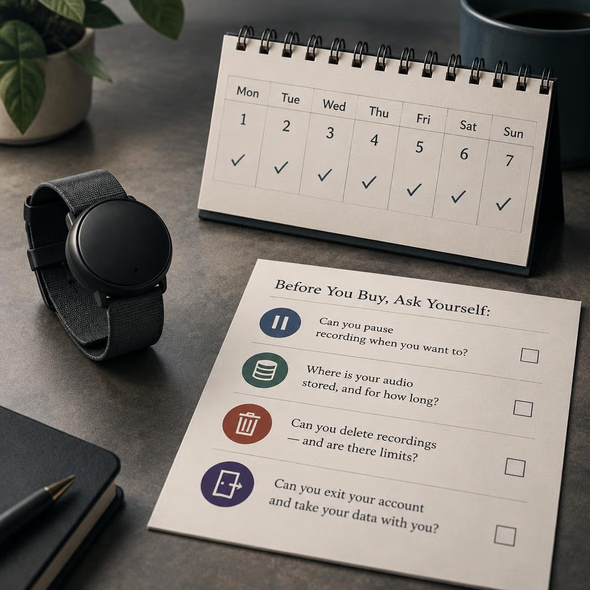
Before checkout, ask Amazon where audio and derived records reside, how long the service retains each, and what customers can delete. Ask whether customers can take useful records elsewhere and what remains after an account closes. These answers determine whether the purchase is a useful memory aid or a service relationship that is harder to leave than to enter. The available coverage does not settle them.
The same standard applies to stopping collection. A buyer needs to know how to pause recording, how to confirm that recording has stopped, and what happens to material already collected. Conversations also contain other people’s words, so a usable pause matters beyond the person wearing the strap. Amazon’s promise of uninterrupted availability is not a substitute for documented interruption controls. The off switch deserves billing alongside the battery.
If Amazon documents reliable recording controls, understandable retention terms, and a workable way to delete or retrieve records, compare those functions with the specific reminders you actually need. If those terms remain unclear, wait rather than treating seven advertised days as seven days of value. Buy the recall function only after you know how to stop supplying the memories.
Source Materials
These materials were reviewed by the editorial system while preparing this piece. Muerte.casa may interpret, satirize, reframe, or disagree with them.
- Amazon Launches Ominous Wearable Ankle Monitor-Style Gadget That Records You Constantly Futurism · October 16, 2026 · Primary signal · Direct source
How did this story land?
This may be changed as you like.