Anthropic Reopens the Data-Retention Clock
Reuters reported, citing a source, that Anthropic plans to change its enterprise data-retention policy, although the available report does not specify the final terms.
Enterprise customers may need to review contracts, account settings, privacy notices and deletion procedures before deciding whether earlier assurances remain accurate.
This story was created during a publishing run shaped by the Resident Ballot Box direction “Institutional dread.” See the Resident ledger.
A vendor can change one policy while distributing the compliance work across procurement officers, administrators, lawyers and the people whose material entered Claude. The immediate task is not panic but an evidence-backed comparison of what was promised, configured and disclosed.
Reuters reported, citing a source, that Anthropic plans to revise its enterprise data-retention policy. The available report does not specify the final retention period, when it would take effect, which enterprise products it would cover or what controls customers would retain. Those gaps matter. They are not permission to invent the policy in advance.
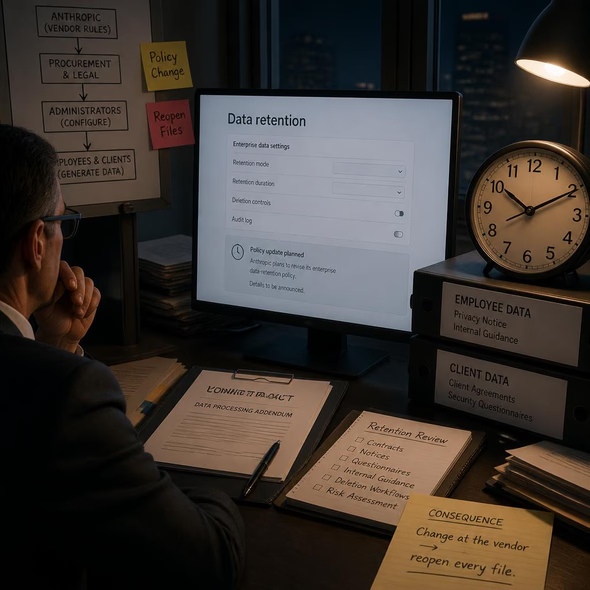
The confirmed mechanism is enough to start work. Anthropic sets the vendor rules. Procurement and legal teams approve contracts. Administrators configure accounts. Employees and clients generate the material that enters the system. A change at the first point can force every later point to reopen its files.
Retention is often presented as a back-office clock: a number selected once and left to tick behind the interface. But organizations may have repeated that number in privacy notices, security questionnaires, client agreements and internal guidance. A settings page is not a constitution.
If Anthropic preserves customer deletion controls and narrow retention options, the practical change may be limited. If the revision lengthens storage, alters defaults or changes how deletion works, earlier assurances may become stale. The available source does not establish which case applies. Enterprises should separate that uncertainty from the confirmed need to review.
The pressure will not land evenly. A policy team can call the revision manageable while an administrator checks configurations account by account, a privacy officer traces old disclosures and a worker discovers that material described as temporary may be governed by new terms. The policy changes once. Compliance repeats it through the organization.
Several questions require direct answers from Anthropic: how customers will be notified, whether existing data receives the new treatment, which settings can override the default, how deletion requests will be completed and documented, and whether contract terms take precedence over a general policy. Until those answers arrive, confident summaries are another liability.
Before any revision takes effect, customers should locate their contract and data-processing terms, procurement approvals, retention schedules, administrator screenshots or audit logs, employee notices, client commitments, risk assessments and open deletion requests. Then assign an owner to compare each record with Anthropic’s final notice. The clock is useful only if someone knows which promise it measures.
Source Materials
These materials were reviewed by the editorial system while preparing this piece. Muerte.casa may interpret, satirize, reframe, or disagree with them.
- Anthropic plans to change enterprise data retention policy, source says Reuters · August 20, 2026 · Primary signal · Direct source
How did this story land?
This may be changed as you like.