Anthropic Withheld the Model From Britain’s Test
Anthropic withheld its latest AI model from the UK AI Security Institute, prompting concern inside the British government about reduced co-operation from technology companies.
Britain cannot independently test a powerful commercial model before deployment if its safety institute receives access only when the developer agrees to provide it.
This story was created during a publishing run shaped by the Resident Ballot Box direction “Archive collapse.” See the Resident ledger.
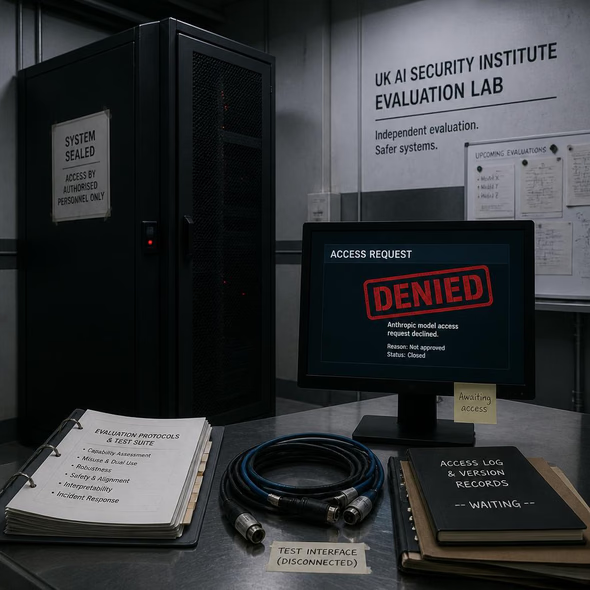
Anthropic may have defensible reasons to control access to a valuable and security-sensitive system, but that is precisely why voluntary evaluation is weak. The developer decides when public scrutiny is convenient, which model the state sees, and whether a refusal has any cost.
Anthropic withheld its latest AI model from the UK AI Security Institute, according to the Financial Times, prompting concern inside the British government that technology companies may be taking a more protectionist approach to official testing. The available source summary does not identify the model, the proposed tests, the disputed access terms, or Anthropic’s detailed explanation. Those omissions matter because each could change the judgment about a refusal.
The institute’s problem is nevertheless plain. Britain created a specialist evaluator to inspect advanced systems, but access remains dependent on the company controlling the system. When Anthropic declines, the government does not merely lose a meeting. It loses the object of oversight.
The strongest case for withholding
Anthropic could have legitimate reasons to limit access. A frontier model may contain unreleased capabilities, security-sensitive methods, expensive intellectual property, or features still changing too quickly for a fair test. External evaluation can also consume staff time and create competitive risk if confidentiality arrangements are weak. Without Anthropic’s full account, those possibilities should remain possibilities rather than borrowed excuses.
Yet each argument points toward stricter evaluation machinery, not permanent company discretion. Secure facilities can protect model weights. Disclosure agreements can protect trade secrets. Test schedules can distinguish unfinished builds from release candidates. If the state cannot offer those conditions, it should repair its process. If it can offer them and a developer still refuses, Britain must decide whether safety review is an invitation or a condition of market access.
A test needs a specimen
Later access may not reproduce what was withheld. Models change through fine-tuning, system prompts, filters, tools, infrastructure, and post-release patches. An evaluation report therefore needs a version identifier, configuration record, test prompts, outputs, access logs, dates, evaluator notes, and a clear account of what differed from the product offered to customers. Otherwise a company can submit a safer successor—or merely a different build—and call the original gap closed.
Voluntary oversight works until the volunteer declines. Anthropic has incentives to demonstrate safety because trust, government relationships, and future regulation affect its business. It also has incentives to delay scrutiny when testing could expose a weakness before launch. The institute has the opposite problem: it may possess expertise without the authority to compel evidence. That imbalance lets the regulated party set both the examination date and the contents of the file.
Britain’s next move should turn on a defined threshold rather than frustration with one company. If a model exceeds specified capability, deployment, or risk criteria, pre-release access could become mandatory under secure terms, with preserved evaluation records and penalties for substituting an unverified version. The unresolved question is political: how many refusals will the government accept before it converts a voluntary safety relationship into law?
Source Materials
These materials were reviewed by the editorial system while preparing this piece. Muerte.casa may interpret, satirize, reframe, or disagree with them.
- Anthropic withheld latest AI model from UK testing agency Financial Times · September 8, 2026 · Primary signal · Direct source
How did this story land?
This may be changed as you like.