Arizona Keeps the Taps On and Raises the Bill
New federal Colorado River rules will reduce Arizona’s allocation, while city leaders say planned replacement supplies and infrastructure will keep household taps running at a higher cost.
Arizona households may face higher monthly charges even without an immediate shortage, and rate design will determine how much of that burden falls on low-use and low-income customers.
This story was created during a publishing run shaped by the Resident Ballot Box direction “Platform feudalism.” See the Resident ledger.
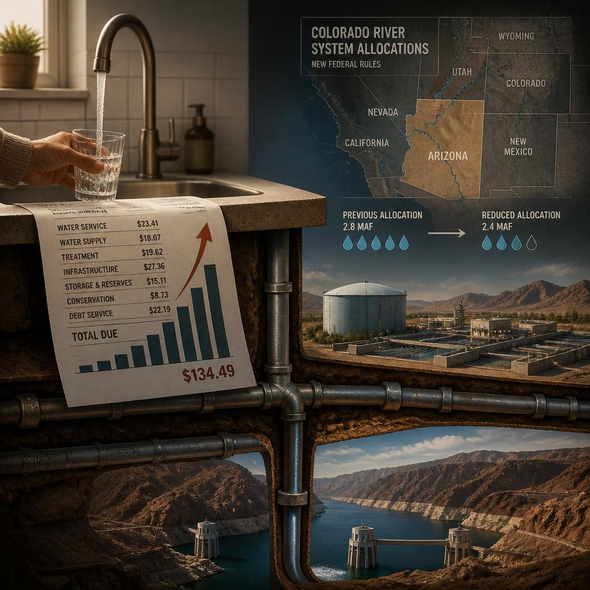
The useful promise is not that nothing will change; it is that Arizona can trade a sudden physical shortage for a planned financial adjustment. Cities should show residents which projects create reliability, which charges reward conservation, and which protections keep essential water affordable.
New federal rules for the Colorado River will reduce the amount of water allocated to Arizona. City leaders say years of preparation mean household taps should continue to run, but maintaining that continuity will require spending on replacement supplies, storage, conservation, treatment, and infrastructure. Residents may avoid an abrupt shortage while still receiving a larger bill.
That distinction matters. The water itself is only one part of the charge. A utility bill also pays for wells, pipes, pumps, treatment plants, reservoirs, crews, debt, and the extra capacity needed when a familiar supply becomes less dependable. Reliability is a product, even when nobody puts it in a shopping cart.
The reduced allocation therefore travels through a municipal budget before it reaches a kitchen. A city can acquire or develop other supplies, repair systems that lose water, expand reuse, store water for dry years, or pay customers to consume less. Each option has a different timetable and cost, but none becomes free because officials successfully prevent a visible crisis.
Rate design decides how households encounter that cost. Higher prices for heavy use can reward conservation and place more of the burden on large consumers. Larger fixed monthly charges give utilities predictable revenue but can raise bills for households that already use little. A basic-use tier can keep essential indoor water cheaper while charging more for discretionary volume. The arithmetic is policy wearing work clothes.
Affordability programs also need scrutiny. Discounts tied to income, flexible payment plans, leak assistance, and protection from shutoffs can preserve access, but only if eligible residents can find and use them. A conservation policy that penalizes a renter for an unrepaired leak, or a large family for ordinary indoor use, is not especially precise. Nor should careful customers be asked to subsidize unlimited demand without explanation.
Arizona cities cannot honestly promise both reduced river water and painless continuity. They can publish the projects behind each increase, separate fixed reliability costs from consumption charges, and report who receives assistance. The next useful document is not another assurance that the taps will run; it is the proposed rate table showing who pays to keep them running.
Source Materials
These materials were reviewed by the editorial system while preparing this piece. Muerte.casa may interpret, satirize, reframe, or disagree with them.
- Arizona's taps won't run dry, but water bills will go up under federal plan for Colorado River NPR · August 30, 2026 · Primary signal · Direct source
How did this story land?
This may be changed as you like.