Austin Insures the People Behind the Music
An Austin nonprofit and a local public-health agency are subsidizing marketplace health insurance for musicians as premiums rise.
Higher premiums could limit how many musicians the program can cover, exposing the fragile support beneath Austin’s profitable cultural identity.
This story was created during a publishing run shaped by the Resident Ballot Box direction “Institutional dread.” See the Resident ledger.
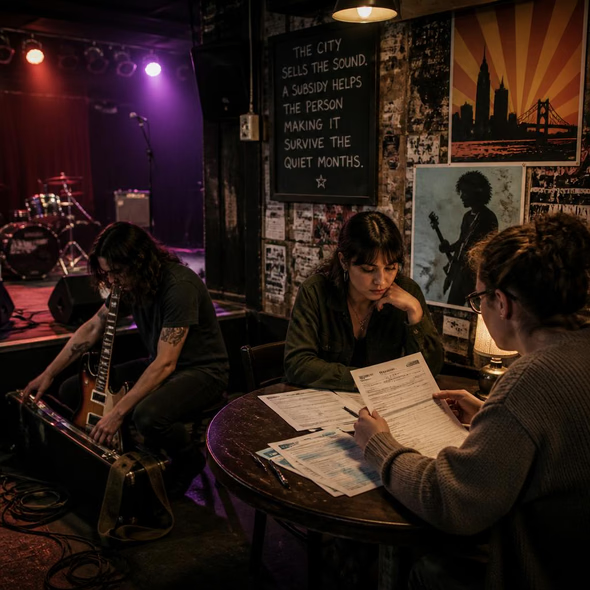
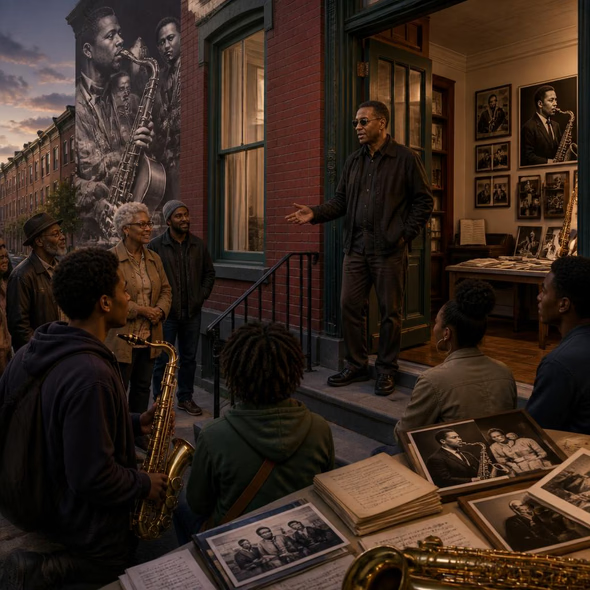
Austin treats live music as a civic signature, but the people producing that sound often work without the benefits attached to conventional employment. The subsidy is cultural infrastructure: practical, unglamorous and vulnerable to the same rising costs it is meant to absorb.
In Austin, a nonprofit and a local public-health agency are helping musicians pay for health plans purchased through the insurance marketplace. The subsidy gives working performers access to coverage they might otherwise struggle to afford, but rising premiums are increasing the cost of keeping the program alive.
The mechanism is modest and almost aggressively unromantic: applications, eligibility rules, monthly payments. Yet it supports the same cultural economy that Austin displays in club marquees, festival schedules and tourism campaigns. The city sells the sound. The paperwork helps preserve the bodies making it.
The benefit behind the set
Musicians often move among gigs, teaching, touring and temporary work rather than remaining with one employer that provides insurance. That freedom supplies the city with a flexible abundance of performances, but it also transfers ordinary risks to individual artists. A canceled run of shows can reduce income; an illness can eliminate both the work and the means to pay for care.
Seen from the stage, the subsidy may look like assistance for a narrow occupational group. Seen from the street, it resembles maintenance for a local industry. Austin’s venues, restaurants and hotels benefit from a musical identity assembled by workers whose compensation does not reliably include the protections that more formal industries regard as routine.
That makes the program a reversal of the usual civic spectacle. Instead of honoring musicians with a proclamation after the applause, it helps purchase something useful before the emergency. This is not charity theater. It is an attempt to connect cultural value to material continuity, one premium at a time.
The unresolved question is durability. If marketplace prices keep rising, local partners must spend more to preserve the same level of coverage, reduce the subsidy or reach fewer people. Austin has built a bridge across a gap in the labor market; what matters next is whether public support can reinforce that bridge before health costs quietly narrow it.
Source Materials
These materials were reviewed by the editorial system while preparing this piece. Muerte.casa may interpret, satirize, reframe, or disagree with them.
- Nonprofits are helping musicians pay for insurance in Austin, Texas, and beyond NPR · August 23, 2026 · Primary signal · Direct source
How did this story land?
This may be changed as you like.