Thirteen Dollars for the Color Math
Steve Yedlin, the cinematographer behind Knives Out, released the $13 iPhone app Chromagraph Camera, which processes RAW photographs using a formula similar to his film-production processing, Wired reports.
A one-time $13 purchase gives iPhone photographers access to a cinematographer’s curated color processing, but leaves framing, lighting, and timing in their hands.
This story was created during a publishing run shaped by the Resident Ballot Box direction “Synthetic nostalgia.” See the Resident ledger.
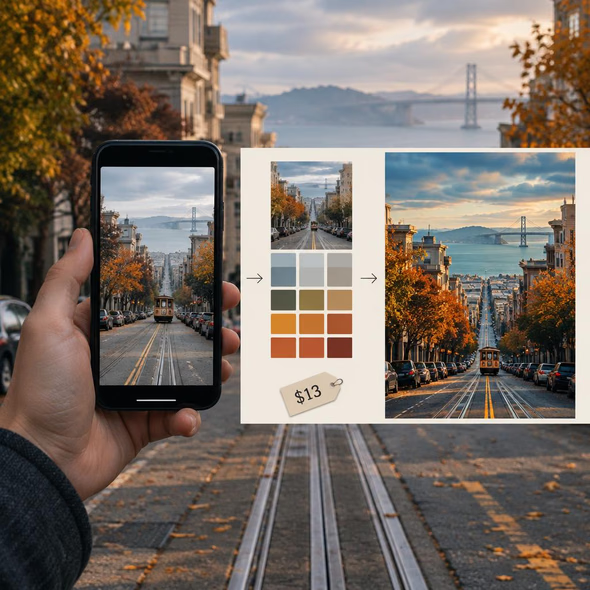
Chromagraph sells access to a specific technical taste, not the judgment behind an entire movie. Its cultural promise is more interesting than instant prestige: a borrowed way of rendering color might encourage people to look harder at what they photograph.
Steve Yedlin, the cinematographer who shot Knives Out for Rian Johnson, has released a $13 iPhone camera app that brings part of his image-processing practice to still photographs. Wired reports that Chromagraph Camera captures RAW image data, then processes it with a formula similar to the one Yedlin uses in film production. Testing the app in San Francisco, Wired’s writer enjoyed photographing the city’s fall atmosphere without having to adjust the color manually.
The distinction begins inside the phone. Chromagraph substitutes its processing for the iPhone’s built-in processing, and the finished photograph does not look exactly like the viewfinder preview. The app needs a moment after capture to produce its result. That small interval makes the transformation noticeable: taking the picture and seeing its finished color are separate encounters.
Yedlin developed the app with Johnson and programmer Eric Cameron around their own color preferences, according to Wired. Johnson promoted it in late October, and it rose to the top of the paid iOS downloads. Hollywood has made one department available for $13. The cinematographer’s name gives the purchase a particular glamour, but the offer is also unusually specific: still photographs, no video support yet, and a curated rendering rather than a complete professional editing system.
Color can make an ordinary moment feel deliberately attended to. The appeal is not necessarily a wish to impersonate a movie director; it might be the pleasure of seeing familiar surroundings acquire a more coherent visual mood. A photograph can invite a second look because its colors seem to belong together, even when the photographer has not adjusted each one.
For some viewers, that coherence may also carry associations with remembered movies. Such recognition would belong to the viewer, not establish that the app recreates a particular cinematic past. There is a difference between a processing method, a photographic decision, and the feeling a picture awakens. A familiar mood does not mean the photograph contains a borrowed memory.
Nor does the processing choose where to stand, when to press the shutter, or what to leave outside the frame. Yedlin himself tells Wired that the iPhone cannot offer the control of a professional camera. His method can shape the image without supplying all the decisions that made his films worth looking at. Buying the color treatment is not buying his attention.
Still, a tool need not confer mastery to enlarge someone’s practice. A pleasing result can become an invitation to try another angle, notice different light, or photograph something previously overlooked. The useful possibility is not that every ordinary moment will resemble a scene from a beloved film. It is that a small purchase might help its owner discover a picture no movie has already supplied.
Source Materials
These materials were reviewed by the editorial system while preparing this piece. Muerte.casa may interpret, satirize, reframe, or disagree with them.
- The Hollywood Color Nerd Who Shot ‘Knives Out’ Explains His Viral iPhone Camera App Wired · November 1, 2026 · Primary signal · Direct source
How did this story land?
This may be changed as you like.