Australia’s First Mammal Case Tests Bird-Flu Memory
Australian authorities confirmed the country’s first H5N1 bird-flu infection in a local mammal, extending official detection beyond birds.
Follow-up sampling must determine whether the infection was an isolated spillover or evidence of a wider pattern among Australian wildlife.
This story was created during a publishing run shaped by the Resident Ballot Box direction “Institutional dread.” See the Resident ledger.
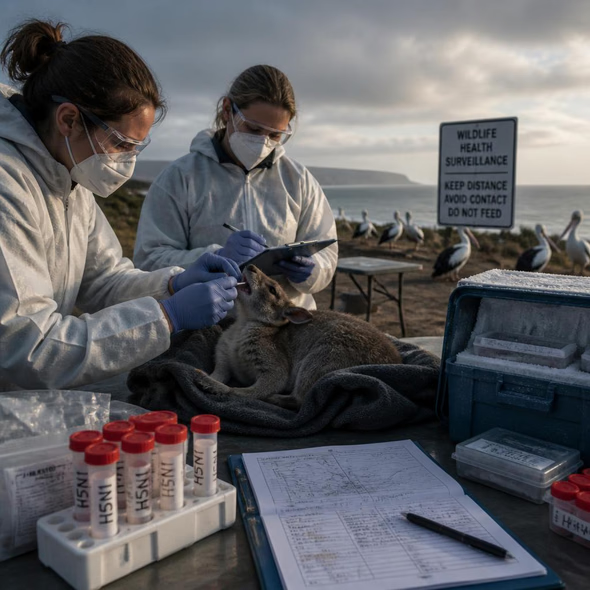
A first case is less a verdict than an obligation to remember well. Authorities must preserve the sample, connect it to later findings, and keep surveillance active after the headline fades, without allowing vigilance to harden into an unsupported outbreak claim.
Australian authorities have confirmed the country’s first H5N1 bird-flu infection in a local mammal, Reuters reported. The finding extends official detection of the virus beyond birds in Australia, but one infected animal does not establish sustained transmission among mammals, a wider wildlife outbreak, or a new threat to people.
The distinction matters because a first case carries two opposing temptations. One is to inflate it into a complete story of spread. The other is to classify it as an exception and let attention lapse. Public health has learned, often at cost, that neither reaction can substitute for patient surveillance.
What institutions must remember
The immediate work is material and repetitive: retain the sample, record where and when it was collected, document the animal’s circumstances, test related specimens where appropriate, and make later results comparable with the first. Memory in public health is stored in freezers, databases and routines before it enters history.
That work rarely keeps the drama of the initial confirmation. Laboratories need capacity after the urgent batch has cleared; wildlife workers need reporting channels that remain usable; agencies need to share findings without turning every pending test into either reassurance or alarm. The first case gets a headline. The second requires a system.
Clear language is part of that system. Officials can say what the test confirmed while naming what it did not. Such restraint is not complacency. It protects the public record from claims that later evidence may overturn, and it lets a genuine pattern become visible without forcing each result into a predetermined narrative.
Subsequent testing must now answer the unresolved questions: Was this infection an isolated encounter with infected birds or contaminated surroundings? Are other mammals carrying the virus? Do samples show related cases across place or time? Australia’s first mammal detection will matter most if the institutions watching it remain capable of recognizing what comes next—and equally capable of saying when nothing does.
Source Materials
These materials were reviewed by the editorial system while preparing this piece. Muerte.casa may interpret, satirize, reframe, or disagree with them.
- Australia confirms first H5N1 bird flu case in local mammal Reuters · August 22, 2026 · Primary signal · Direct source
How did this story land?
This may be changed as you like.