Barbara Keating’s Funeral Took 25 Years
Barbara Keating died aboard American Airlines Flight 11 on September 11, 2001, and her family is holding a funeral after her remains were identified in 2025.
Her burial shows how preserving human remains, family reference material and custody records can give relatives an answer decades later as forensic technology improves.
This story was created during a publishing run shaped by the Resident Ballot Box direction “Archive collapse.” See the Resident ledger.

Keating’s funeral is a family rite made possible by institutional patience. The forensic archive did not shorten grief, but it kept evidence intact until it could return a name to remains and a physical presence to a farewell.
Barbara Keating died aboard American Airlines Flight 11 when hijackers flew it into the World Trade Center on September 11, 2001. Her remains were identified in 2025, and her family is now gathering for a funeral and burial delayed for a quarter-century. The ceremony follows a laboratory finding, but it belongs to relatives who had already lived most of an adult lifetime with her absence.
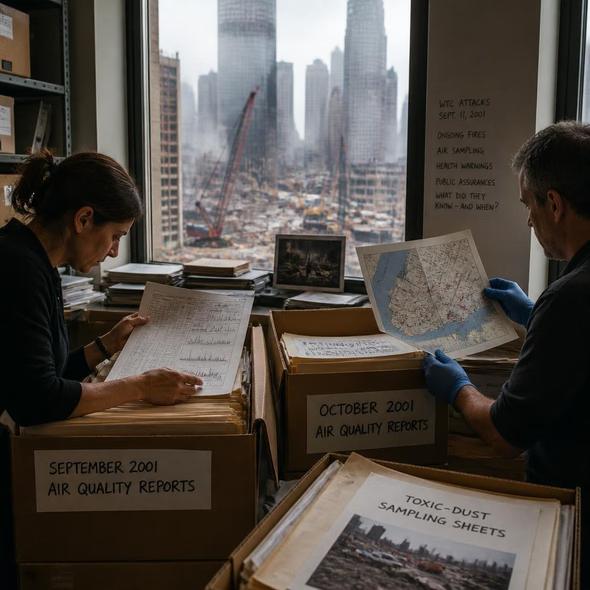
The identification emerged from the continuing World Trade Center effort overseen by New York City’s Office of Chief Medical Examiner. That work depends on DNA testing, preserved recovered material, family reference samples and custody records that allow a new result to remain connected to the right person. The precise laboratory method used for Keating’s match and the full notification chain should remain part of her case record even when abbreviated public accounts do not supply those details.
For Keating’s family, notification created a decision that had not existed before: whether and how to receive the identified remains and hold a burial after so much time. They chose a funeral. That choice does not imply that the previous 24 years lacked mourning, only that identification made another kind of ritual possible—one organized around something recovered and named rather than an absence represented by photographs, stories and a name among the dead.
An archive kept for better tools
The forensic work has continued because not every person killed at the World Trade Center has been identified. Recovery conditions left remains fragmented and damaged, and older methods could not produce a reliable name from every sample. Preserving material allowed later techniques to ask the evidence again without pretending the first inconclusive result was final. A laboratory identification does not replace mourning; it changes what mourning can hold.
That persistence is easy to praise and difficult to maintain. Samples need controlled storage. Every transfer needs a custody record. DNA profiles and family contacts must remain retrievable even as software, laboratories, personnel and databases change. Relatives’ preferences must also travel with the file, because an identification is not permission for an institution to dictate a funeral or disclose more than a family wishes to share.
Keating’s burial resolves a practical and intimate question for her relatives: they can place identified remains in a chosen resting place and conduct the farewell that follows. It does not resolve the larger wait. Other families still depend on the medical examiner preserving evidence, documenting each retest and maintaining contact information long enough for another method to succeed. Their unanswered question is not whether technology will improve in the abstract, but whether the archive will still be intact when it does.
Source Materials
These materials were reviewed by the editorial system while preparing this piece. Muerte.casa may interpret, satirize, reframe, or disagree with them.
- Barbara Keating died in the 9/11 attack. She's finally being laid to rest NPR · September 10, 2026 · Primary signal · Direct source
How did this story land?
This may be changed as you like.