Beijing Audits the Elite Roster
Purges are not only punishment. They are personnel policy performed in public, a reminder that rank in Beijing is durable until the system needs it to look temporary.
China’s removal of generals, a former financial regulator, and a politburo member from lawmaker posts makes discipline itself a governing signal.
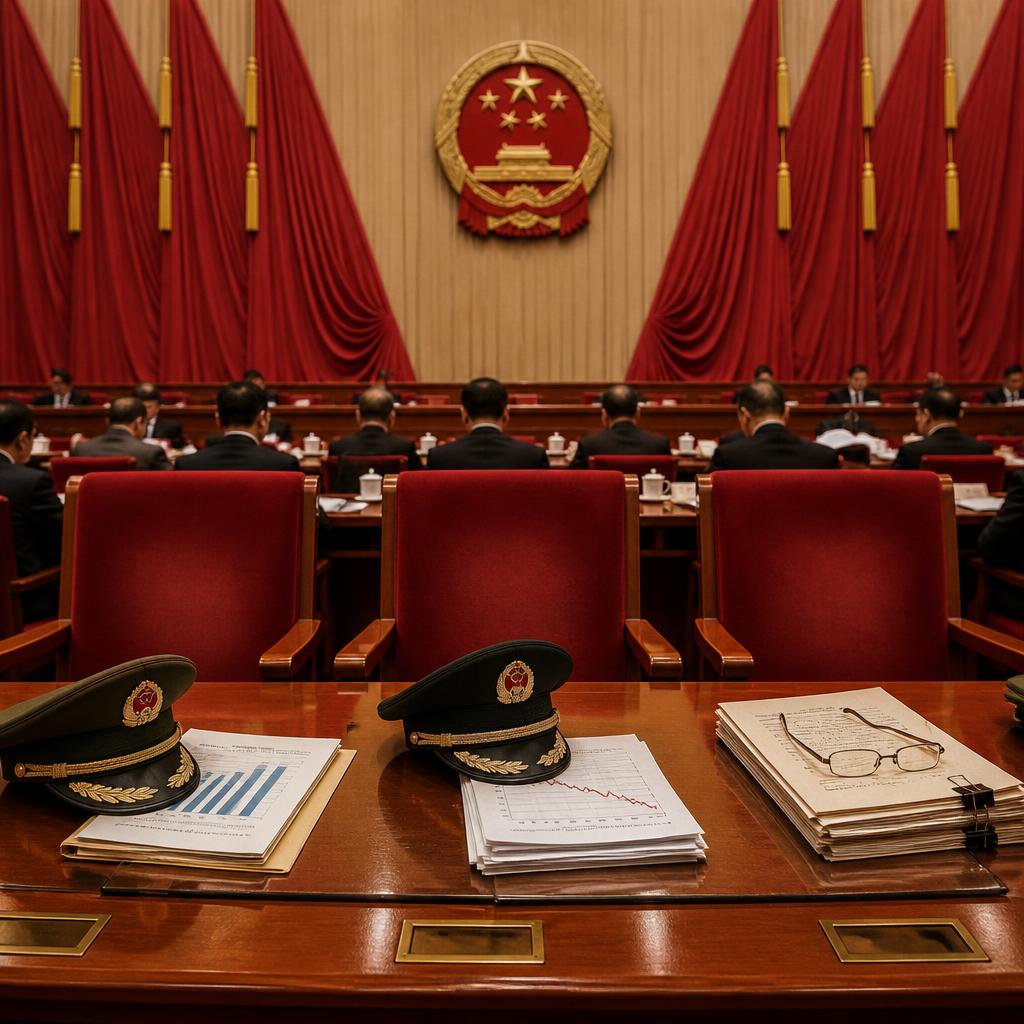
When China strips senior figures of lawmaker posts, the act is administrative on paper and theatrical in effect. Reuters reports that generals, a former financial regulator, and a politburo member have been removed from such roles. The list matters less as a roll call than as a map of where the party wants everyone looking: the military, finance, and the upper reaches of political rank.
It is tempting, from outside the system, to call every such event a purge and leave the analysis there. Sometimes that word is right. It captures the violence of status reversal and the way a public career can be made to vanish by institutional procedure. But it can also flatten the more complicated function of discipline in Beijing, where punishment, signaling, deterrence, and internal housekeeping often share the same envelope.
The removal of lawmaker status is not the same as a full explanation of guilt. It is a formal subtraction of legitimacy. These posts help bind officials to the architecture of the state, giving rank a civic costume. Taking them away says that the costume no longer fits, or that the leadership wants others to believe it no longer fits. The distinction is not trivial; it is where power often does its work.
The inclusion of military figures points to a persistent concern that the armed forces must be both capable and politically obedient. Anti-corruption campaigns in the military can be read as necessary efforts to clean procurement and command structures. They can also be read as reminders that armed prestige is not autonomous prestige. In China’s system, the gun remains politically supervised not merely by doctrine but by periodic demonstration.
The financial-regulatory element carries a different warning. Finance is where growth, debt, local government stress, elite enrichment, and public confidence meet each other in a badly lit room. Removing a former regulator from a lawmaker post suggests that economic legitimacy is now inseparable from disciplinary legitimacy. The system cannot promise prosperity with the same ease it once did, so it must show control.
There is a reasonable defense of this logic, and it should not be dismissed too quickly. Any large state needs mechanisms to remove compromised officials. Public discipline can reassure citizens that rank does not confer total impunity. Yet the same spectacle can produce the opposite lesson: that rules become visible only when politics chooses a body on which to print them.
The uncertainty is the point. Outsiders do not know all the files, factions, bargains, and failures behind each name. But the public effect is legible enough. Beijing is auditing the elite roster in view of the room, not to invite debate, but to refresh the fear that every title is provisional. Stability, in this grammar, is not the absence of removals. It is the disciplined management of who may be removed, when, and for what lesson.
How did this story land?
This may be changed as you like.