Necessity Becomes Alliance Cover
The phrase sounds like judgment. It also works as insulation, moving a national military act into the language of collective strategic hygiene.
When NATO’s chief calls new U.S. strikes on Iran “absolutely necessary,” the alliance is doing more than endorsing force. It is narrowing the room for later dissent.
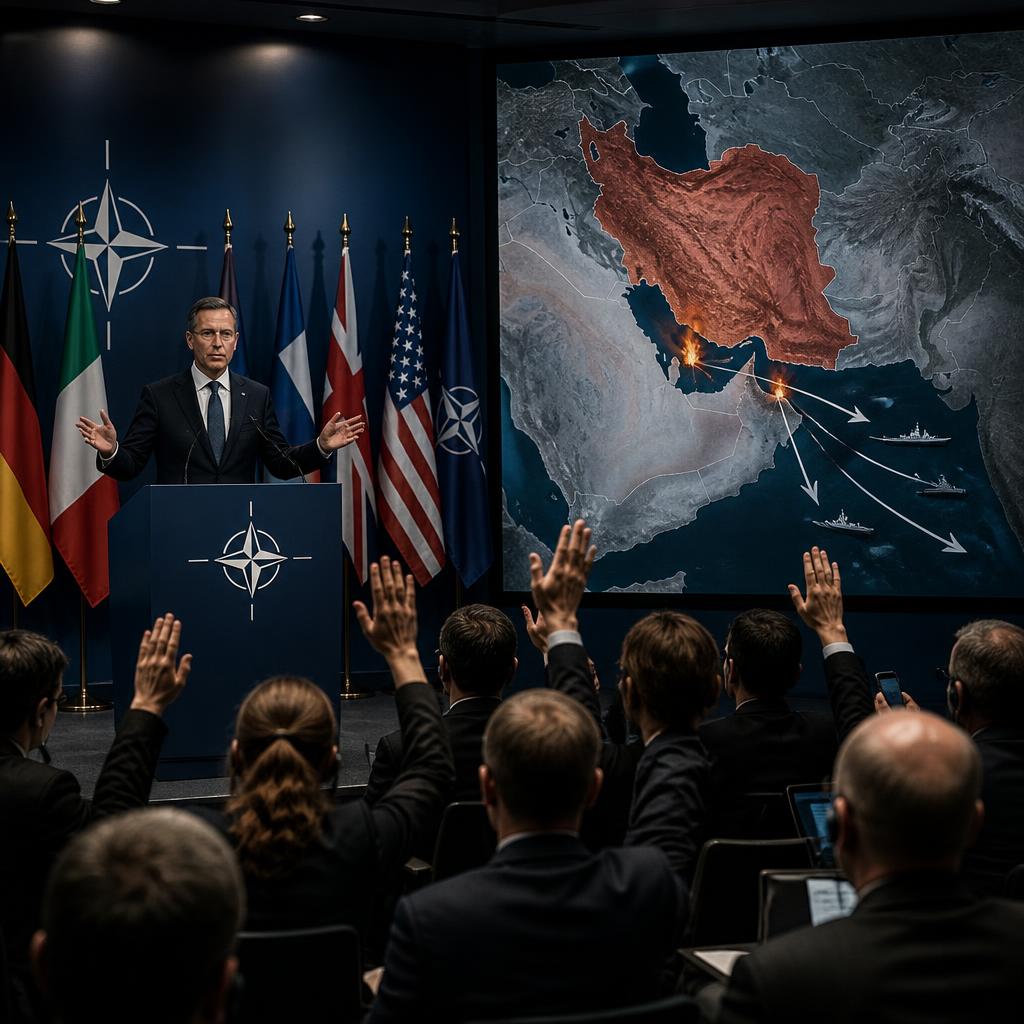
There is a serious case for NATO’s public defense of new U.S. strikes on Iran, and it should not be dismissed too quickly. If Tehran attacked ships in the Strait of Hormuz, as U.S. officials say, then Washington’s allies have an interest in signaling that maritime coercion will not be treated as a manageable local nuisance. Deterrence often depends less on the strike itself than on whether adversaries see a larger coalition standing behind it.
That is the strongest version of the NATO chief’s phrase, “absolutely necessary.” It says the alliance is not letting Iran split American action from European security, Gulf shipping, energy prices, or the credibility of Western warnings. It also gives smaller allies some shelter: they do not have to improvise twenty-seven separate explanations while markets, militaries, and embassies wait for clarity.
The use of necessity
But necessity is never only a description. It is a political solvent. Once an act is called necessary, later doubt begins to sound irresponsible, late, or disloyal. The word narrows the corridor before the next decision is even visible. It can turn a U.S. military choice into alliance hygiene, as if force were not chosen but cleaned into existence by circumstance.
That matters because public endorsement can travel farther than formal authorization. NATO members may not have ordered the strikes. Some may not want escalation with Iran. Yet alliance language can pre-commit them to the next rung: air defense support, intelligence sharing, naval deployments, sanctions enforcement, or diplomatic cover if Iran retaliates against bases, ships, or partners in the Gulf.
Cohesion and its price
The timing adds pressure. AP has described the U.S. action as part of a broader campaign after attacks on ships in the Strait of Hormuz, including an effort to revoke Iran’s ability to openly sell crude oil. Reuters reports the NATO chief’s defense as leaders meet in Turkey. In that setting, unity is not background music. It is the product being made on stage.
Still, cohesion purchased through maximal language can become brittle. If Iran answers asymmetrically, if shipping is further disrupted, or if evidence around the triggering incidents becomes contested, allies will need room to calibrate. A coalition that has already declared necessity may find it harder to say proportionality, pause, or no.
The forecast, then, is conditional. If the strikes restore deterrence quickly, NATO’s language will look like disciplined alignment. If they open a longer exchange, the same language may look like a bridge built too far ahead of consent. Necessity can hold an alliance together. It can also make the next door easier to open than to close.
How did this story land?
This may be changed as you like.