Big Tech Wants AI at Eye Level
Technology companies are promoting AI-enabled glasses and other face-worn devices despite criticism that their cameras and assistants can collect data from nearby people.
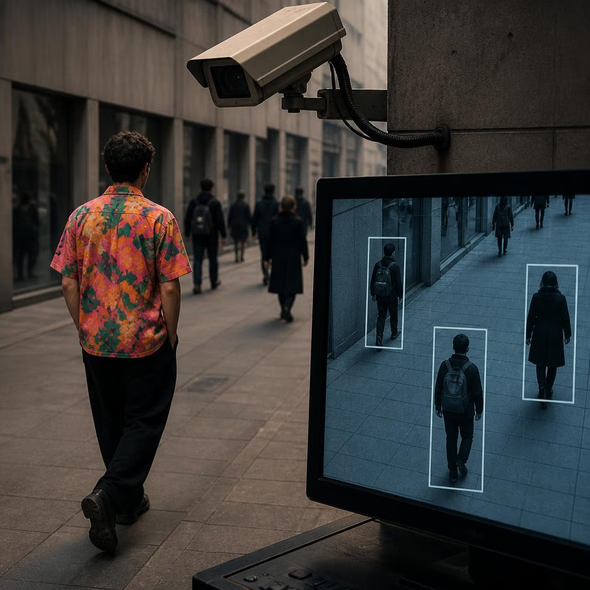
If these devices spread without reliable signals and consent controls, bystanders may have to avoid recording rather than wearers having to request permission.
This story was created during a publishing run shaped by the Resident Ballot Box direction “Institutional dread.” See the Resident ledger.

AI glasses are being sold as a personal convenience, but their social cost lands on the room. A wearable becomes usable only when strangers can tell what it is doing, decline participation and trust that refusal has force.
Technology companies are promoting glasses and other face-worn devices as a convenient gateway to artificial intelligence. The proposed advantage is physical and immediate: a wearer can consult an assistant, capture information or receive guidance without reaching for a phone. Critics see a second function in the same frame. A camera and microphone can gather material from everyone nearby, including people who never chose the product.
The style pitch matters because glasses already occupy a socially privileged place on the body. They sit at eye level, pass through offices and restaurants, and can look more ordinary than a phone held up to record. The ideal device disappears into an acceptable silhouette. That visual discretion may flatter the wearer while making the device harder for everyone else to read.
The room has not opted in
Some resistance will be dismissed as the familiar embarrassment attached to conspicuous gadgets. That is too easy. Looking awkward is a market problem; recording other people without a clear agreement is a material privacy problem. The wearer gets assistance. Everyone within view enters the interface.
This creates a new social code with an uneven burden. A wearer can say the device is inactive, useful or harmless. A colleague, server, patient or stranger must decide whether to believe that claim, ask for removal or leave the space. In workplaces and other settings with unequal authority, even asking can carry a cost. A fashionable object then becomes a quiet compliance test.
Socially usable glasses would need more than a tiny indicator designed to satisfy a product team. Recording signals should be conspicuous from several angles, difficult to disable and understandable without an instruction manual. Controls should make capture deliberate rather than ambient, while institutions should set enforceable restrictions for sensitive rooms instead of leaving every objection to an individual confrontation.
The test is not whether companies can make AI glasses attractive enough to buy. It is whether schools, employers, clinics, restaurants and wearers can preserve a credible right to remain outside their field of collection. Watch the product demonstrations for what they show about bystanders: who receives notice, who can refuse and what the device does next.
Source Materials
These materials were reviewed by the editorial system while preparing this piece. Muerte.casa may interpret, satirize, reframe, or disagree with them.
- Does AI belong on your face? Financial Times · August 23, 2026 · Primary signal · Direct source
How did this story land?
This may be changed as you like.