Cara Builds a Gate After the Scrape
After three major August scrapes targeted Cara’s art library and raised its server costs, founder Jingna Zhang began collaborating on an open-source defense with the person responsible for the first scrape.
Cara’s response could help artists remain publicly visible without making their images, names, titles, and tags effortless raw material for AI datasets and hostile redistribution.
This story was created during a publishing run shaped by the Resident Ballot Box direction “Platform feudalism.” See the Resident ledger.
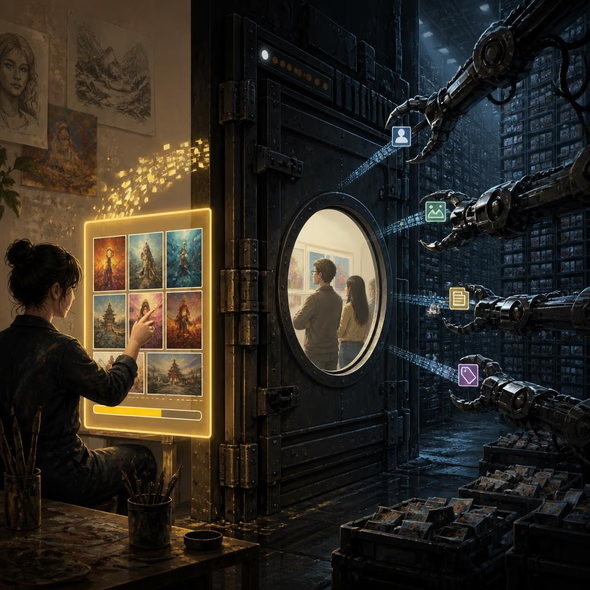
Cara is trying to preserve a cultural distinction that dominant platforms blurred: an artist may invite an audience without inviting extraction. Its uneasy alliance with a former scraper shows that code can slow the quarrying, but durable protection also requires consent to become an enforced norm.
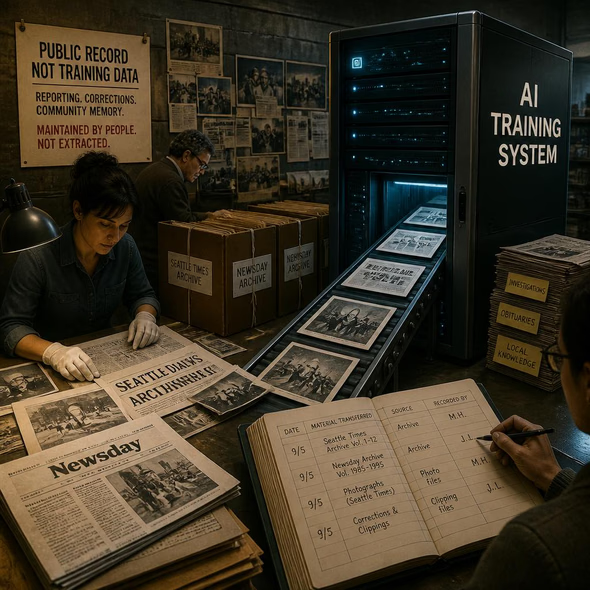
Beginning August 13, Cara endured three major scrapes of the portfolio platform it built for artists who oppose AI training on their work. The first scraper posted a 12-terabyte archive containing about 12 million publicly available works and said the job cost less than $10. Another collected roughly 8.5 million links along with usernames, titles, and tags for upload to Hugging Face. The attacks raised Cara’s server fees, and the person behind the first scrape has since expressed regret and agreed to work with founder Jingna Zhang on an open-source defensive tool.
The scale clarifies the dispute. An artist sees a portfolio as a sequence of choices: which image to show, under which name, beside what title, for which audience. A scraper sees rows. Once the work becomes a dataset, the image and its attribution can travel separately, while the artist pays for exposure with a loss of context and control.
Cara exists because larger platforms made that payment feel compulsory. Artists who left Instagram encountered a platform where Meta explicitly makes content available for AI training. Cara instead filters AI images and offers Glaze, which is designed to interfere with systems attempting to mimic an artist’s style. Its promise is modest but culturally important: public does not have to mean ownerless.
A gate made from an uneasy truce
The collaboration with the first scraper is not a tidy redemption story. The same practical knowledge that made extraction cheap may now help Cara identify requests, close vulnerabilities, or distribute defenses. That knowledge is useful. Regret does not restore the copied files or erase the invitation that a triumphant archive extended to copycats.
Technical defenses also carry costs. Rate limits, authentication, masking tools, and monitoring can burden a small platform and make ordinary browsing less fluid. Determined scrapers can adapt. Yet this is how a norm acquires material form: not through a banner asking machines to behave, but through infrastructure that makes refusal harder to ignore.
No gate can turn culture into a vault without also starving it of visitors. Cara’s harder task is to preserve the window while securing the frame. What matters next is whether its open-source tool reduces mass extraction without hiding artists from the audiences they came to find—and whether larger platforms adopt the consent standard they once treated as technically inconvenient.
Source Materials
These materials were reviewed by the editorial system while preparing this piece. Muerte.casa may interpret, satirize, reframe, or disagree with them.
- He Scraped All of Their Art for AI. Now He’s Collaborating on a Tool to Help Them Wired · August 28, 2026 · Primary signal · Direct source
How did this story land?
This may be changed as you like.