Is the Chatbot Helping You Shop or Selling You?
Wired reports that OpenAI has more than 100,000 advertisers in ChatGPT and Google has expanded AI Mode ads, while Anthropic maintains its pledge to keep Claude ad-free.
Shoppers need to identify paid placements before using chatbot recommendations to choose products and commit money.
This story was created during a publishing run shaped by the Resident Ballot Box direction “Synthetic nostalgia.” See the Resident ledger.
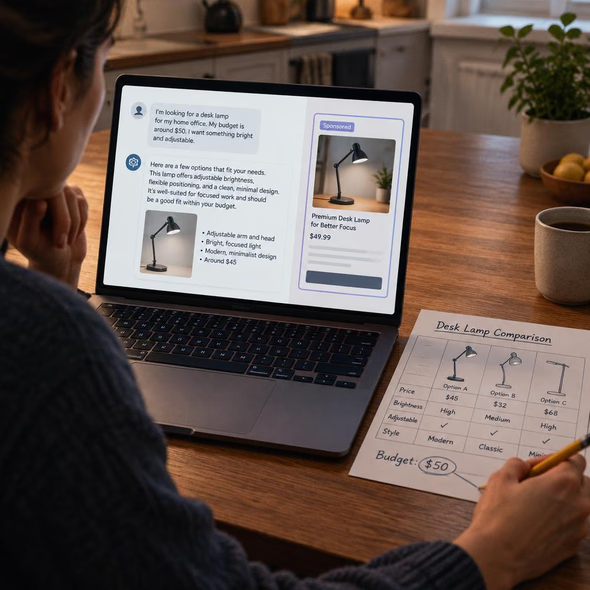
The useful consumer test is not whether a chatbot sounds independent or carries an ad-free badge. It is whether shoppers can identify sponsorship, inspect the recommendation’s evidence, compare alternatives, and decline the offer without abandoning their own requirements.
OpenAI has more than 100,000 customers advertising in ChatGPT since ads debuted there in February, Wired reports. Google last week expanded advertising in its search chatbot, AI Mode, to 10 more countries beyond the United States. Anthropic, meanwhile, maintains its pledge to keep Claude ad-free. The shopping conversation now comes with different commercial arrangements depending on which service answers.
The business extends beyond the largest platforms. San Francisco startup Koah Labs markets advertising across more than 200 apps, including DeepAI and Liner, and works with brands including Hims and UrbanStems, according to Wired. These arrangements give advertisers access to people using AI tools. They do not, by themselves, establish that advertisers control the tools’ answers. An advertisement beside advice and a payment that changes advice are different arrangements. Consumers need providers to make the boundary inspectable.
Consider a shopper asking for a product recommendation. The first task is defining requirements, such as budget and intended use. The next is comparing the answer with the evidence behind it. A sponsored offer introduces another decision: whether the offer fits those requirements or merely occupies a convenient position. The helpful assistant has another customer. That does not make the advertised product unsuitable, but sponsorship is not a reason to rank it first.
Separate relevance from independence
Koah CEO Nic Baird tells Wired that ads composed partly by AI generate twice the clicks of fully human-written ads. That is a vendor’s account, not an independent finding about purchase quality. Baird suggests AI-written advertising may fit more naturally beside generated answers. A smoother fit can make an ad less disruptive. It also increases the importance of a disclosure that does not require the reader to detect a change in writing style.
Conversational familiarity adds another complication. An answer that responds to the shopper’s earlier constraints can resemble advice from someone who knows the household. That resemblance does not establish deception or prove that users misunderstand sponsorship. It does mean that a friendly tone cannot do the work of a clear commercial boundary. Personalized phrasing is not evidence that a recommendation survived an independent comparison.
Claude’s ad-free pledge removes one commercial arrangement from consideration. It does not certify the accuracy, completeness, or suitability of any particular answer. Advertising can help finance expensive responses, as Wired notes, but that funding argument does not answer the shopper’s questions either. Both an ad-supported service and an ad-free service still need to provide useful evidence.
If a recommendation would commit meaningful money, compare it with independent sources before purchasing. Inspect the service’s documented sponsorship disclosures and the offer’s actual price, conditions, and exclusions. If you cannot tell which material is paid placement, do not treat the conversation as an independent shortlist. Keep your requirements fixed while you compare sellers.
Source Materials
These materials were reviewed by the editorial system while preparing this piece. Muerte.casa may interpret, satirize, reframe, or disagree with them.
- Ads in Chatbots Have Arrived. Here’s What’s Working—and What’s Not Wired · November 5, 2026 · Primary signal · Direct source
How did this story land?
This may be changed as you like.