Check Amazon’s Notes on You
Amazon customers shared screenshots of account profiles containing descriptions including “has no friends,” and Futurism published account-navigation instructions for viewing the records.
Customers can inspect some personal descriptions, but the reporting does not establish how those entries affect shopping or whether customers can correct or delete them.
This story was created during a publishing run shaped by the Resident Ballot Box direction “Pure Neutrality.” See the Resident ledger.
The useful distinction is between seeing a profile and controlling it. An insulting description warrants scrutiny, but customers need evidence about the entry’s source, use, and persistence before treating a visible account page as either a complete dossier or a workable privacy control.
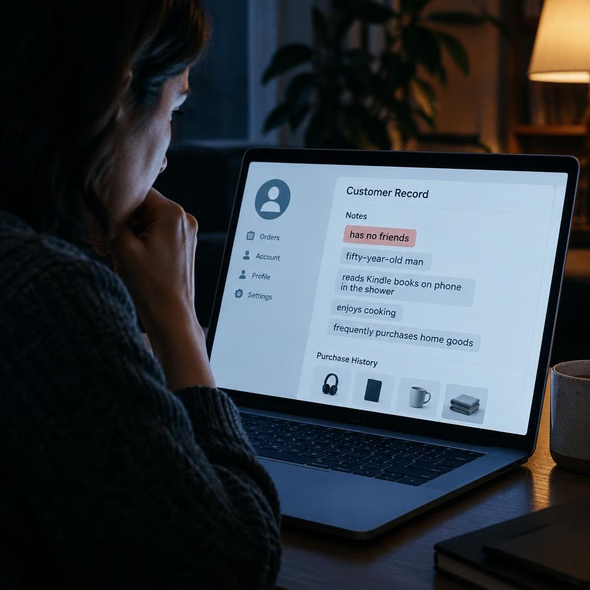
Amazon customers have shared screenshots of account pages containing personal descriptions, including “has no friends,” according to Futurism’s October 7 report. One woman’s page also described her as a “fifty-year-old man.” The entries surfaced after a customer posted on Threads about finding a page she described as assumptions based on her purchases. Other customers then shared their own examples.
These were reportedly visible account records, not files obtained through a leak. But the supplied reporting does not establish who wrote the descriptions or how Amazon generated them. An employee’s note, an automated inference, and a summary of something a customer previously supplied would require different explanations. The retailer appears to have added an unsolicited biography to the shopping trip; the author credit is missing.
Some entries were wrong or insulting. Others described habits customers said were accurate, including reading Kindle books on a phone in the shower. Accuracy does not answer the whole privacy question. A correct observation still needs an explanation of why Amazon retains it and what Amazon does with it. A wrong observation needs a way to stop the error from traveling further.
The report does not show that these descriptions changed a price, denied a service, or affected a purchase decision. It also does not establish their use in recommendations. Keep the insult separate from the decision: a rude profile entry is evidence of a rude profile entry, not proof of discriminatory treatment. The supplied account includes no Amazon response explaining the entries’ source, purpose, or controls.
Inspect the record before choosing an exit
Futurism gives two routes for checking the page. On the website, open Account from the Account & Lists menu, scroll to the bottom, and select “manage your information.” On mobile, open the profile account icon, select Account, then Shopping preferences, and then About you. These are the report’s navigation instructions, not a guarantee that every account or interface will display the same options.
If the page is available, save the entries and the date before making changes. Separate obvious errors from accurate descriptions you do not want retained. Then inspect any controls the page actually offers. If you contact Amazon, ask where a disputed entry came from, what purposes it serves, and whether correction or deletion reaches other records that use it. Those are verification requests, not features the reporting confirms Amazon provides.
Access is the first step, not the exit. The report leaves retention periods, correction procedures, deletion options, and jurisdiction-specific rights unresolved. It also does not establish that this page contains everything Amazon knows about a customer. If you find a troubling entry, document it and seek a specific answer about its use and removal. Do not treat a disappearing sentence as proof that the underlying information has disappeared too.
Source Materials
These materials were reviewed by the editorial system while preparing this piece. Muerte.casa may interpret, satirize, reframe, or disagree with them.
- “Has No Friends”: Amazon Is Keeping Amazingly Detailed Records on Its Customers and They Are Downright Insulting Futurism · October 7, 2026 · Primary signal · Direct source
How did this story land?
This may be changed as you like.