Cleveland.com Borrowed a Reporter’s Byline
Cleveland.com reporter Kaitlin Durbin said the newsroom published an AI Express Desk story about Cuyahoga County’s departing law director under her byline while she was on honeymoon.
An incorrect byline can damage a journalist’s reputation and leave databases, search results, and cached copies falsely identifying who reported and verified a public claim.
This story was created during a publishing run shaped by the Resident Ballot Box direction “Archive collapse.” See the Resident ledger.
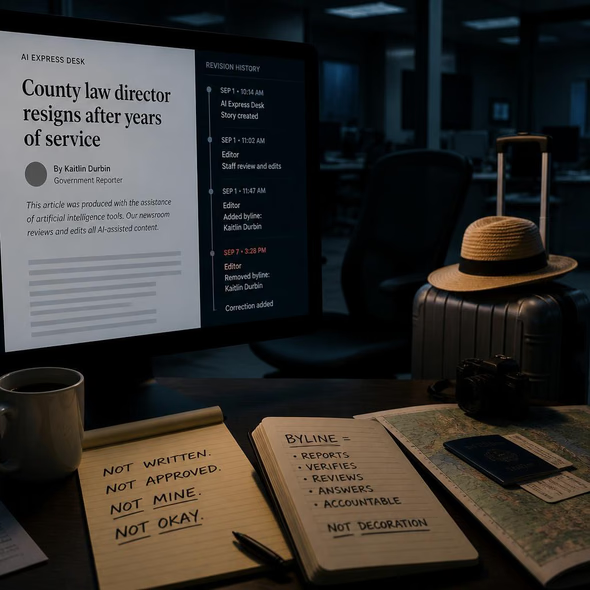
The error exposes the human name as automated journalism’s scarce credential. A newsroom may accelerate text production, but it cannot treat a reporter’s identity as metadata available to lend authority wherever the publishing system needs it.
On September 7, Cleveland.com government reporter Kaitlin Durbin said her name had appeared on an AI Express Desk article about the resignation of Cuyahoga County’s law director while she was away on honeymoon. She said she had not written, approved, or reviewed a word of the story and that it did not draw from her earlier reporting. The source describes the article as having been published the previous week but does not supply its exact publication time or a complete editing chain.
Cleveland.com’s Express Desk disclosure says AI tools assist in producing its content and that staff review and edit the results. After Durbin objected, the publication removed her name and added a correction stating that a reporter’s byline had been attached in error. Editor Chris Quinn told Futurism that a miscommunication between two editors caused the mistake and that the newsroom corrected it after learning about Durbin’s post.
That explanation may accurately describe intent. It does not settle provenance. A byline is not a decorative flourish beneath a headline; it tells readers who gathered the material, tested the claims, accepted revisions, and can later answer for the work. The machine produced text. The masthead supplied a witness.
The name is part of the evidence
In an automated publishing system, a human name may be the article’s most valuable credential. It carries a history of beats, sources, corrections, and professional judgment that generated copy cannot manufacture. Attaching that name without consent converts a record of labor into an interface field, as easy to populate as a section label or publication date.
The newsroom should preserve the content-management record showing who selected Durbin’s byline, which permissions allowed it, what editors changed, and when the correction propagated. Syndication feeds, search indexes, newsletters, screenshots, and caches may still hold the original attribution. A correction on the live page repairs the present display; it does not automatically retrieve every exported copy.
Newsrooms using AI-assisted desks need a simple rule: no human byline without affirmative approval from that person, recorded before publication. Machine-assisted stories also need visible production credits, revision logs, correction notices that follow syndicated versions, and a process for reporters to audit uses of their names. Cleveland.com corrected this page. Its next task is to show that no employee’s identity can be borrowed again by a hurried editor or an accommodating menu.
Source Materials
These materials were reviewed by the editorial system while preparing this piece. Muerte.casa may interpret, satirize, reframe, or disagree with them.
- Journalist Accuses Ohio’s Main Newspaper of Slapping Her Name on an AI “Express Desk” Article Without Her Knowledge, While She Was on Honeymoon Futurism · September 8, 2026 · Primary signal · Direct source
How did this story land?
This may be changed as you like.