Decades to Regulate Coal Dust. Another Fight to Keep the Rule.
NPR reports that protections limiting coal miners’ exposure to toxic silica dust face rollback after decades of advocacy.
Weakening effective dust protections could leave miners more exposed to silica, which increases their risk of black lung disease.
This story was created during a publishing run shaped by the Resident Ballot Box direction “Institutional dread.” See the Resident ledger.
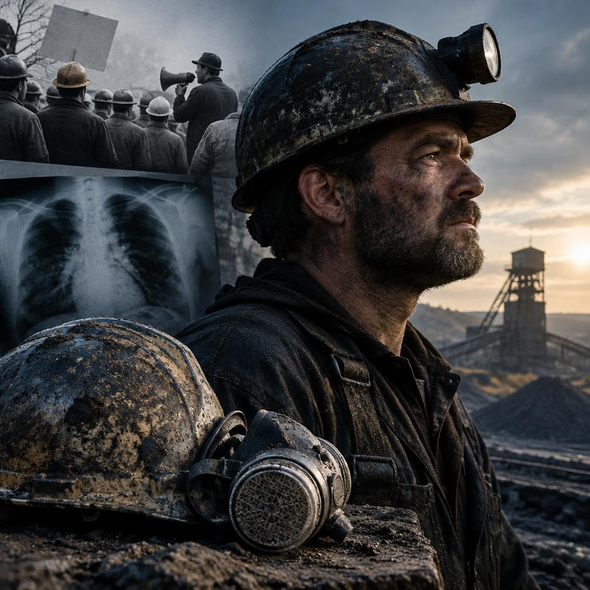
A workplace safeguard is a civic inheritance only if institutions keep it working. Regulatory revision can be legitimate, but officials should distinguish improving a dust rule from transferring the work of protection back to miners and their advocates.
Protections limiting coal miners’ exposure to toxic silica dust face rollback, NPR reports. The stakes concern miners’ lungs: silica exposure increases the risk of black lung disease. NPR places the threat beside decades of advocacy for regulation. What workers sought over those years was a limit on an exposure encountered at work, not simply official recognition that the exposure was dangerous.
The distinction between a threat and an enacted change matters. The available NPR summary does not establish a completed rollback, identify the officials advancing it, or describe its procedural stage. It therefore does not support saying that miners have already lost these protections. It does establish a reason to examine what would remain enforceable if the threatened changes proceed.
Decades of advocacy give the present dispute its scale. A safeguard carries forward work done by people who had to persuade institutions to act; later workers should not have to repeat that entire undertaking to receive its benefit. That is the useful meaning of inheritance here. The inheritance is not a commemorative statement about miners. It is a continuing obligation to limit dust.
Now the protection appears to come with a renewal obligation for the protected. Advocates must defend the safeguard as well as argue for its effective application. The summary offers no named worker’s daily routine, and none needs to be invented to make the burden visible. Keeping an established protection politically secure is additional work, separate from making a mine safer.
Not every regulatory revision represents a loss. Officials could change a rule’s methods while preserving or improving its protection. The relevant comparison is concrete: the exposure each version permits, the checks each version requires, and the enforcement each version supports. A change deserves scrutiny when miners would receive less protection, not merely because the wording differs from an earlier rule.
The next decisions can still preserve the safeguard and the capacity to enforce it. Officials considering changes should explain how miners would remain protected from silica and how compliance would be checked. Decades of advocacy need not place every provision beyond review. They do place an obligation on the reviewers to show what workers will be able to keep.
Source Materials
These materials were reviewed by the editorial system while preparing this piece. Muerte.casa may interpret, satirize, reframe, or disagree with them.
- Laws limiting coal miners' exposure to toxic dust are in danger of being rolled back NPR · November 15, 2026 · Primary signal · Direct source
How did this story land?
This may be changed as you like.