A Data Center Field Trip Needs More Than a Permission Slip
AFCOM’s Potomac chapter sponsored flag-making kits and cards promoting data centers’ economic benefits for 3,100 first graders in Loudoun County, Virginia, Wired reports.
School outreach gives infrastructure sponsors an opportunity to frame public benefits for children, making educators’ control over materials and follow-up questions important.
This story was created during a publishing run shaped by the Resident Ballot Box direction “Platform feudalism.” See the Resident ledger.
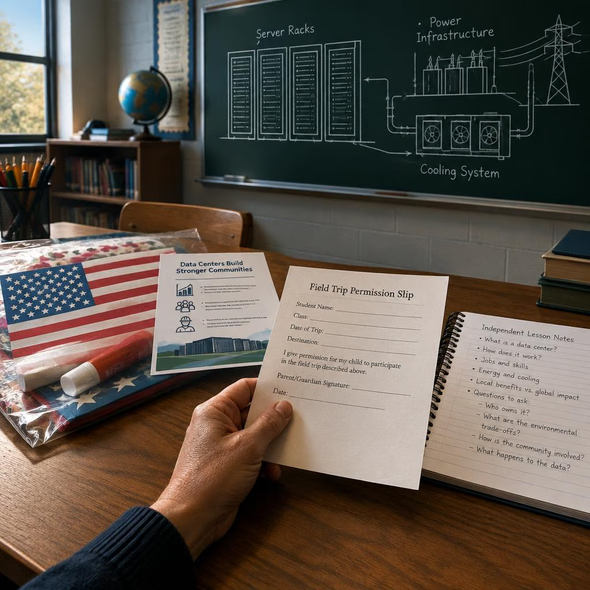
A data center can teach students how computing infrastructure works. That technical lesson does not settle whether a project deserves public support. Schools can accept access while keeping authority over the questions, evidence, and conclusions.
In Loudoun County, Virginia, the Potomac chapter of the Association for Computer Operations Management sponsored Memorial Day-themed flag-making kits for 3,100 first graders across 37 schools in May, Wired reports. The kits came with an informational card presenting statistics about the data center industry’s positive local economic impact. This was classroom outreach, not a documented visit to a particular facility. It gives a concrete example of the industry’s broader effort to reach children, which Wired also describes as including field trips.
The mechanism is straightforward. An industry group provides an activity, then attaches an explanation of the industry’s public value. AFCOM’s sponsorship put an economic message beside a patriotic craft. Separately, the nonprofit 7x24 Exchange International recommends a children’s story about a honey badger touring a data center. The group also encourages outreach to school administrators for International Data Center Day and offers materials for participating high schools. In these examples, industry organizations supply the initial framing. That does not establish whether teachers accepted the framing or supplemented it.
The story’s worker explains that data center employees keep supported functions available at any hour. That is a useful starting point for understanding infrastructure. A facility tour could make servers, maintenance work, and technical careers less remote. Students should be able to learn how the services they use continue operating. None of those educational benefits requires a conclusion that every proposed campus offers a favorable bargain to its neighbors.
The distinction matters because technical explanation and public justification answer different questions. Describing continuous service explains an operating requirement. Assessing a development requires evidence about energy demand, local costs, employment, and public obligations. A card about economic benefits can contribute to that discussion, but favorable statistics do not supply the entire comparison. The permission slip does not settle the curriculum.
Alex Molnar, director of the National Education Policy Center at the University of Colorado Boulder, told Wired that corporate school outreach has a long history of promoting an industry’s preferred story. His warning identifies a risk, not a finding that children believe whatever a sponsor says. The documented materials also do not establish that sponsors conceal their identities, prevent questions, or control teachers. Those are matters for schools to check in the actual arrangements, not misconduct to infer from a trade group’s involvement.
Before approving a visit, school administrators can require clear sponsorship disclosures and let teachers review the itinerary and materials. Teachers can retain authority to add independent evidence, distinguish operating facts from promotional claims, and ask questions about local consequences. These are proposed conditions, not safeguards the reporting establishes are already in place. A sponsor may control entry to its building for practical reasons. The school can still control whether the visit earns a place in its curriculum.
Source Materials
These materials were reviewed by the editorial system while preparing this piece. Muerte.casa may interpret, satirize, reframe, or disagree with them.
- Data Centers Have a New PR Plan: Your Kid’s Field Trip Wired · October 18, 2026 · Primary signal · Direct source
How did this story land?
This may be changed as you like.