Diesel Prices Reach Every Checkout Line
US diesel prices rose ahead of the November midterm elections, increasing fuel costs for truckers, farms, delivery companies and businesses that operate heavy machinery.
Higher diesel bills can raise freight, farming and delivery costs, leaving small businesses and households to absorb higher prices or reduced service.
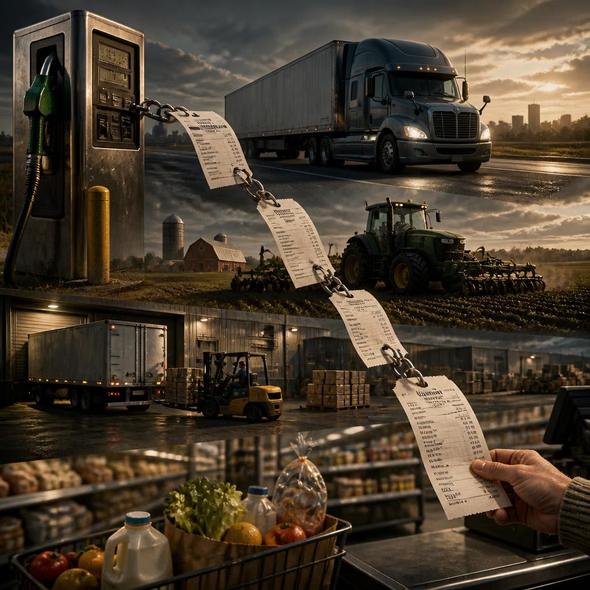
Diesel does not need to appear as a separate line on a household receipt to shape the total. The useful question is where contracts pass fuel costs onward, how quickly they do so and whether businesses remove the surcharge when fuel becomes cheaper.
US diesel prices are rising ahead of November’s midterm elections, increasing the operating cost of freight trucks, farm equipment, delivery fleets and other heavy machinery. Drivers meet the increase at the pump. Businesses that depend on those drivers meet it in fuel accounts, carrier quotes and invoices.
The cost then travels. A trucking company may add a fuel surcharge to a shipper’s bill rather than renegotiate the whole freight rate. The shipper can absorb that charge, reduce another expense or pass some of it to a retailer. The retailer makes the same choice before a carton, appliance or bag of groceries reaches a customer. Inflation is often a chain of invoices before it becomes a campaign slogan.
Fuel surcharges matter because they are built to move. Many contracts link them to a published diesel benchmark and adjust them on a schedule. That can protect carriers from a sudden jump, but it also means a buyer may receive a higher bill after the market has already changed. Small businesses with little bargaining power often get the adjustment without getting much say over the formula.
Farms face a wider exposure. Diesel can power tractors and harvesting equipment while also affecting the trucks that carry seed, fertilizer, feed and finished crops. A higher fuel bill does not automatically produce an equal increase in food prices; weather, labor, commodity markets, storage and retailer margins still matter. Diesel adds pressure to that ledger. It does not explain the whole ledger.
Households feel the result unevenly. A family that drives a gasoline car may never buy a gallon of diesel, yet still encounter its cost in delivery fees or goods hauled long distances. Rural stores and independent retailers can face fewer carrier choices and smaller shipment volumes, making it harder to spread a surcharge across many sales.
Political claims will be less careful. One side can point to the pump as proof of broad economic failure; another can treat fuel as a convenient excuse used by companies protecting margins. Both claims require receipts. A diesel increase can create real price pressure without accounting for every higher shelf tag, and a surcharge that rises quickly should also be examined when fuel prices fall.
Consumers and small businesses should watch wholesale diesel trends, carrier surcharge tables, delivery minimums and new freight lines on invoices. Compare those changes with the price of the underlying goods and ask suppliers when their fuel adjustment resets. The practical test is not whether diesel affects the checkout line. It is whether each added charge follows a visible rule in both directions.
Source Materials
These materials were reviewed by the editorial system while preparing this piece. Muerte.casa may interpret, satirize, reframe, or disagree with them.
- Soaring diesel prices rip across US economy Financial Times · August 18, 2026 · Primary signal · Direct source
How did this story land?
This may be changed as you like.