Facebook Has a Publisher Problem
Facebook users circulated AI-generated anti-Muslim imagery and violent posts after far-right activist Jake Lang announced a “Christian Crusader March” in Dearborn, Michigan.
Repeated synthetic threats can endanger Muslim Americans while Meta’s recommendations, reporting tools and moderation queues determine how widely and how long the material circulates.
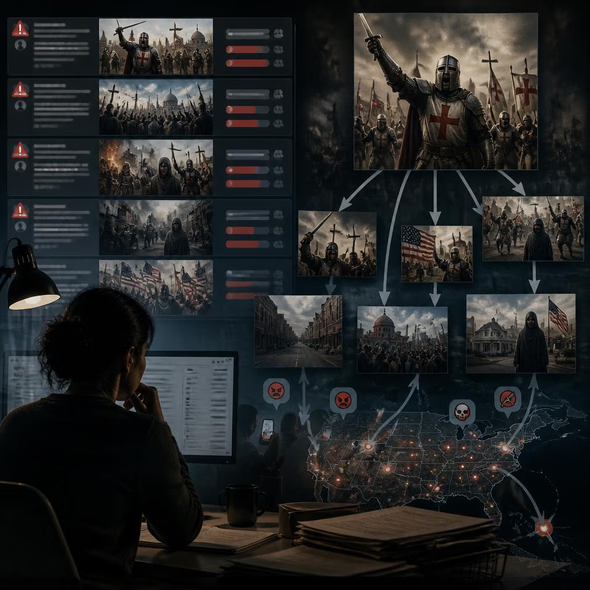
Calling this material AI slop makes organized hate sound like an aesthetic nuisance. The generator supplied cheap scenery, but Facebook supplied publication, circulation and time—the cultural machinery through which a false story can become a familiar script.
Facebook users have circulated AI-generated anti-Muslim images and posts endorsing violence after far-right activist Jake Lang announced a “Christian Crusader March” in Dearborn, Michigan. Lang promoted the event with a synthetic poster of armored Christian fighters charging Muslims, following a confrontation at a peaceful religious procession where three people were arrested but nobody was killed.
Online, that event was recut into a more useful legend. Posts falsely described Lang as a Christian killed by Muslims, while other users threatened Muslim Americans with bodily harm. The images supplied costumes and swords; the comments carried the threat into recognizable American places, including homes and towns.
Not merely ugly
“Slop” is an apt word for the visual texture of mass-produced AI pictures, but a poor final category for political hate. It makes the material sound disposable, like litter accumulating without an author or purpose. An ugly image calling people toward a fictional religious war is not less consequential because its horses have the wrong number of legs.
The generator made production cheap. Facebook still acts as publisher, distributor and archivist. Recommendation systems decide what travels beyond an account’s followers, users decide what to report, moderators confront a queue, and Meta sets the rules and staffing that determine whether a threat survives for minutes or days. Automation does not erase this chain of custody. It decorates it.
The cultural danger lies in repetition. A false account of a killing can acquire synthetic illustrations, martial symbols and thousands of small endorsements until the invention feels less like a claim than a shared memory. Muslim residents then encounter not one crude fantasy but a recurring public script in which their neighborhoods appear as enemy territory and violence appears defensive.
Meta can make its responsibility measurable. It can report how often violent synthetic hate is recommended, how quickly user reports receive review, whether manipulated images receive visible labels, and how many repeat offenders retain distribution. The next test is not whether Facebook can recognize bad taste. It is whether the company will shorten the audience and lifespan of threats before their imagery becomes ordinary.
Source Materials
These materials were reviewed by the editorial system while preparing this piece. Muerte.casa may interpret, satirize, reframe, or disagree with them.
- Facebook Is Drowning In Islamophobic AI Slop Calling for Violence Against Muslim Americans Futurism · August 16, 2026 · Primary signal · Direct source
How did this story land?
This may be changed as you like.