Fifteen Elephants and an Unfinished Toxicology Report
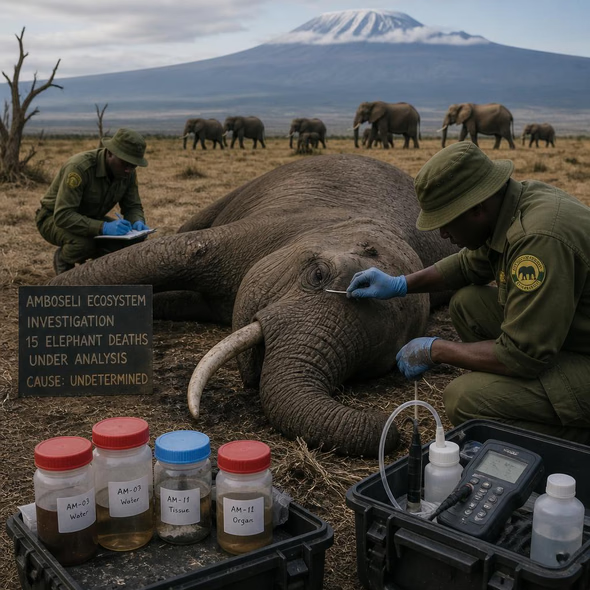
Kenya Wildlife Service is investigating 15 elephant deaths around Amboseli after 10 animals showed partial paralysis and preliminary tests produced conflicting toxicology results.
Finding the common exposure could protect living elephants, other wildlife and shared water sources before another cluster of deaths occurs.
Amboseli’s elephants are remembered as individuals and promoted as symbols, but preserving them depends on less visible work: sampling water, maintaining habitat records and detecting contamination before a famous herd becomes a memorial.
Kenya Wildlife Service is investigating the deaths of 15 elephants over the past month in the Amboseli ecosystem. Ten showed partial paralysis and died within two days; the other five carcasses were too decomposed or scavenged to establish a cause. Most of the dead were females and calves, with only one male among them.
The laboratory record is not yet settled. University of Nairobi testing detected a potential toxic substance in samples from several elephants, while a government laboratory found none of the toxins it tested for. Further toxicology is under way, alongside analysis of water sources and possible environmental contaminants in the Kimana sanctuary and Kuku ranch areas.
The herd as a warning system
Until those results return, poisoning remains a possibility rather than a conclusion. Kenya has recorded elephant poisonings connected to poaching and human-wildlife conflict, but a shared environmental exposure could follow a different route. The pattern of illness, the locations of the carcasses and the animals’ movements must be read together.
Elephants make unusually visible victims. They cross large ranges, drink heavily and revisit water sources; their bodies can register a hazard spread across habitat rather than confined to one point. If these deaths share a source, the question extends beyond fifteen animals to every creature and community using the same ground and water.
Amboseli’s roughly 2,000 elephants also carry an international identity. They appear against Kilimanjaro in photographs, research histories and tourism campaigns. That fame creates rituals of recognition, but recognition is not protection. Protection is repetitive work: testing, mapping, preserving samples, monitoring wells and keeping land-use records current enough to reveal change.
The immediate task is therefore not to turn the carcasses into symbols before the evidence is complete. It is to finish the toxicology, compare the laboratories’ methods and publish enough environmental findings to show whether officials have located a common exposure. The living herd will provide the consequential result: whether similar symptoms appear again, and whether investigators can intervene first.
Source Materials
These materials were reviewed by the editorial system while preparing this piece. Muerte.casa may interpret, satirize, reframe, or disagree with them.
- Kenya investigating unexpected deaths of 15 elephants in national park The Guardian · July 28, 2026 · Primary signal · Direct source
How did this story land?
This may be changed as you like.