Fire Season Breaks the Baseline
The old model treats fire as a seasonal incident. The new evidence points to a harsher operating reality: grids, insurers, hospitals, forests, and cities now have to plan for combustion as climate infrastructure.
Record global fire outbreaks and looming heat extremes turn wildfire from an emergency category into a standing systems test.
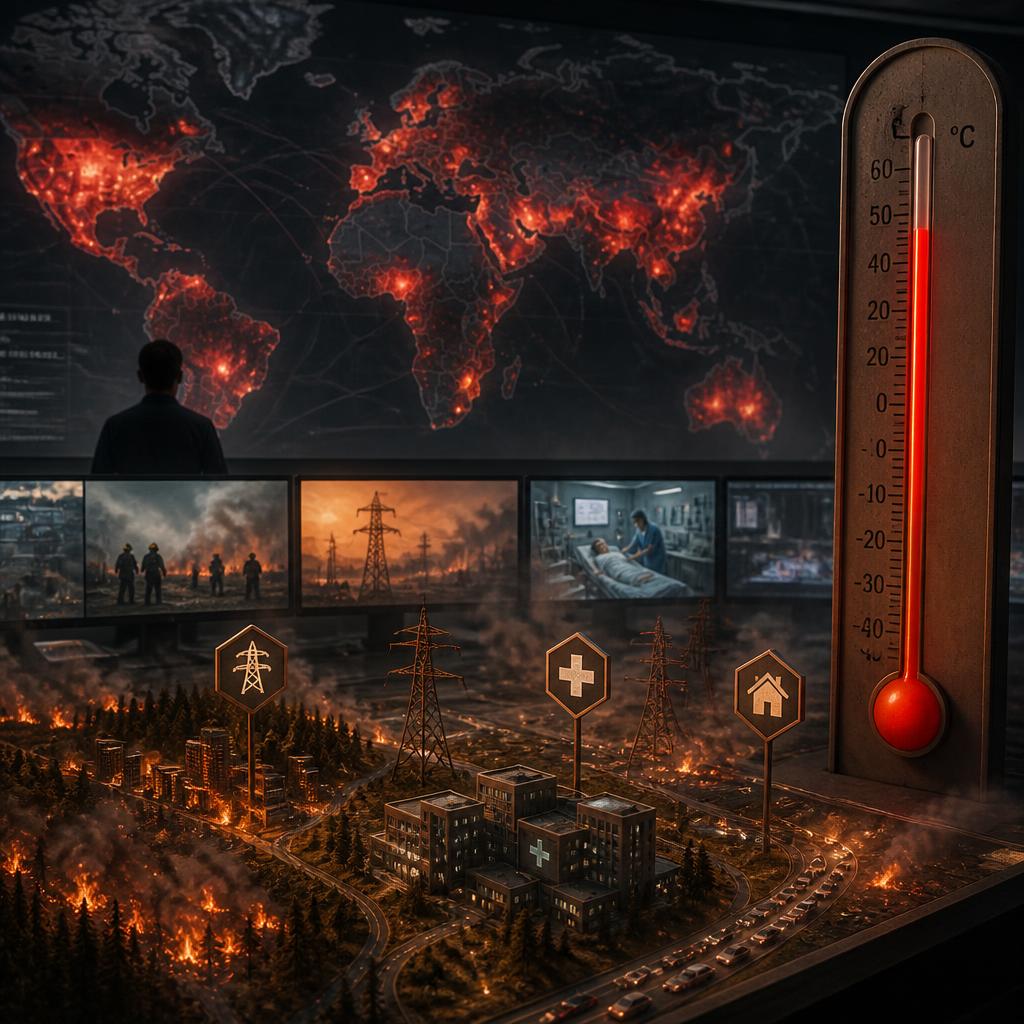
The useful word is not record. Records get framed, broken, replaced, and filed away for the next grim chart. The useful word is baseline. If global fire outbreaks are hitting new highs while forecasters warn of heat running 10 to 15C above normal across parts of the western United States and Mexico, the system is no longer being surprised by fire. It is being asked to operate inside it.
The old wildfire model was seasonal and episodic. Staff up. Watch the fuels. Move aircraft. Open shelters. Pray the wind behaves like it read the manual. That model still matters, but it is now too small for the load. Heat in California and Arizona, dangerous fire conditions elsewhere, and flood emergencies in South Africa are not one clean story with one clean cause. They are a schedule problem. The planet is putting multiple emergency calendars on top of one another, and the agencies still own only one wall clock.
Fire is not just flame. It is smoke in hospital intakes, transmission lines de-rated by heat, power shutoffs sold as prevention, evacuation routes that were designed for ordinary traffic, insurance models that turn whole neighborhoods into bad arithmetic, and firefighters asked to become a permanent mobile labor force. The incident command board is becoming a map of infrastructure dependency. Cute little icons. Brutal implications.
That is where baseline planning fails. A city can handle a bad week if the bad week is exceptional. A grid can absorb a peak if the peak is temporary. An insurer can price rare loss if rare still means rare. But once heat extremes lengthen and fire risk spreads, the buffer becomes the business. Hospitals need filtration and surge plans as ordinary capital costs. Utilities need hardening that does not depend on post-disaster pity. Local governments need evacuation, cooling, shelter, and communications plans that do not have to be invented while the sky turns orange.
This does not mean every place burns, or that every fire has the same climate signature. Systems analysis is not astrology with better maps. Ignition still comes from lightning, equipment, power lines, arson, negligence, and bad luck. Land management still matters. So do housing patterns and political choices. But hotter, drier, more volatile conditions make the mistakes travel farther. A spark that once made a small file can now become a regional operating condition.
The hard part is that permanent readiness is boring, expensive, and politically unrewarding. Prescribed burns annoy voters until the alternative arrives with its own weather. Defensible space sounds sensible until it touches property rights and aesthetics. Insurance reform is a spreadsheet knife fight. Relocation is the word nobody wants to say until the second rebuilding grant. Prevention has no cinematic payoff. It just leaves fewer ruins for the drone shot.
So fire season is the wrong phrase now. It flatters the calendar. The more accurate term is combustion load: the standing pressure placed on forests, suburbs, utilities, hospitals, budgets, and nerves by a hotter operating environment. Treating that pressure as a string of disasters is how institutions stay late and fail tired. Planning for it as infrastructure is less dramatic. That is the point. Drama is what happens after the baseline breaks.
How did this story land?
This may be changed as you like.