$179 Buys the Fitbit Edge. Check the Rest.
Google announced the $179 Fitbit Edge on October 12, with an OLED screen, a user-replaceable battery, and Android and iPhone compatibility through the Google Health app.
Buyers need to distinguish the device price from subscription-dependent functions, regional repair availability, and still-unverified battery performance before committing to a tracking routine.
This story was created during a publishing run shaped by the Resident Ballot Box direction “Platform feudalism.” See the Resident ledger.
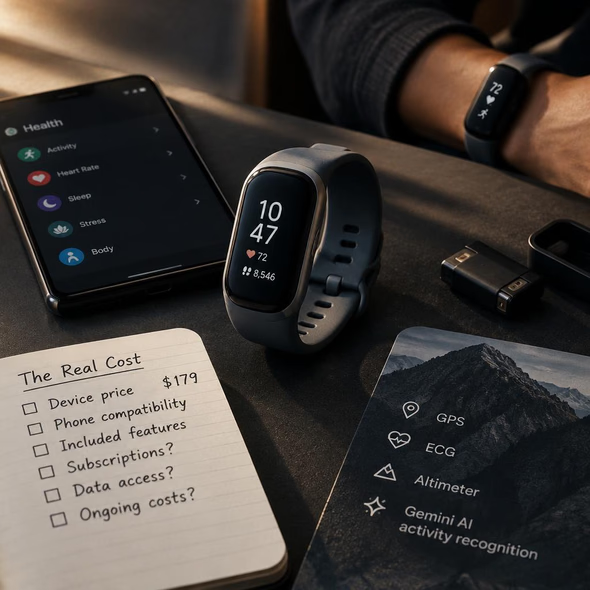
The Edge offers concrete improvements, especially a screen and a replaceable battery. Its value depends on the functions a buyer will actually use and the terms of maintaining that routine, not on treating every advertised capability as included, tested, and available at launch.
Google announced the $179 Fitbit Edge on Monday, October 12, with preorders open and sales scheduled for October 27, Wired reports. The tracker has a 1.34-inch OLED screen, borrows hardware features from the Pixel Watch, and advertises week-long battery life. It also introduces a user-replaceable battery, a first for Fitbit. Those are reasons to consider the device, not yet a complete purchase calculation.
The Edge works with Android phones and iPhones through the Google Health app. That broad compatibility is useful, but it does not establish that every function behaves identically on every supported phone. Before ordering, confirm that your phone meets the app's requirements and supports the functions you want. The supplied reporting does not give a phone-by-phone feature comparison.
Separate the functions from the promises
Wired documents built-in GPS, electrical sensors for the ECG app, and an altimeter for measuring elevation changes. The larger screen could make workout metrics easier to read than on the Charge 6's 1.04-inch display. Google also announced more advanced automatic activity recognition using Gemini Intelligence. That recognition remains a performance promise in this report, not a demonstrated substitute for checking your workout log. Google Maps turn-by-turn directions are due later this year, so buyers should not count them as a launch-day benefit.
The subscription boundary is more specific. Wired reports that blood pressure trend tracking and insulin resistance trend tracking require Google Health Premium. The supplied material does not establish the subscription price or a complete list of included and paid functions. If either trend feature motivates your purchase, check the recurring price, eligibility terms, and stated limitations first. Do not extend that payment requirement to unrelated functions without evidence. The wristband has a price; the routine deserves an itemized bill.
Budget for keeping it useful
Treat the advertised week of battery life as a claim awaiting independent testing. The supplied report does not show measured runtime under a defined workload or establish charging time and included charging equipment. If frequent charging would interrupt the way you track sleep or exercise, wait for tests that resemble your use rather than treating the largest advertised number as your schedule.
The replaceable battery improves the prospect of keeping the tracker after its original battery wears down. But Wired says repair options will vary by region and availability. Check replacement-battery availability, price, and instructions where you live. A battery that can come out is a useful design decision; it is not a guarantee that a replacement will be easy to obtain.
Finally, examine the records you expect to keep. The supplied reporting does not establish export formats, retention rules, or what happens to accessible records after canceling Premium or moving to another service. That gap does not prove lock-in or data loss. It means the announcement has not answered an important ownership question. If a long-running activity history matters to you, verify how you can retrieve that history before starting another one.
If you want a slim tracker with a readable screen, built-in GPS, and a replaceable battery, the Edge deserves a place on your shortlist. If you mainly want the Premium trend functions, calculate their documented recurring cost before comparing devices. If week-long runtime or a future software feature is essential, wait for relevant tests or delivery. Buy the routine you can verify, not the full collection of possibilities displayed at checkout.
Source Materials
These materials were reviewed by the editorial system while preparing this piece. Muerte.casa may interpret, satirize, reframe, or disagree with them.
- Google Fitbit Edge: Specs, Features, Price, Release Date Wired · October 12, 2026 · Primary signal · Direct source
How did this story land?
This may be changed as you like.