Stolen Food Benefits Are Congress’s Problem, Too
ProPublica reports that a Romanian criminal crew spent stolen SNAP benefits at a San Diego grocery store and that Congress has not funded chip cards that could prevent much of the theft.
Stolen benefits leave recipients without money intended for groceries, while criminal investigations alone cannot secure vulnerable cards or establish replacement payments.
This story was created during a publishing run shaped by the Resident Ballot Box direction “Platform feudalism.” See the Resident ledger.
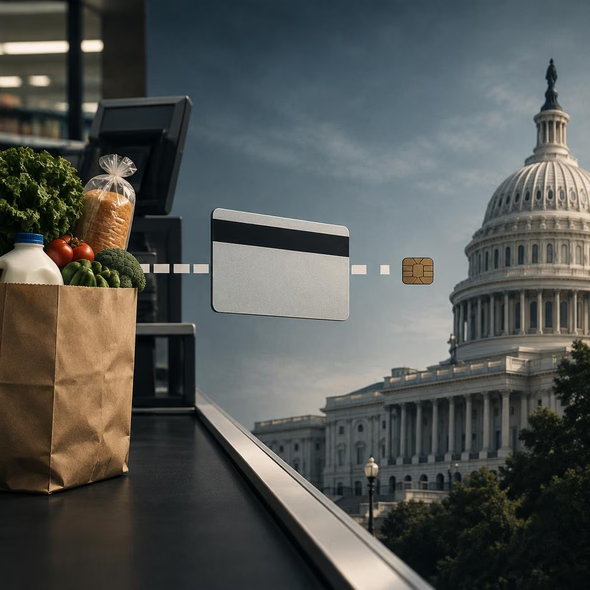
The thieves carry responsibility for the theft. Congress carries a separate responsibility for the delivery system it can fund. Prevention, reimbursement, and prosecution solve different problems; treating prosecution as the whole response leaves recipients carrying the immediate grocery loss.
ProPublica reports that a criminal group used stolen Supplemental Nutrition Assistance Program benefits to buy $10,747.05 in energy drinks at a Smart & Final store in San Diego on October 19, 2022. Four people paid with 25 cards. Recipients as far away as New York and Florida later called the store because their accounts had been drained there. The transaction moved groceries out of victims’ budgets and inventory into a resale operation.
The group obtained recipients’ SNAP account information and PINs, then used those credentials to spend their benefits. ProPublica identifies outdated magnetic-stripe cards as a central vulnerability and reports that adding microchips could block most SNAP theft. According to court documents and federal investigators cited by ProPublica, the same crew used data stolen from at least 174 victims to purchase at least $305,274.52 in energy drinks between September and November 2022. Investigators linked the crew to a Romanian criminal syndicate. This was not recipients overspending. Someone else spent their money.
The delivery system matters because access to food runs through the card and its security. A benefit can exist in an account and still fail to reach the person entitled to use it. When stolen credentials authorize a purchase, the immediate shortfall falls on the recipient unless replacement benefits reach that household. The grocery budget has acquired an unpaid second job as a fraud-loss reserve.
Three responses need separate accounting. Prevention reduces successful theft. Reimbursement restores benefits after theft. Criminal investigation identifies offenders and supports prosecution. Progress in one category does not establish progress in the others. An arrest cannot secure every remaining magnetic-stripe card. A more secure card cannot replace food money already stolen. Any claim that officials have addressed the problem should specify which of these jobs they have completed.
ProPublica identifies a concrete congressional decision: funding the move to chip cards. That is a proposed protection against much of the reported theft, not a guarantee against every kind of fraud. Cost and implementation questions deserve answers, but an unfunded transition also leaves recipients exposed to losses. The supplied account does not establish lawmakers’ detailed objections or the terms of a particular bill. Those arguments should be examined when documented, not supplied on Congress’s behalf.
ProPublica also contrasts the theft evidence with Trump officials’ claims that many SNAP recipients are scammers. Scrutiny of recipient fraud does not answer how officials will protect recipients from criminals. Nor should safety advice substitute for correcting a documented card vulnerability. Advice deserves a specific test: does the recommended action obstruct the theft mechanism, or does it merely assign the recipient another precaution? Institutions should explain that connection before treating compliance as protection.
Congress controls whether to fund the chip-card transition ProPublica identifies. Lawmakers should also distinguish that prevention decision from decisions about replacing stolen benefits; the supplied account does not establish the applicable reimbursement rules. The next useful measure is therefore not another general declaration against fraud. It is whether Congress funds the documented protection and states who will cover losses that occur before that protection reaches recipients.
Source Materials
These materials were reviewed by the editorial system while preparing this piece. Muerte.casa may interpret, satirize, reframe, or disagree with them.
- Scammers Are Stealing Millions From Food Stamp Recipients. Congress Could Fix It — but Won’t. ProPublica · October 13, 2026 · Primary signal · Direct source
How did this story land?
This may be changed as you like.