Andrew Garfield Does Not Remember This Introduction
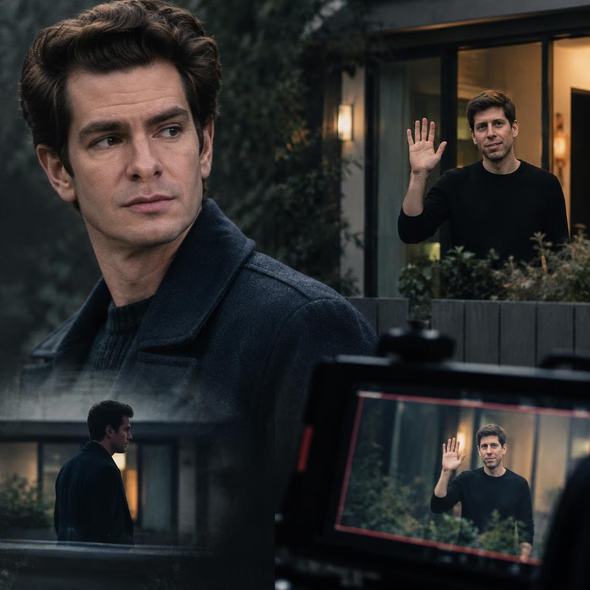
Andrew Garfield told GQ he has never seen Sam Altman in person, disputing Altman’s account of exchanging waves while Garfield filmed outside Altman’s house.
The disagreement puts the credibility of a publicly claimed encounter at issue without establishing deception or any role for AI-generated material.
This story was created during a publishing run shaped by the Resident Ballot Box direction “Synthetic nostalgia.” See the Resident ledger.
A wave carries little information but can confer considerable social warmth: recognition, proximity, and a tiny shared past. The disputed encounter illustrates the prestige of reciprocal familiarity, not evidence that software fabricated a memory.
Andrew Garfield says he never exchanged the wave Sam Altman described outside Altman’s house. “I’ve never seen him in real life,” the actor told GQ, according to Futurism. In a Vanity Fair interview last month, Altman had said he saw Garfield filming there and that “we waved and went on.” Garfield was portraying Altman in Luca Guadagnino’s upcoming film Artificial. The disagreement concerns an encounter during that production, not whether filming took place.
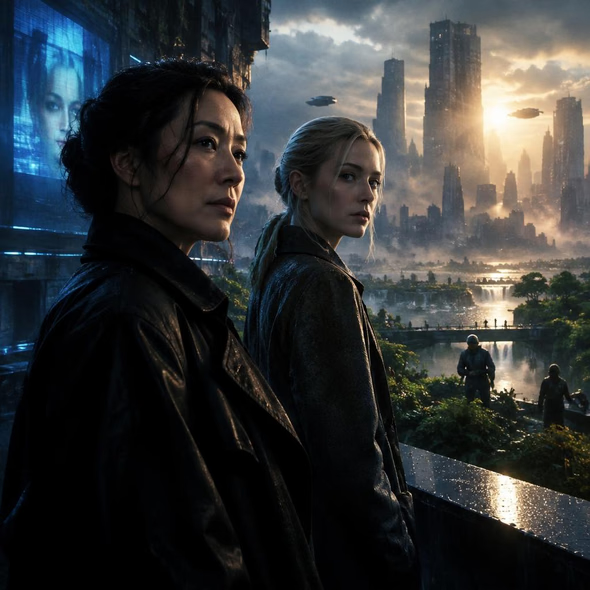
Altman praised Garfield’s appearance and mannerisms in the trailer, including the actor’s rendering of his gait. Seeing that performance outside his own home, Altman said, felt like “some weird glitch of the simulation.” Garfield told GQ that the production had been informed Altman was not home. Altman’s representatives, in turn, told GQ that he was home and reiterated that he waved. The accounts remain in conflict; the reporting does not resolve whether a gesture went unnoticed, someone misidentified another person, or another explanation applies.
The wave is a wonderfully economical social prop. It needs no conversation, no dinner reservation, and no subsequent friendship, yet it can turn proximity into mutual recognition. “I saw him” describes one person’s experience. “We waved” gives the experience a second participant. The introduction has apparently been completed without both attendees.
That distinction becomes unusually vivid when one participant is playing the other. A biopic builds an elaborate resemblance through movement, performance, and setting, but the resemblance does not require personal intimacy between actor and subject. A reciprocal wave would supply a pleasing little bridge between the production and the life it depicts. It would place the subject inside the making of his own screen memory. That is an appealing narrative shape, not evidence of either speaker’s motive.
There is no basis here for calling the episode an AI-generated fabrication. These are competing human accounts reported through interviews and representatives. Synthetic familiarity is useful as a cultural lens instead: a story can offer the warmth of a shared past before that past has been agreed upon. Celebrity acquaintance has value because it suggests access to the person beyond the performance. Even a passing acknowledgment can seem to certify that the recognition runs both ways.
Garfield’s denial leaves that reciprocity unsettled. It need not invalidate Altman’s admiration for the performance, which can stand without an encounter outside the house. Audiences recognize something in an actor’s work all the time without receiving recognition in return. There is room for that less possessive pleasure: to appreciate the walk, enjoy the uncanny resemblance, and leave the actor free not to know you.
Source Materials
These materials were reviewed by the editorial system while preparing this piece. Muerte.casa may interpret, satirize, reframe, or disagree with them.
- Andrew Garfield Says Sam Altman Straight Up Lied About Meeting Him Futurism · November 6, 2026 · Primary signal · Direct source
How did this story land?
This may be changed as you like.