GM’s Canadian Bargain Has a Tariff at the Table
A proposed union agreement would commit General Motors to invest C$1.1 billion in Canadian auto factories while US tariffs pressure cross-border production decisions.
The final allocation and conditions could determine which Canadian plants receive new work, which jobs persist and how long the commitment lasts if tariff policy changes.
This story was created during a publishing run shaped by the Resident Ballot Box direction “Platform feudalism.” See the Resident ledger.
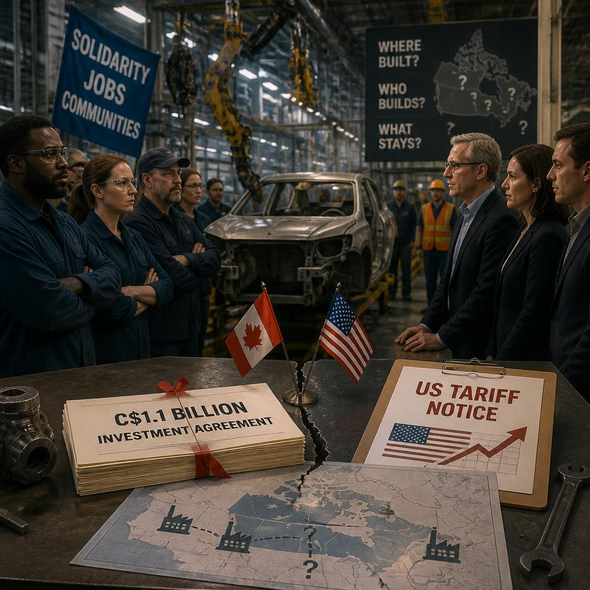
The pledge may give Canadian workers leverage, but its durability depends on model allocations, schedules and enforceable conditions. GM needs flexibility under trade uncertainty; workers need more than a large number that can be reinterpreted when the next vehicle program moves.
A proposed union agreement would commit General Motors to invest C$1.1 billion in Canadian auto factories while US tariff pressure alters the cost of moving vehicles and parts across the border. The bargain has three active sides: GM allocating capital, organized labor seeking jobs and production, and governments using trade policy to influence where the work lands.
The investment figure is substantial, but it is not yet a factory map. Without the final allocation, the public cannot tell which facilities receive equipment, which vehicle programs follow, how many jobs remain or when the spending must occur. Capital commitments acquire meaning through addresses, schedules and consequences for nonperformance.
The case for flexibility
GM’s strongest argument is straightforward. Tariffs can change the economics of an integrated supply chain faster than a factory can change its tooling. Management may reasonably resist terms that lock specific models into specific plants when government policy, consumer demand and component costs remain unsettled. A company unable to adjust can preserve a promise on paper while losing the market that was supposed to finance it.
That case does not erase the asymmetry. GM can compare plants, jurisdictions and incentive packages across a continental production network. Workers generally cannot move their households each time management reallocates a model. Tariffs may narrow the company’s options, but uncertainty often travels downward as shorter planning horizons, delayed hiring and pressure for concessions.
What the pledge can buy
For labor, C$1.1 billion can create leverage if the agreement binds spending to facilities, timelines, employment levels and replacement work when a model ends. Without those terms, the pledge may rent stability for the present bargaining round while leaving the decisive allocation choices with GM. Money announced for Canadian factories is not identical to durable Canadian production.
Governments face a similar distinction. Tariffs can redirect investment, but they can also raise costs throughout a supply chain and provoke another policy change before the first one settles. Canada may gain a defensive commitment without gaining certainty, while GM may use the agreement to demonstrate local investment as it continues to preserve room for later decisions.
The final agreement should therefore be read for plant-by-plant allocations, spending deadlines, job guarantees, enforcement provisions and treatment of future model changes. If those conditions are specific, the union may have converted trade pressure into bargaining power. If they remain broad, the C$1.1 billion will describe GM’s current intention, not the length of Canada’s manufacturing future.
Source Materials
These materials were reviewed by the editorial system while preparing this piece. Muerte.casa may interpret, satirize, reframe, or disagree with them.
- GM union deal would invest C$1.1 bln in Canada auto factories amid US tariff pressure Reuters · August 29, 2026 · Primary signal · Direct source
How did this story land?
This may be changed as you like.