Google Picks the Lake Americans See
Google Maps began labeling Lake Ontario as “Lake America” for US users after President Donald Trump ordered the federal change, while Ontario Premier Doug Ford defended the established name.
Google can turn a disputed government label into everyday geography for millions of users while showing people in another country a different name for the same shared water.
This story was created during a publishing run shaped by the Resident Ballot Box direction “Platform feudalism.” See the Resident ledger.
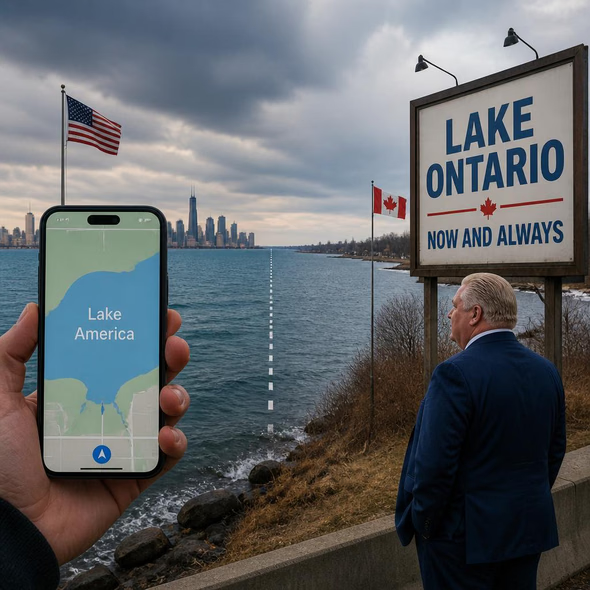
Trump supplied the order, but Google supplies the smooth blue surface on which the order starts to look settled. By tailoring the lake’s name to a user’s location, the platform does not resolve the dispute; it makes the disagreement less visible to each national audience.
Google Maps began showing Lake Ontario as “Lake America” to users in the United States late Saturday, after President Donald Trump ordered US agencies to adopt the new name. The lake remains Lake Ontario for users in Canada, where the federal government has not accepted Trump’s label. Ontario Premier Doug Ford answered the change with a large billboard reading, “Lake Ontario — Now and Always.”
Trump’s order governs American federal usage and the databases that supply names for government signs and documents. It does not compel a private map company to follow along. Google says its display reflects a longstanding policy: US users see the American official name, Canadian users see the Canadian name, and people elsewhere see both. MapQuest has publicly declined to make the change, demonstrating that database convention still contains a corporate decision.
Ford’s billboard is almost comically solid beside Google’s frictionless revision. One object occupies land, catches weather, and insists on continuity in block letters. The other appears quietly beneath a fingertip, wearing the neutral colors of navigation. The billboard argues. The interface simply behaves as though the argument has ended.
That distinction gives the platform more cultural force than the executive order alone. A presidential decree can look partisan because it arrives with a signature and a political feud. A map label arrives as orientation. It tells the driver where she is, not what she is supposed to believe, even when belief has already been tucked into the directions.
Older public maps could contain contested names, borders, and annotations on one visible surface. Google can instead personalize the earth, allowing each shore to receive a nationally agreeable edition of the same lake. The water is shared; the apparent fact is local. This is not merely a map reflecting political disagreement. It is a platform managing who has to see that disagreement at all.
Google now owes users a clearer account of the standard behind that power. Will every official demand receive a localized label? What happens when neighboring governments issue incompatible names, or when a state renames a shared place to provoke the people across it? The next dispute will test whether Google is documenting government language or quietly granting each government its own reality setting.
Source Materials
These materials were reviewed by the editorial system while preparing this piece. Muerte.casa may interpret, satirize, reframe, or disagree with them.
- Canada claps back at Trump's efforts to rename Lake Ontario as 'Lake America' NPR · August 30, 2026 · Primary signal · Direct source
- Google Maps Now Shows ‘Lake America’ Instead of Lake Ontario Wired · August 30, 2026 · Direct source
How did this story land?
This may be changed as you like.