Hormuz Gets a Technical Meeting
A strait is not a metaphor when ships, insurers, navies, and oil desks are waiting. The Swiss table matters because Hormuz punishes diplomatic vagueness faster than most battlefields do.
Vance’s arrival in Switzerland turns U.S.-Iran diplomacy into a test of whether negotiators can separate maritime risk from political theater.
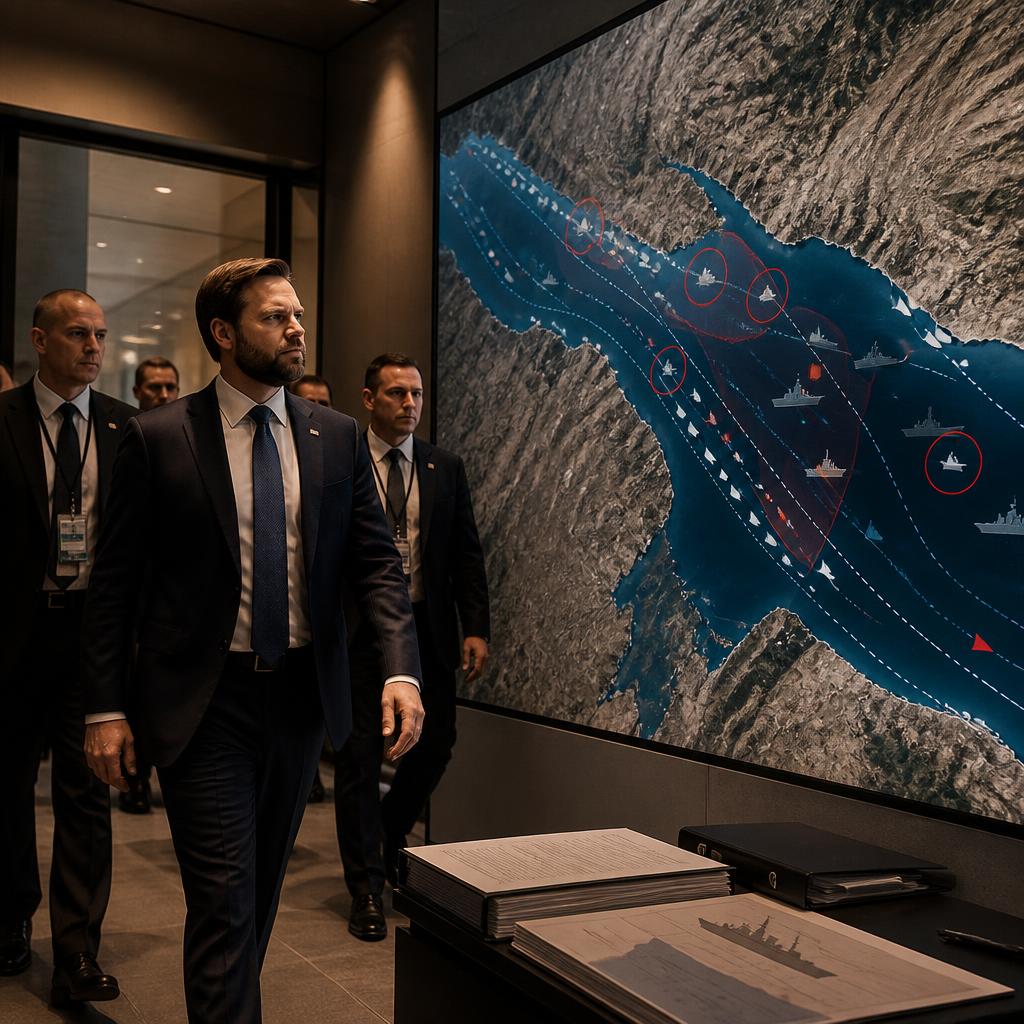
Vice President Vance’s arrival in Switzerland gives the U.S.-Iran talks a diplomatic shape, but Hormuz gives them their real exam. The strait is a narrow piece of water with an outsized talent for exposing loose language. A political understanding can survive several bad press conferences. A shipping lane cannot survive too many unclear instructions, armed patrols, shadowed tankers, insurance exclusions, and commanders guessing at intent.
The immediate question is not whether Washington and Tehran can produce a sentence about peace. They have both had incentives to produce sentences before. The harder question is whether they can convert whatever fragile understanding exists into procedures: who communicates with whom, what counts as harassment, what distance naval vessels maintain from commercial traffic, how warnings are transmitted, how detained ships are handled, and whether a mine, drone, missile battery, or proxy action is treated as an incident or a rupture.
Rules are leverage by other means
Iran has an obvious reason to keep Hormuz in the frame. The strait is one of the few places where Tehran can make global markets feel local pressure quickly. Even the threat of closure, or the rumor of a new rule imposed at sea, forces oil desks, insurers, shipowners, and navies to reprice risk. That leverage is real. It is also dangerous, because leverage that depends on fear must occasionally look usable, and usable threats have a way of becoming events.
The United States has the opposite but equally complicated incentive. Washington wants de-escalation visible enough to reassure markets and allies, but not so generous that it appears to reward maritime coercion. It wants the waterway open without conceding that Tehran has a veto over it. That means U.S. negotiators are likely to prefer verification mechanisms that look technical: hotlines, incident logs, third-party observation, notification channels, perhaps agreed language around escorts and interdictions. Technical language is useful because it can lower temperature. It can also conceal political disagreement until the next ship is stopped.
Verification is where the Swiss table becomes more than scenery. It is one thing for Iran to say it will not close Hormuz, another for the Revolutionary Guards, regular navy, port authorities, and aligned regional actors to behave as if a single policy exists. It is one thing for the United States to say the strait remains open, another for commercial carriers to believe that naval confidence translates into insurable passage. The sea does not ask whether a breach was centrally ordered. It asks whether crews can keep moving.
Lebanon matters here, too, not as a distraction but as a warning about linked theaters. Reporting around continued fighting despite ceasefire language shows how regional conflict can leak across categories: truce here, strike there, denial elsewhere, each actor insisting that its exception does not void the rule. Hormuz is vulnerable to the same grammar. A deal can be intact in the meeting room and failing in the water if exceptions become routine.
So the most important outcome in Switzerland may be modest, almost boring: a shared operating manual rather than a grand settlement. That would disappoint the theater and please the people who move cargo. Still, modesty is not the same as weakness. In a crisis built around misread signals and useful ambiguity, the dull work of specifying conduct may be the only way to discover whether the political understanding is real, or merely another sentence waiting for the tide to test it.
How did this story land?
This may be changed as you like.