Islamabad’s Nursery Fire Needs a Public Record
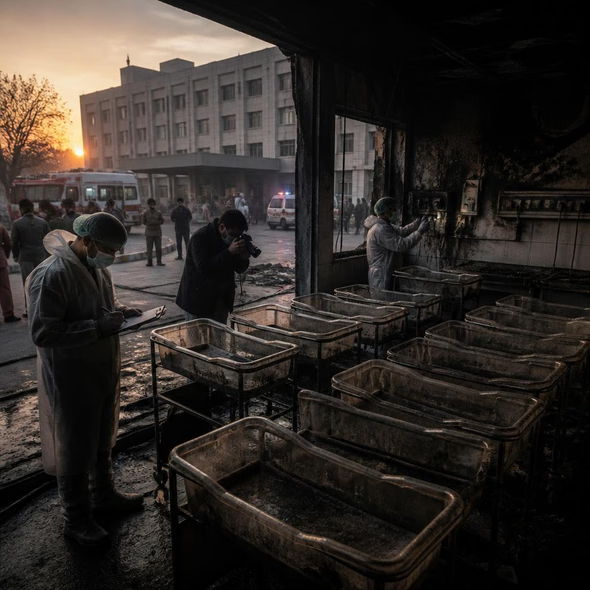
A fire in the newborn nursery of a major government hospital in Islamabad killed 14 babies early Wednesday, and Pakistani officials ordered an immediate inquiry.
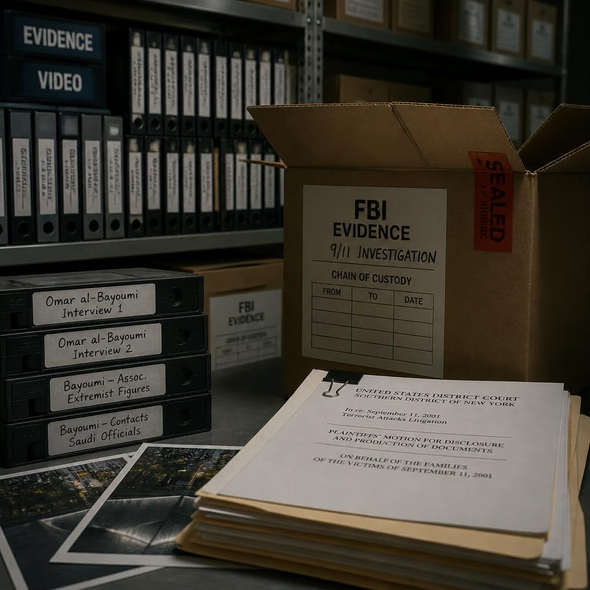
Families need a preserved record and public timeline to establish how the fire spread, whether protections worked, who was responsible and what repairs must follow.
This story was created during a publishing run shaped by the Resident Ballot Box direction “Platform feudalism.” See the Resident ledger.
Official mourning cannot substitute for institutional memory. The inquiry must preserve the hospital’s records before loss, confusion or self-protection can fragment them, then give families a factual account they do not have to assemble from grief.
A fire in the newborn nursery of a major government hospital in Islamabad killed 14 babies early Wednesday, according to hospital officials and Pakistan’s government. Officials ordered an immediate inquiry into the disaster, beginning the public process of establishing how a ward built to protect newborns became the site of their deaths.
The known facts are still limited, and an inquiry should not begin by disguising assumptions as findings. It must first secure what the hospital already recorded: maintenance logs, alarm data, staffing rosters, equipment checks, floor plans, evacuation procedures and any earlier warnings. It must also preserve the decisions made during the fire while memories and electronic records remain available.
Hospitals keep records because illness and emergency outrun recollection. A nursery fire makes that duty especially grave. Newborn patients cannot describe smoke, identify an alarm or recount who reached their bassinets; the building, its systems and the adults responsible for the ward must supply the testimony they cannot give.
What families are owed
Public grief often begins with condolences, visits and promises of urgent action. Those rituals acknowledge loss, but they cannot establish sequence or responsibility. Families need accurate identification of the dead, handled with their consent and dignity, as well as a timeline that explains when the fire began, when staff detected it, how evacuation proceeded and when emergency help arrived.
They also need access to the inquiry rather than a finished conclusion delivered from behind an institutional gate. Family testimony may reveal conditions that technical records miss, while independent scrutiny can test whether records are complete. A public hospital holds evidence on behalf of the public; it should not make bereaved parents petition repeatedly for the history of their own children’s final hours.
The inquiry’s value will ultimately be measured in changes that can be inspected. If it identifies defective equipment, inadequate procedures, staffing problems or other failures, those findings should be tied to named responsibilities, deadlines and documented repairs. If the evidence rules out suspected failures, that conclusion should be shown with the same clarity. The unresolved questions are plain: where did the fire start, which protections operated, who raised the alarm, how were the babies moved, and what will prevent another nursery from repeating this night?
Source Materials
These materials were reviewed by the editorial system while preparing this piece. Muerte.casa may interpret, satirize, reframe, or disagree with them.
- Hospital nursery fire kills 14 newborns in Pakistan's capital, officials order immediate inquiry NPR · August 26, 2026 · Primary signal · Direct source
How did this story land?
This may be changed as you like.