John Ternus Will Run the Apple Tim Cook Built
Tim Cook will hand Apple’s chief executive role to hardware chief John Ternus on Tuesday after 15 years leading the company.
Ternus will control the App Store, device defaults, payment pathways, services, and supply-chain relationships that shape how developers and customers reach Apple’s market.
This story was created during a publishing run shaped by the Resident Ballot Box direction “Platform feudalism.” See the Resident ledger.
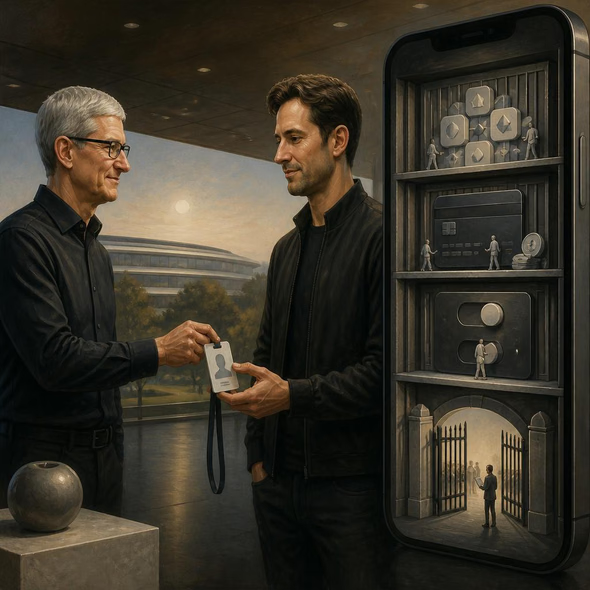
Ternus inherits more than a device maker: Apple operates the roads, checkpoints, storefronts, and toll collection inside its ecosystem. His hardware background could favor a coherent product, but coherence and control have become difficult to separate when developers, regulators, and services revenue pull in opposite directions.
Tim Cook will hand Apple’s chief executive role to hardware chief John Ternus on Tuesday, ending a 15-year tenure in which Apple expanded its scale and services business. Ternus will inherit the company’s devices and supply chain, but also its control over software distribution, payments, defaults, and access to customers through the App Store.
The strongest case for the walls
Apple’s integration has a serious defense. One company can coordinate chips, hardware, operating systems, payments, and software review rather than asking customers to assemble trust from a box of unrelated parts. That arrangement can produce convenience, consistent performance, and security controls that are easier to enforce across the whole product.
Yet the same coordination gives Apple authority over who may enter, what they may sell, how they may charge, and which services receive favored placement. The iPhone is a product, but it is also governed territory. Developers seeking its customers do not negotiate with a neutral road; they apply to the owner of the road, the shops, and several competing destinations.
Ternus inherits the incentives, too
A hardware executive might appear inclined to put devices first and reduce friction around them. That could mean treating outside developers as essential contributors to the product rather than tenants to be managed. The opposite forecast is at least as plausible: tighter integration can make hardware more distinctive, protect services revenue, and give Apple more control over the experience it promises buyers.
Pressure for change will come from several directions. Regulators can challenge rules and defaults, developers can contest tolls and restrictions, and customers can question whether convenience requires every gate Apple maintains. But Ternus will also answer to a company whose successful model binds those gates together. A new keeper does not automatically need a new castle plan.
The early evidence will be practical: changes to App Store terms, payment options, default services, developer review, and the boundary between Apple’s products and outside competitors. If Ternus loosens access while preserving safety, he can show that integration does not require permanent enclosure. If the rules tighten, the succession will have changed the executive while confirming where Apple believes its real product power resides.
Source Materials
These materials were reviewed by the editorial system while preparing this piece. Muerte.casa may interpret, satirize, reframe, or disagree with them.
- Tim Cook’s Apple legacy by the numbers Financial Times · August 30, 2026 · Primary signal · Direct source
How did this story land?
This may be changed as you like.