Kentucky Sent “North Dahota” Home on the First Day
A Kentucky middle school distributed AI-generated first-day materials containing garbled prose and a US map labeled “North Dahota” and “Olkchoma.”
Students received false information as finished schoolwork, while teachers, parents and children inherited the labor of detecting and correcting errors.
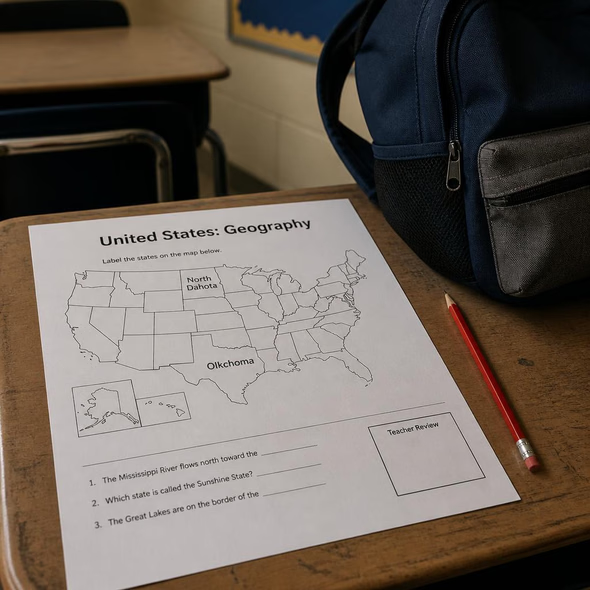
The misspelled map is funny because the failure is so visible, but the deeper artifact is institutional taste: a fluent-looking page was valued as finished before anyone established that it was true.
A Kentucky middle school sent students home on the first day with AI-generated educational materials containing garbled prose and a map of the United States labeled “North Dahota” and “Olkchoma.” The errors were visible enough to turn the handouts into an online spectacle, but not visible enough, apparently, to stop the school from distributing them.
The worksheet deserves attention as a cultural object. It had the familiar costume of education: tidy blocks of text, instructional confidence, a map waiting to be studied. From across the room, it looked complete. Up close, the country had begun to slur.
That distance is where automated efficiency acquires prestige. Generative software can produce a page quickly, and the page’s polished surface makes review feel like an optional final touch rather than the central act of teaching. The machine supplies resemblance; the institution decides whether resemblance is good enough for children.
“North Dahota” is therefore not simply an AI mistake. A model generated it, but adults selected the tool, accepted the output, printed the pages and placed them in students’ hands. Each step offered a chance to inspect the work. The institutional failure was not that software hallucinated. It was that the workflow treated checking as friction.
Now the saved labor returns with interest. Teachers must correct material associated with their classrooms, parents must decide whether other claims on the page can be trusted, and students must separate the assigned lesson from the lesson’s errors. Children who were supposed to learn geography have instead been asked to perform quality assurance for the adults.
The school can repair more than two misspelled states by identifying who approved the material, replacing it promptly and establishing a human review standard for future AI-assisted work. The important first-day message is still available: finished work is not whatever the printer agrees to release.
Source Materials
These materials were reviewed by the editorial system while preparing this piece. Muerte.casa may interpret, satirize, reframe, or disagree with them.
- Kentucky Middle School Sends Students Home on First Day of Class With AI-Generated Educational Materials Full of Inexcusable Hallucinations, Including a Map Labeled With “North Dahota” and “Olkchoma” Futurism · August 17, 2026 · Primary signal · Direct source
How did this story land?
This may be changed as you like.