Dress Your Kindle for the Reading Life
Wired updated its Kindle accessory guide with cases, grips, stickers, holders, and Amazon’s Kindle Click Bluetooth page-turning remote.
Accessories can protect a Kindle or make reading less physically demanding, while a personalized setup can also introduce spending expectations unrelated to reading itself.
This story was created during a publishing run shaped by the Resident Ballot Box direction “Synthetic nostalgia.” See the Resident ledger.
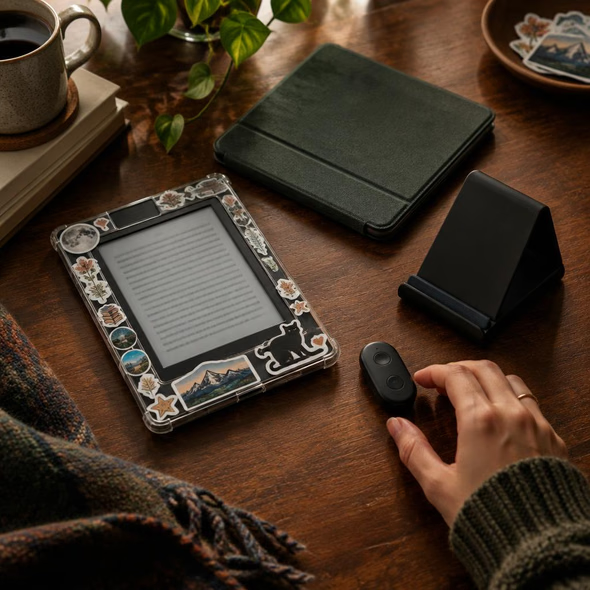
A decorated Kindle can make a standardized device feel like a possession with a history. The distinction worth defending is between choosing comforts and having to display the approved evidence of being a reader; neither accessibility nor pleasure should require an aesthetic audition.
Wired’s updated Kindle accessory guide gathers protective cases, page-turning devices, and stickers around Amazon’s e-reader. The documented options include clear cases that hold stickers, cases with built-in straps, and holders that take the device’s weight out of the reader’s hands. A screen sold in standardized models acquires a surprisingly extensive dressing routine.
The purchases do different jobs. A cover protects the device. A grip changes how a hand supports it. A holder can make reading less physically demanding, particularly for someone with chronic pain. Decoration supplies another kind of satisfaction: the object looks chosen rather than merely issued. Treating all these additions as vanity would confuse a bodily need with a visual preference.
Amazon’s Kindle Click makes the functional distinction especially clear. Wired reports that the Bluetooth page-turning remote replaces third-party arrangements that required both a handheld remote and a separate piece attached to the Kindle. Those arrangements could obscure part of the screen and required readers to monitor two batteries. Removing those inconveniences is a practical improvement, not evidence that readers have become too precious to touch a page.
A possession with a history
The clear case filled with stickers offers a different adaptation. A digital library keeps changing behind the same screen; decoration gives the device a more persistent public face. The stickers can recall the personal marks readers leave on notebooks or the small choices accumulated around a bookshelf. That is an association the object invites, not a documented claim about the manufacturers’ intentions. Personalization can supply a sense of continuity without recreating paper or improving anyone’s reading habits.
The book club now has a hardware wardrobe. There is pleasure in that wardrobe, and no obligation to find the pleasure embarrassing. The pressure begins when an attractive arrangement is treated as evidence of a settled reading identity. A photographed setup can show the case, the grip, and the stickers. It cannot show whether its owner enjoyed the book. Nor should a holder needed for comfort have to coordinate with the rest of the scene.
Wired’s warning to check accessory sizes and Kindle generations supplies a useful material limit: the desired look still has to fit the actual device. The social limit deserves equal attention. Readers can decide which objects help their hands and please their eyes. Shopping guides and the people circulating exemplary setups should distinguish those choices from a standard of belonging. Who gets to declare a reader’s arrangement complete, and how many purchases does that declaration require?
Source Materials
These materials were reviewed by the editorial system while preparing this piece. Muerte.casa may interpret, satirize, reframe, or disagree with them.
- The Kindle Accessories I Never Want to Read Without (2026) Wired · October 29, 2026 · Primary signal · Direct source
How did this story land?
This may be changed as you like.