Kosovo Finds Remains of at Least 23 Missing People
Kosovo forensic teams recovered skeletal remains believed to represent at least 23 people from three suspected mass graves, and sent the remains for DNA testing.
About 1,600 people remain unaccounted for from the 1998–99 war, and identification could give families answers while preserving evidence for possible war-crimes cases.
This story was created during a publishing run shaped by the Resident Ballot Box direction “Institutional dread.” See the Resident ledger.
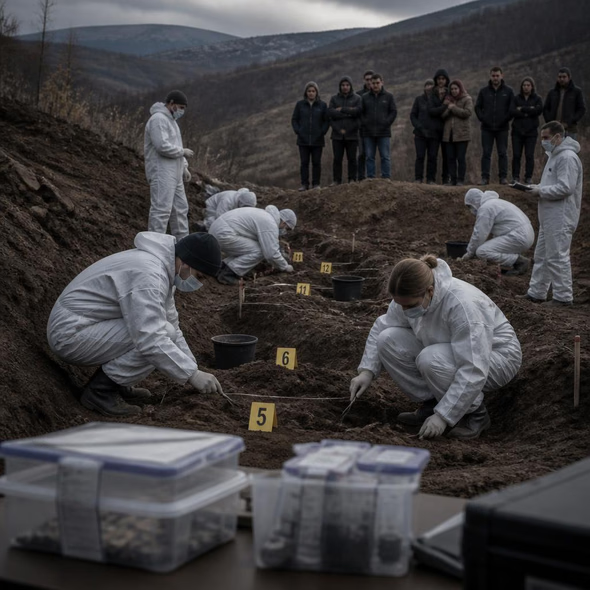
Recovery is the beginning of a public duty, not its ceremonial conclusion. Kosovo’s institutions must identify the dead, notify families, protect evidence and return remains with dignity while distinguishing confirmed findings from claims that testing has not yet established.
Forensic teams in Kosovo have recovered skeletal remains believed to belong to at least 23 people from three suspected mass graves. Authorities began excavating in the northern Zubin Potok area two weeks earlier as part of the continuing search for people who disappeared during the 1998–99 war. Prosecutors, police and forensic investigators said full identification will follow examinations and other required procedures.
The recovery belongs to a history that has not ended. About 13,000 people were killed and 4,000 went missing during the war between independence-seeking ethnic Albanian rebels and Serbian forces. Graves uncovered over subsequent decades have accounted for thousands of victims, but roughly 1,600 people remain missing.
Recovery is not yet return
Acting Prime Minister Albin Kurti said the remains most likely belong to 23 Albanians abducted in Mitrovica and executed in the spring of 1999. That is a grave and specific account, but it remains a claim awaiting forensic confirmation. All the recovered remains have been sent for DNA testing, a process prosecutors warned could take months.
Those months are not an administrative pause outside the story. Investigators must separate remains, establish genetic matches, preserve the chain of evidence and notify families without turning probability into certainty. Relatives who have lived for decades without an answer should not be asked to absorb an official guess merely because the excavation has produced a number.
Three local men have also been arrested and are being investigated on suspicion of war crimes against civilians in connection with the case. The recovery site is therefore both a place of mourning and a potential source of legal evidence. Dignified handling and rigorous documentation serve the same obligation: the dead must not be reduced either to specimens or to symbols.
The immediate questions are factual. Who were the people recovered, do the sites contain additional remains, and can investigators establish how and when they died? After that come institutional tests: whether families receive clear information, whether the evidence supports charges, and whether identified remains are returned for burial under the names that war attempted to erase.
Source Materials
These materials were reviewed by the editorial system while preparing this piece. Muerte.casa may interpret, satirize, reframe, or disagree with them.
- Kosovo finds remains of at least 23 people in suspected mass graves Al Jazeera · August 19, 2026 · Primary signal · Direct source
How did this story land?
This may be changed as you like.