Liberia Agrees to Take 1,200 US Deportees
Liberia agreed to receive 1,200 US deportees from Africa, the Americas and the Caribbean, with an initial group of 20 expected to arrive Thursday.
The agreement shifts responsibility for housing, legal status, safety and possible onward movement from the deporting country to the country receiving the flights.
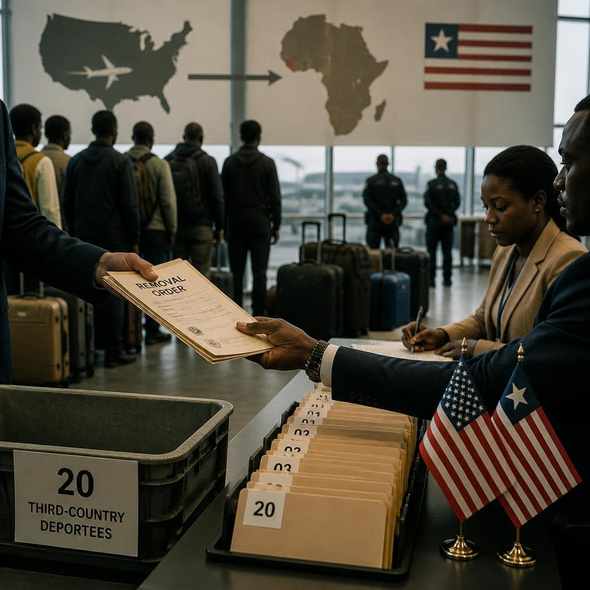
Washington can count completed removals, while Liberia must turn each arrival into an administrable human future. Whether this becomes durable policy depends less on the first flight than on rules, resources and rights that remain unclear.
Liberia has agreed to receive 1,200 people deported by the United States even though Liberia is not their country of origin. The group is expected to include Africans and nationals from North America, South America and the Caribbean. The first transfer, involving 20 people, is scheduled for Thursday.
The strongest US argument is procedural: third-country agreements keep removals moving. An administration committed to increasing deportations does not want a final order to stall at the point where another country must accept the person. Liberia’s agreement supplies an available destination and turns an American enforcement decision into an international itinerary.
That account is coherent as logistics and incomplete as government. A completed flight does not settle what legal status the deportees will hold in Liberia, how long they may remain, what protections they can claim, whether they may work or travel, or under what conditions they could move onward. Washington can close a case while Monrovia opens several.
Liberia has its own incentives for agreeing, but the durable bargain cannot be judged from the acceptance number alone. The relevant terms include what support the United States provides, which costs Liberia assumes and how much discretion Liberian authorities retain over individual cases. Without those details, partnership is a diplomatic label placed over an uneven division of labor.
The people on the flight carry the sharpest uncertainty. Removal to one’s own country can already involve danger, separation and legal dispute; removal to a third country adds another government, another set of rules and another chance for responsibility to become pleasantly difficult to locate. The paperwork travels downward through institutions. The consequences stay with the person named on it.
The first 20 arrivals will show whether Liberia has a reception process. The larger test begins afterward: published status rules, access to review, living arrangements, safety protections and credible plans for people who cannot remain indefinitely. If those terms stay obscure as the flights continue, the agreement will function less as shared migration management than as an American removal queue with a Liberian address.
Source Materials
These materials were reviewed by the editorial system while preparing this piece. Muerte.casa may interpret, satirize, reframe, or disagree with them.
- Liberia agrees to take 1,200 third-country deportees from the U.S. NPR · August 18, 2026 · Primary signal · Direct source
How did this story land?
This may be changed as you like.