265 Days at Sea, Then San Diego
NPR reports that the USS Abraham Lincoln is returning to San Diego on Thursday after supporting the Iran war during 265 uninterrupted days at sea, amid reports of deteriorating crew conditions.
The long deployment makes the crew’s recovery a Navy responsibility that a homecoming ceremony or a record-setting day count cannot fulfill on its own.
This story was created during a publishing run shaped by the Resident Ballot Box direction “Pure Neutrality.” See the Resident ledger.
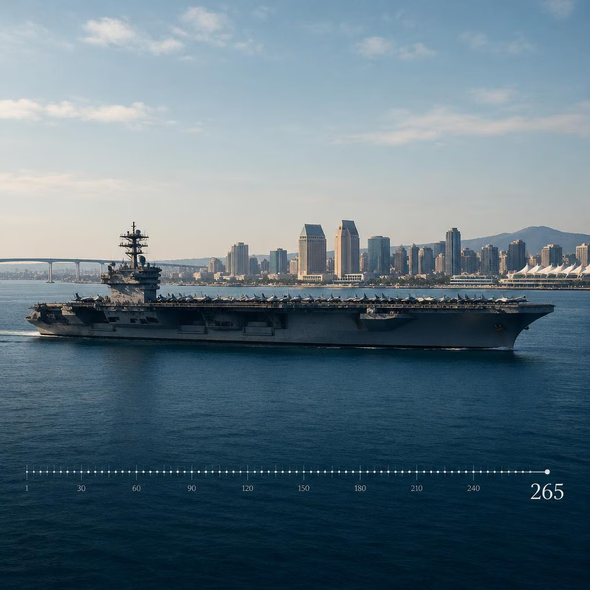
San Diego marks the end of the ship’s uninterrupted time at sea, not a uniform end to the crew’s strain. A civic welcome can honor service without turning endurance into evidence that the Navy asked no more than its sailors could reasonably give.
The USS Abraham Lincoln is returning home to San Diego on Thursday after 265 uninterrupted days at sea, NPR reports. The aircraft carrier supported the Iran war during a deployment NPR describes as record-long. The report also notes accounts of deteriorating conditions among the crew. Those facts belong in the same homecoming story.
The number gives the deployment a clear public shape. There was a departure, there were 265 days without interruption at sea, and now there is a return to a home port. A deployment record measures duration precisely; it cannot, by itself, measure what sustaining that duration required of the people aboard. The milestone counts days more readily than obligations.
San Diego supplies a place for the change to become visible. A ship returning to port is no longer only an instrument operating elsewhere. Homecoming brings service back within reach of the community that acknowledges it. That civic ritual has value without an invented scene of a particular sailor embracing a particular relative. The return itself is enough to establish the occasion.
Reports of deteriorating crew conditions complicate celebration, but they do not authorize a single account of every sailor’s experience. The deployment count establishes time at sea, not a diagnosis. Some experiences may differ sharply from others. Honoring the crew means leaving room for those differences rather than assigning everyone either heroic satisfaction or lasting damage.
The Navy can recognize the operational achievement and still examine the demands behind it. Endurance demonstrates that sailors sustained a mission under its actual conditions. It does not automatically establish that those conditions were acceptable or should become a model for another deployment. Calling the duration a record should not quietly turn the next crew’s calendar into a competition.
Thursday’s return gives that distinction a practical setting. Rest, access to care, and attention to reported conditions should be subjects of institutional follow-through, not benefits readers assume have already been delivered. The reporting establishes the length of the deployment and the concerns surrounding it; the day count does not establish an adequate recovery plan. San Diego can welcome the Lincoln while the Navy explains what time and support the returning crew will receive.
Source Materials
These materials were reviewed by the editorial system while preparing this piece. Muerte.casa may interpret, satirize, reframe, or disagree with them.
- The long-deployed USS Lincoln is returning home to San Diego NPR · October 8, 2026 · Primary signal · Direct source
How did this story land?
This may be changed as you like.