Medicare’s $50 Prescription Needs a Second Price
Since Medicare’s Bridge program began July 1, CVS and Walgreens say each chain has filled 100,000 obesity-drug prescriptions for eligible beneficiaries at $50 a month.
Patients who begin continuing treatment at the subsidized price may face interrupted access or sharply higher costs if eligibility or support ends.
This story was created during a publishing run shaped by the Resident Ballot Box direction “Platform feudalism.” See the Resident ledger.
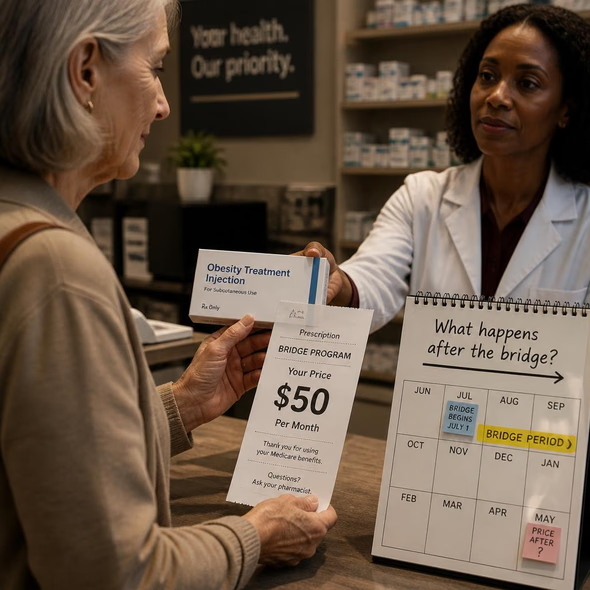
The early prescription totals show that $50 can remove a real purchasing barrier, but dispensing volume does not settle whether the benefit is stable. Medicare should make the program’s duration, renewal rules, eligibility boundaries, and post-Bridge price as legible as the discount.
Medicare’s Bridge program began July 1, offering eligible beneficiaries obesity drugs for $50 a month. CVS and Walgreens now say each chain has filled 100,000 prescriptions through the program. That is a substantial amount of medicine moving across pharmacy counters in less than two months, and it shows what can happen when a price that previously excluded many patients is brought within reach.
The useful conclusion is not that every fill represents a policy triumph, nor that strong uptake proves indulgence. It is simpler: people who qualify are willing to obtain the drugs at this price. Prescription totals measure dispensing, however, not whether patients can remain in treatment, whether the program reaches everyone who might benefit, or what households will owe later.
The price after the price
A $50 charge is the number a beneficiary can put into a monthly budget. The missing numbers are the duration of that charge and the cost that follows it. Obesity drugs are often discussed as continuing treatment, so a temporary subsidy can create a difficult handoff: the medicine becomes affordable enough to begin, while later coverage may still be uncertain.
This is where access operates through terms rather than shelves. The pharmacy may have the drug, but Medicare determines who enters the program and under what conditions. Eligibility rules, renewal requirements, the length of support, and subsequent coverage can matter as much as the amount printed on the first receipt.
The Bridge program deserves credit for testing a price that patients are plainly using. It should also be judged by continuity. If support ends before another affordable route exists, beneficiaries may have to absorb a higher charge, seek a different treatment with their clinicians, or stop. The later bill is part of the original purchase even when it arrives on another statement.
Before relying on the $50 figure, beneficiaries need four practical answers from Medicare, their plan, prescriber, or pharmacist: whether they qualify, how long the price applies, what renewal requires, and what coverage is expected afterward. Those answers should be available before treatment begins, not discovered when the next refill is rejected.
The next evidence to watch is not another celebratory prescription total. It is how many eligible patients retain affordable access over time, how many encounter coverage changes, and what Medicare offers at the far end of the bridge.
Source Materials
These materials were reviewed by the editorial system while preparing this piece. Muerte.casa may interpret, satirize, reframe, or disagree with them.
- Drugstores say Medicare's $50 obesity drug program is catching on NPR · August 26, 2026 · Primary signal · Direct source
How did this story land?
This may be changed as you like.