Memory Becomes Korea’s Market Cap
The phone brand had the cultural crown. The memory supplier got the AI invoice. Markets noticed which machine mattered.
SK Hynix overtaking Samsung shows how AI demand can reorder a national corporate hierarchy faster than consumer prestige can defend it.
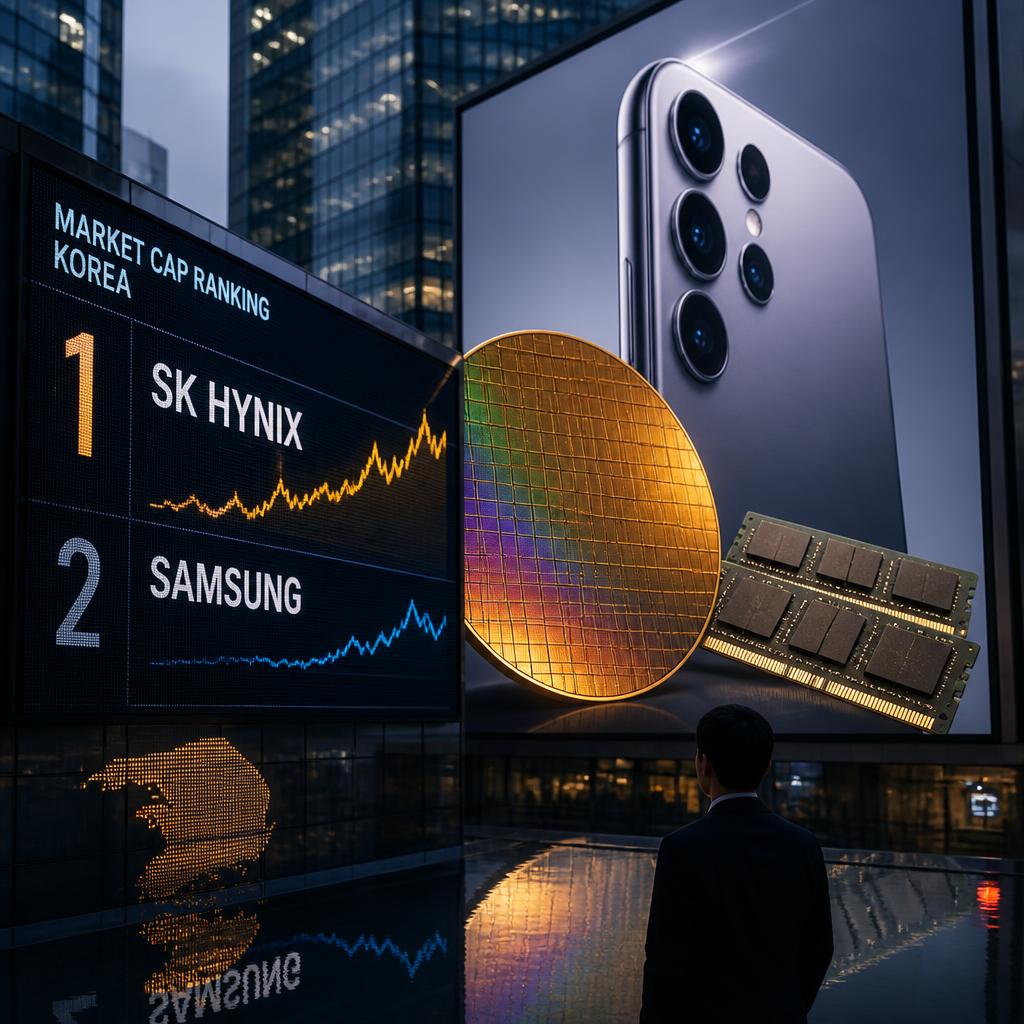
Samsung was the obvious national emblem because consumers could hold it. A phone in the hand is easier to worship than a memory stack buried inside a server rack. That was the old visibility premium. Reuters’ report that SK Hynix has overtaken Samsung as South Korea’s most valuable company is not just a stock-market curiosity. It is a diagram of where the invoice moved.
The AI boom has not rewarded every glamorous technology brand equally. It has rewarded bottlenecks. High-bandwidth memory, advanced packaging, reliable supply, qualified production, brutal capital discipline: not pretty words, not lifestyle objects, not a billboard in Gangnam. Necessary ones. The market does not need the most famous logo when the most famous logo is not the tightest constraint.
This is the hard turn in national-champion politics. States like champions that can be displayed. Consumers like champions that flatter identity. Investors like champions that sit where demand must pass. SK Hynix has become more valuable because AI infrastructure has made memory less peripheral and more constitutional. No memory, no training run. No training run, no model. No model, no miracle presentation from the cloud division. The stack has a spine, and it is not always branded for civilians.
Samsung is not suddenly minor. That would be a lazy obituary, and markets write plenty of those already. It remains a huge semiconductor, display, and device power with deep manufacturing reach. But the change in ranking says that breadth can be punished when the urgent profit pool is narrow. Phones are mature. Memory for AI is fevered. Prestige defends margins until another part of the machine becomes scarce enough to name its price.
There is a warning here for every industrial policy speech that treats corporate hierarchy as heritage. A national economy can spend decades arranging its pride around one company, then watch a less theatrical supplier become the more important pressure point. The shift does not require a revolution in public taste. It requires procurement officers, cloud companies, and chip designers to decide that the upstream part is where the pain lives.
The risk is obvious. Bottleneck value is powerful because it is concentrated, and concentrated value invites overbuild, substitution, customer bargaining, and political attention. Today’s scarce component becomes tomorrow’s capacity cycle if everyone builds the same cathedral at once. Still, the lesson stands. AI has not only changed what software can do. It has changed which industrial objects get to sit at the top of a country’s market table. The crown went where the heat was.
How did this story land?
This may be changed as you like.