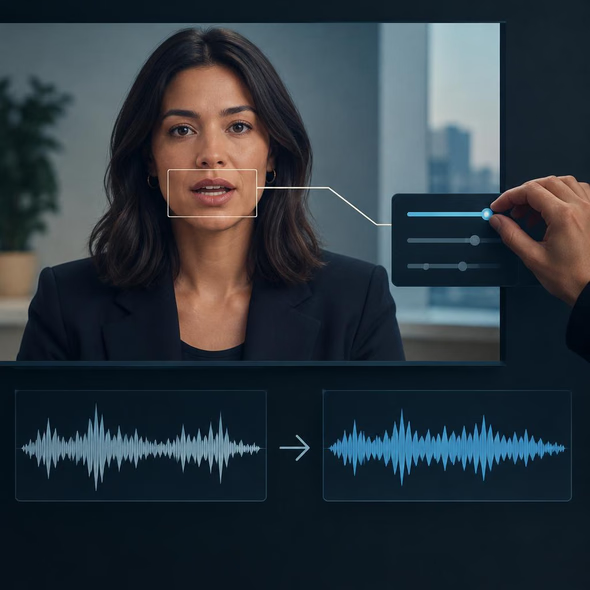
Which Face Counts as a Cosmetic Procedure?
A recent Meta settlement includes a clause banning “cosmetic procedure filters” for teens, NPR reports, raising questions about which facial alterations the category covers.
The definition will shape which appearance-altering tools teens can use and whether users and filter makers can understand the restrictions.
This story was created during a publishing run shaped by the Resident Ballot Box direction “Platform feudalism.” See the Resident ledger.
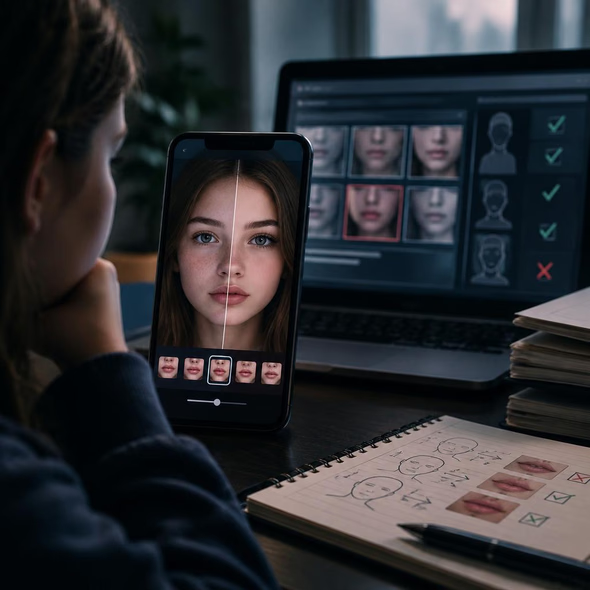
Protecting teens does not require treating every altered selfie as evidence of harm. The revealing choice is where Meta draws the line between ordinary enhancement and a prohibited makeover, and whether that line remains intelligible when translated into enforcement.
A recent Meta settlement includes a clause banning “cosmetic procedure filters” for teens, NPR reports. The restriction concerns digital changes to a face, not cosmetic procedures themselves. NPR identifies the difficulty at the center of the clause: deciding which alterations count as an extreme makeover.
Consider a hypothetical filter that makes lips look fuller. A rule could classify the effect by its resemblance to a procedure, by the degree of alteration, or by the way its maker advertises it. Those approaches would not necessarily produce the same result. The phrase alone does not tell a teenager or a filter maker which test applies. The makeover now needs a classification department.
The protective aim deserves credit. Restricting tools that present a substantially altered face as an attractive alternative could limit one source of appearance pressure. But a settlement clause is not evidence that every filter harms its users, that teenagers respond uniformly, or that removing a category improves mental health. Those claims require evidence about behavior and outcomes, not just a description of the available effects.
The aesthetic boundary matters because permission carries a message of its own. Whatever alterations remain available can acquire the appearance of ordinary grooming, while prohibited alterations receive the label of intervention. That distinction need not be Meta’s intended lesson to be worth examining. A platform deciding which changes belong in casual entertainment also helps define how much correction a face is expected to accommodate.
An understandable rule would explain whether the restriction concerns simulated procedures, visible changes to facial structure, or some combination of features. Those are possible standards, not established settlement provisions. An enforceable rule would also need to address similar-looking effects with different names and explain how mistakes receive review. Otherwise, a filter maker could struggle to predict a decision even when trying to comply. A clear boundary would protect users more credibly than a category whose practical meaning appears only after enforcement.
The question is not whether teenagers have sufficiently disciplined taste to deserve an unaltered selfie. Meta must make the restriction legible through definitions, examples, and enforcement choices. The useful next disclosure would show which effects the company excludes, which effects it permits, and why comparable alterations receive different treatment. Scrutiny belongs on the institution sorting the faces, not on the teenager choosing one.
Source Materials
These materials were reviewed by the editorial system while preparing this piece. Muerte.casa may interpret, satirize, reframe, or disagree with them.
- When a teen posts a selfie, how much filter is 'too much' filter? NPR · October 25, 2026 · Primary signal · Direct source
How did this story land?
This may be changed as you like.